
We finally made a (sort of) road trip to Hampi, with my beloved Dani. She was keen on seeing the UNESCO World Heritage site and since this has been on my radar for a while now, I gladly went along. Dani has an American friend volunteering at an NGO there, the Kishkindha Trust, under the aegis of the formidable Shama Pawar. It sounded promising and I was looking forward to our time there.
Getting to Hampi ended up being quite roundabout for me. Since I had to be in Goa with #lovethisman just before, I decided to catch a train from Margao to Hospet, the closest station. I have been a fan of the Indian Railways throughout my growing years, using the locals daily from Lonavla to Pune through University, and the Deccan Queen to Bombay for decades. One truly memorable childhood holiday was an overnight train journey in 1986 with my whole family and our two dogs, in a coupe, on broad and narrow gauge rakes to Goa. So I was understandably happy to take a First AC berth and chug along contentedly through South Goan forests and downwards to the hot plains of central Karnataka.
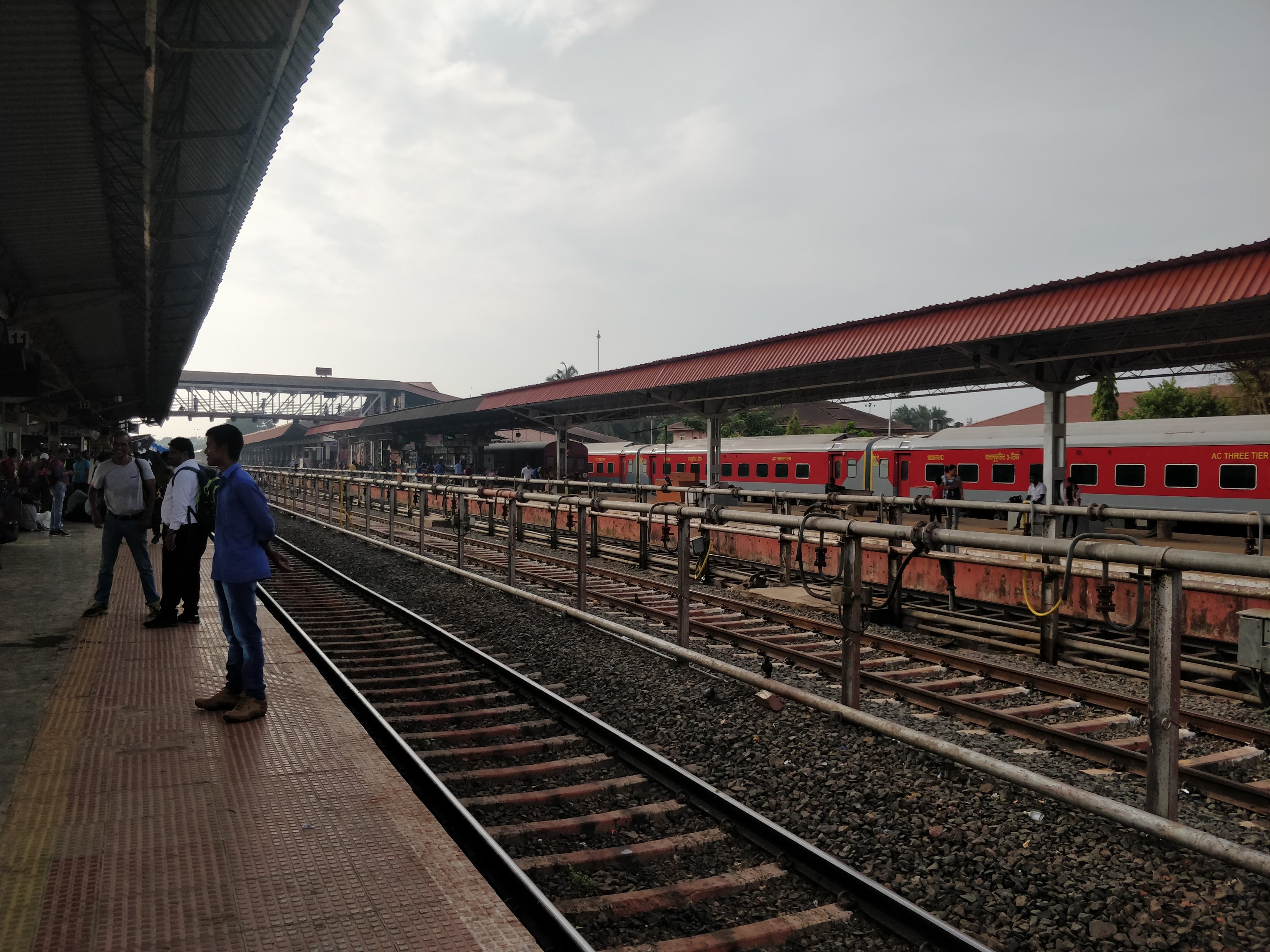

The journey was cool and comfortable but still a shock to my senses. The rest of the train, the Howrah Express that went from Vasco in Goa to Kolkata, was packed to the gills. The train would wind it’s way across Goa, Karnataka, Andhra Pradesh, Odisha and reach Bengal over two nights. Maybe I’m just too fussy now, but everything was so dirty and the loos were a nightmare. The food was indifferent. The clean blanket and pillow did not set me at ease. Parents were glued to their devices with kids playing video games and watching nursery rhymes on loop, loud enough for everyone to suffer the tinny sound from the mobile. I had to hold back the urge to scream and finally told the errant mother to give her child headphones or turn the darn device off. Elsewhere, a child howled and screamed and not once did the family even try to pacify him. It was the stuff of nightmares, akin to being on a long haul flight with a crying, colicky baby.
I read a lot, but mostly I just wished for noise -cancelling headphones. The only nice thing that happened was when I started chatting with a pleasant Sardar who apparently does this route to Ranchi at least once a month ( shudder!). He spoke fluent Kannada, having grown up in Dharwad, and used to play state cricket. He ensured I got off safely, at the correct station, helping me with my bags. Of course the train was already running two hours late from its first stop, Goa. *eye roll*
This man helped me remember numerous train buddies over the years, and why I used to love trains: talking to new people, making new friends, glimpses into their world, often so different from my own, was the icing. I have made train friends including a famous sari designer, the Commissioner for Jails, a famous musician, and more!
I was met at Hospet station by my home-stay taxi. The drive through town streets with ancient ruins casually strewn about was unique. A temple here, a gateway there. And lots of brightly colored municipal schools (yay!) Small houses bordered the road, with vivid green patches of banana and sugarcane. My train rolled past, the tracks parallel to the road, us as we drove onwards and across the Tungabhadra River.
It was a relief to reach our accomodation, the Uramma Home Stay in Annegundi, near Shama Pawar’s Community Center, the hub of her work in this region. Shama does many marvelous things here, including creating rural jobs and education opportunities for women. Her battle against the open defecation and bad sanitation is sadly stalemate and the filth around the village is not just odious, but depressing.
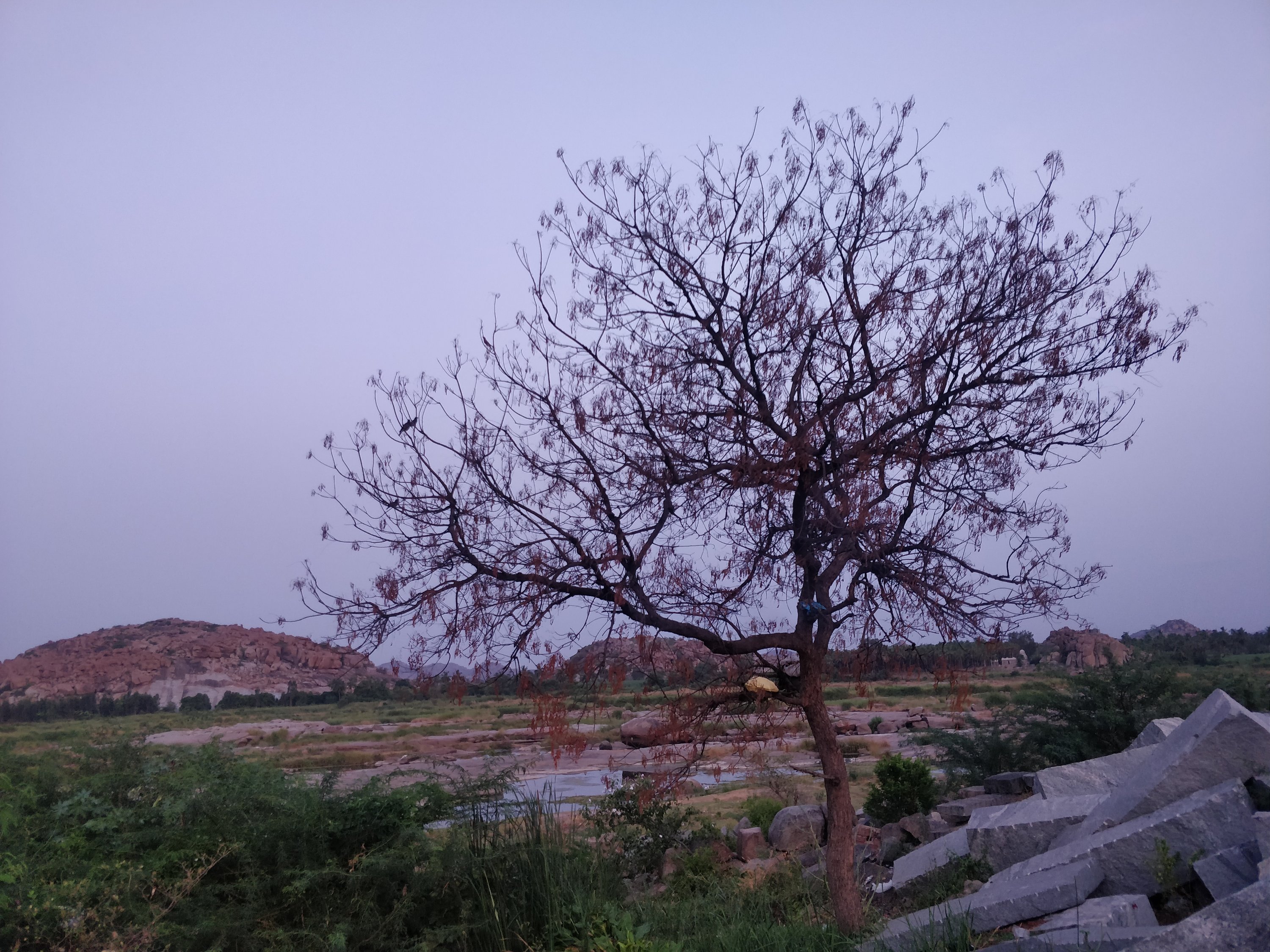

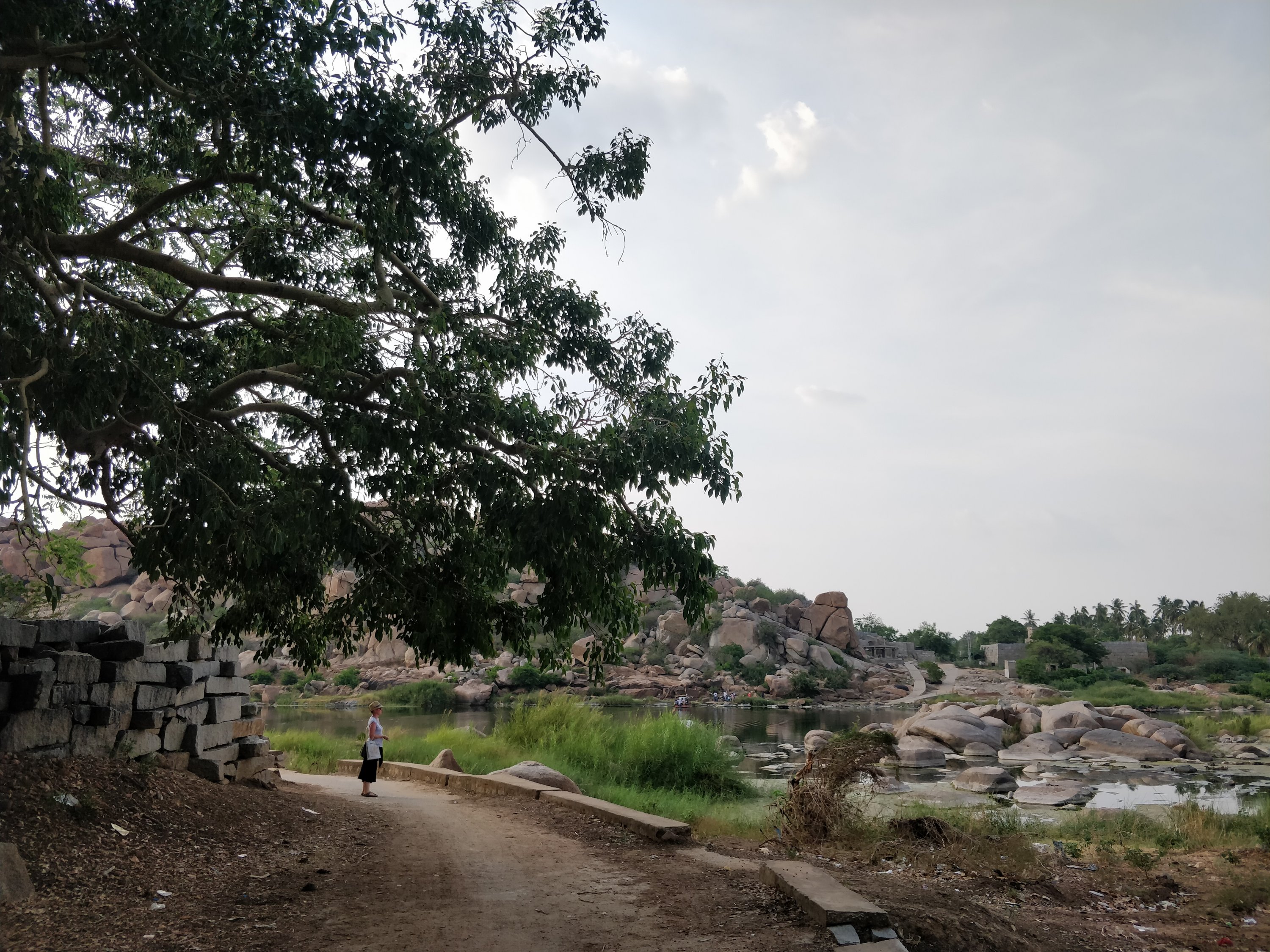
Let me not describe how it feels to see children squatting by the road and calling out to you animatedly in polite English as they poop. Or tell you about the dog searching for food in the open drain filled with sewage. Every front stoop is spanking clean because every piece of dirt is already on the street outside. When we weren’t dodging piles of inter-species poop, we were hopping over garbage and plastic and foil packaging from FMCG brands like rupee packs of Pan Parag and hair oil and toothpaste and sweets. Corporate India, your CSR is definitely not reserved for making simple changes in your packaging to reduce your garbage footprint and no amount of fancy schools and heart-breaking internet films will condone this wastefulness. When the world ends, we will still have shiny one rupee foil packs fluttering across the Apocalypse. These are the nicer photos from Annegundi!
Shama also has set up neat little workshops where local women weave beautiful things from banana fibre or make rope from water hyacinths the harvest from the river. Her center is full of enthusiastic social workers and volunteers who come from across the country. Handbags, mats, coasters and more are woven here. There is a great sense of pride in these ladies, they may come from conservative muslim families but they are learning languages and skills and they are educating their childre.n.

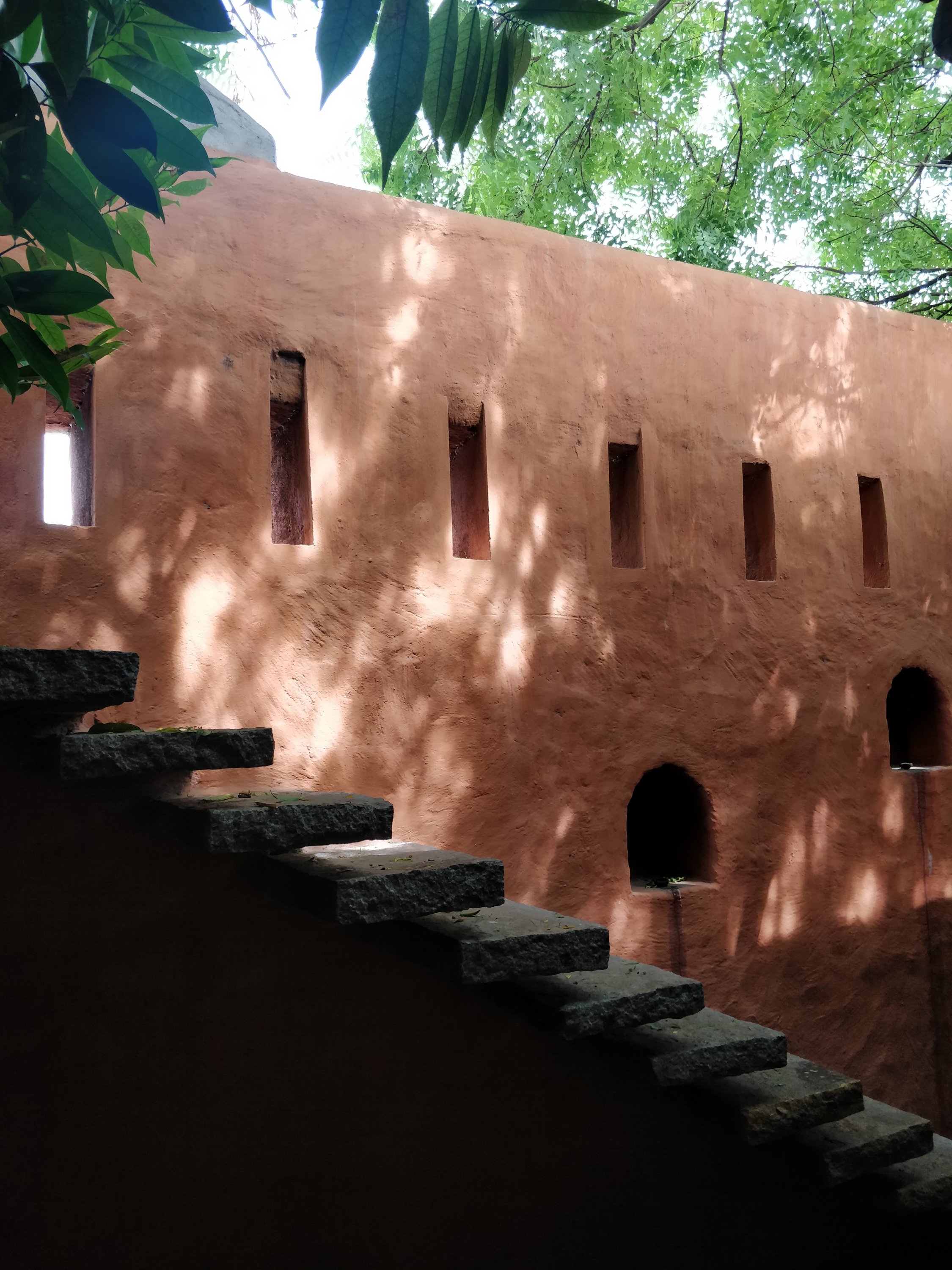

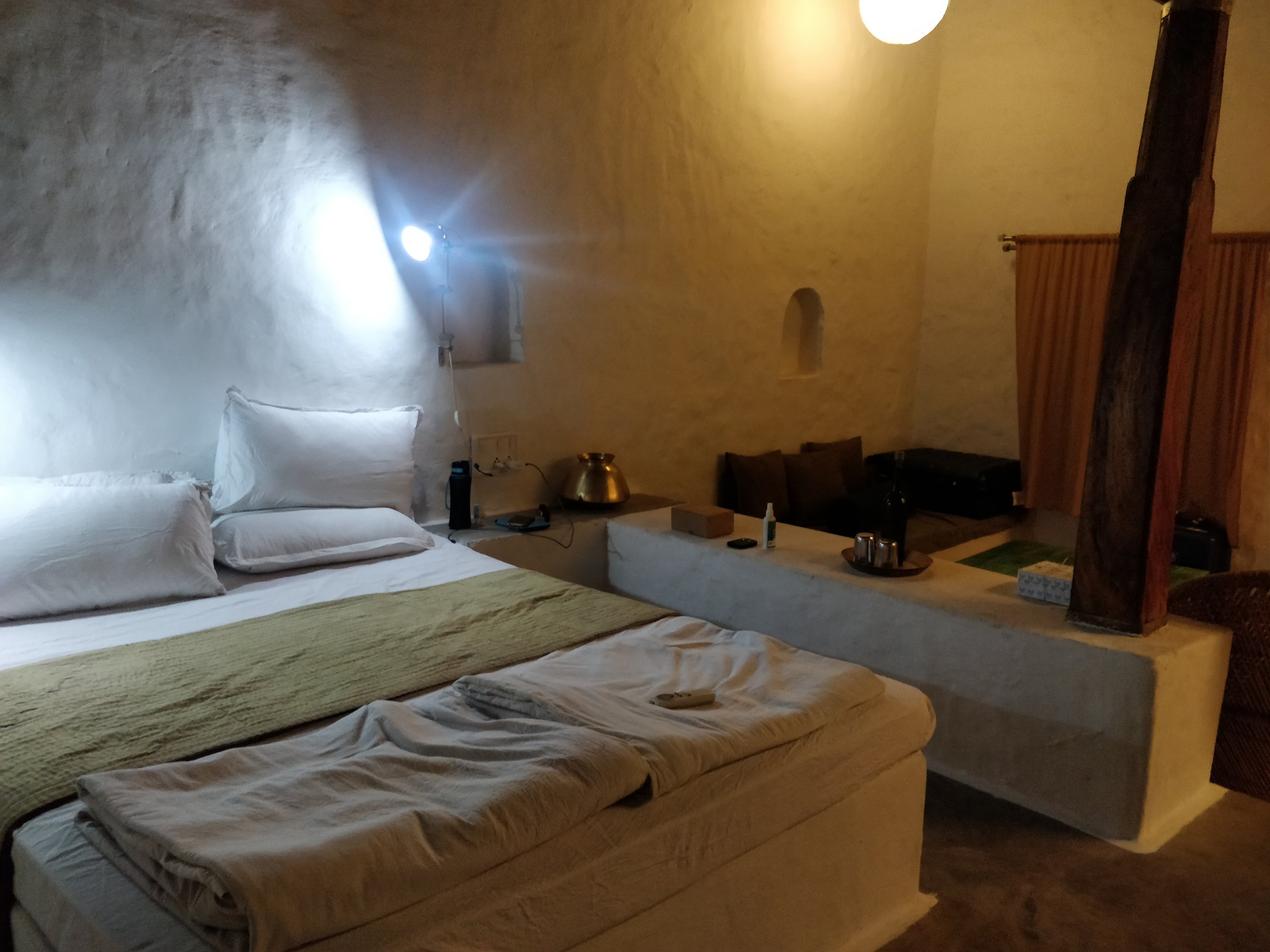

Our home-stay was a short walk away from the community center, just off the main village square. Shama has converted an old house into a very fortress-like guest house: two guest bed rooms, a walled courtyard garde, a living area to hang out in and a working kitchen. Simple vegetarian food is delivered to you on order. Our room was large, spare but comfortable and clean. The bathroom had a gorgeous sky- light. Everything was rustic and cement finished, with more rustic touches in the decor and rough limestone walls. The meals were minimal and tasty- we ate whatever was made for the Center and it’s volunteers. There is no alcohol and soft drinks are hard to come by. Hampi, across the river, is staunchly vegetarian, but you can find non-veg and alcohol on Hippie Island further away. Visits from langoors are common around here and I had a near-brush with one of them when I ventured up onto the terrace!
A walk around Anegundi revealed a small village with plenty of its own share of ancient stone temples and rock pools. There were happy stray dogs everywhere. And loads of cattle and cattle poop. Friendly villagers and children who knew Angie, our American friend, would keep calling out in English and stopping to chat. The village was mostly Muslim and there was a lot of excitement for Eid, which was any day now.
We even saw the local King’s house. He is a direct descendant of Krishna Devaraya himself, so it says. The house is humble for a king but easily the smartest in the village. There are odd bits of ancient debris scattered around, and mostly ignored. Some old houses have small stone shrines embedded in their walls, these shrines must be centuries old. Like Rome, the old and the new just coexist.
There are plenty of langurs and they cause plenty of disruption to village life with their antis. Annegundi even has an ATM, the only one around for miles. The nearest fuel station is not exactly next door, so be sure to tank up regularly.
The village is surrounded by hillocks made of mounds of monoliths. We came up with our own theories of how they got there. I went all geek and imagined a big bang volcano exploding and spraying the area with rocks for miles, or an asteroid that exploded and is now strewn across this region. Dani and Angie much preferred the more whimsical, fairy tale version of the Gods playing boules or football and throwing a few boulders artistically towards the Earth. I must say this version seems a lot more fun!
Despite the terrible, searing, choking heat, averaging 40C+ Hampi managed to charm and awe.
More about that next.
 Thewanderingindiangourmet