
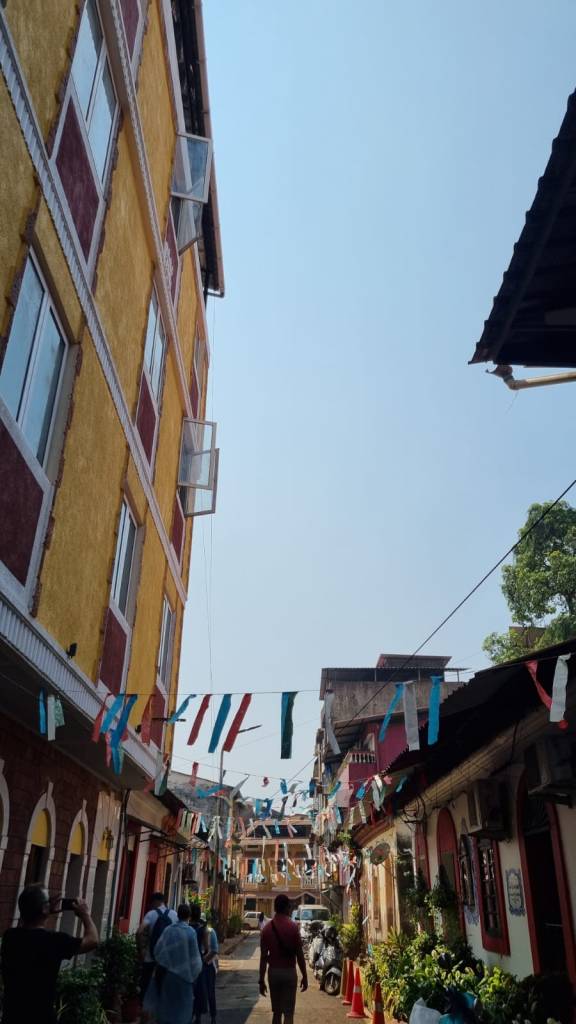


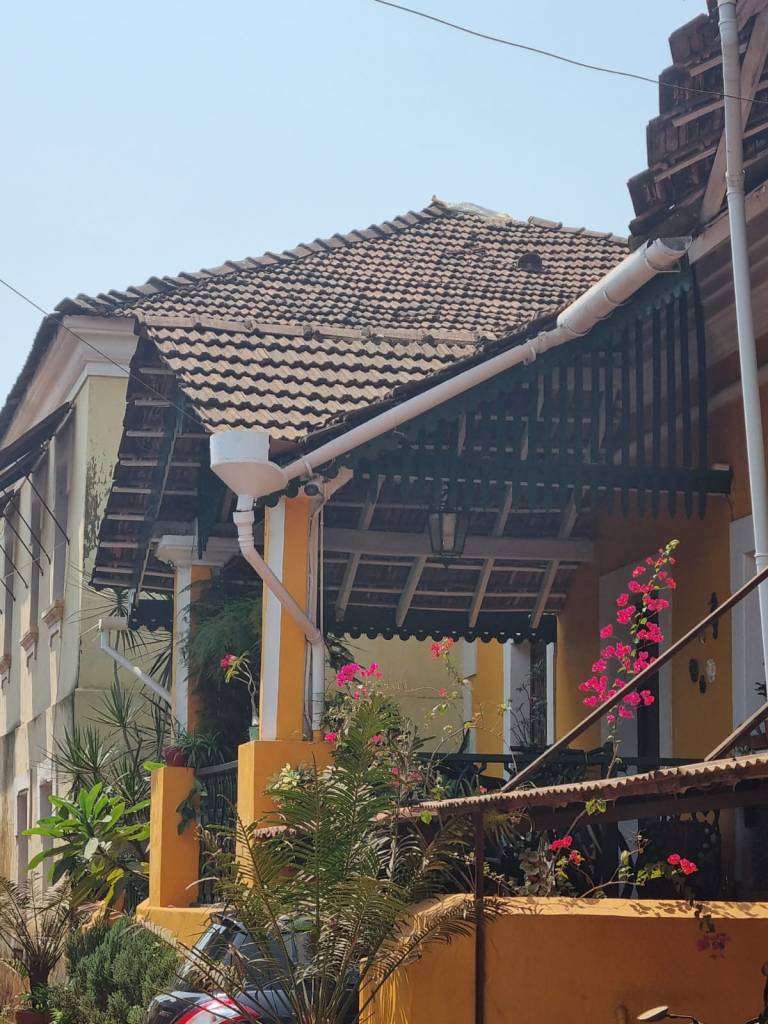

Above photos by Alekhya
February 2023
Our recent getaway to Goa included a heritage walking tour in Panjim’s Latin Quarter, Fontainhas, a remnant of Portuguese colonialism.
We did the walk with www.makeithappen.com a very good local experiential tour company. Our guide Amreen was superb: well-versed in the history of Goa, warm, smiling and hospitable.
I have always loved Panjim, the capital city of Goa. Panaji as it was known before, is so pretty with with elegant boulevards, grand churches, the corniche and grand town houses.


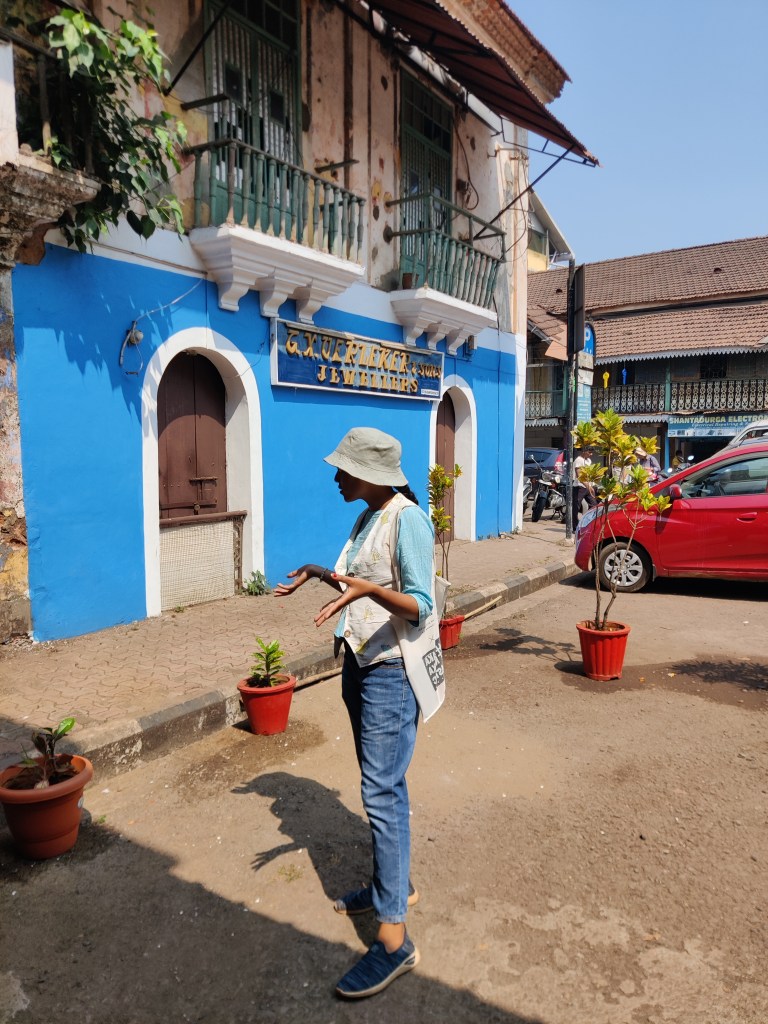


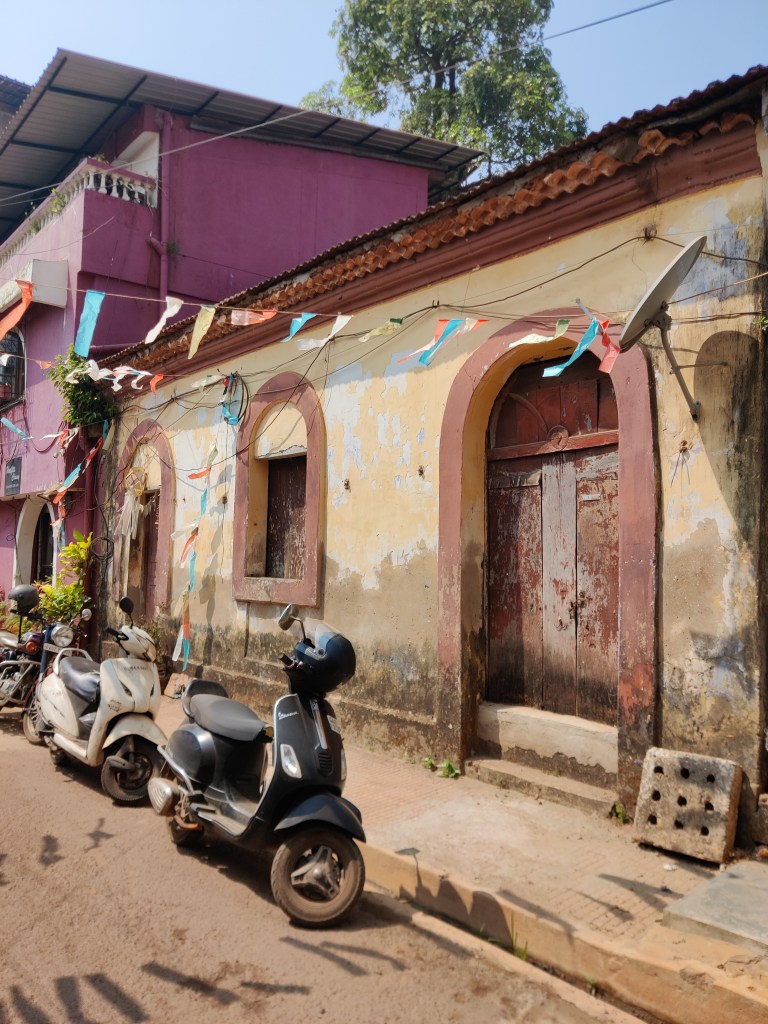
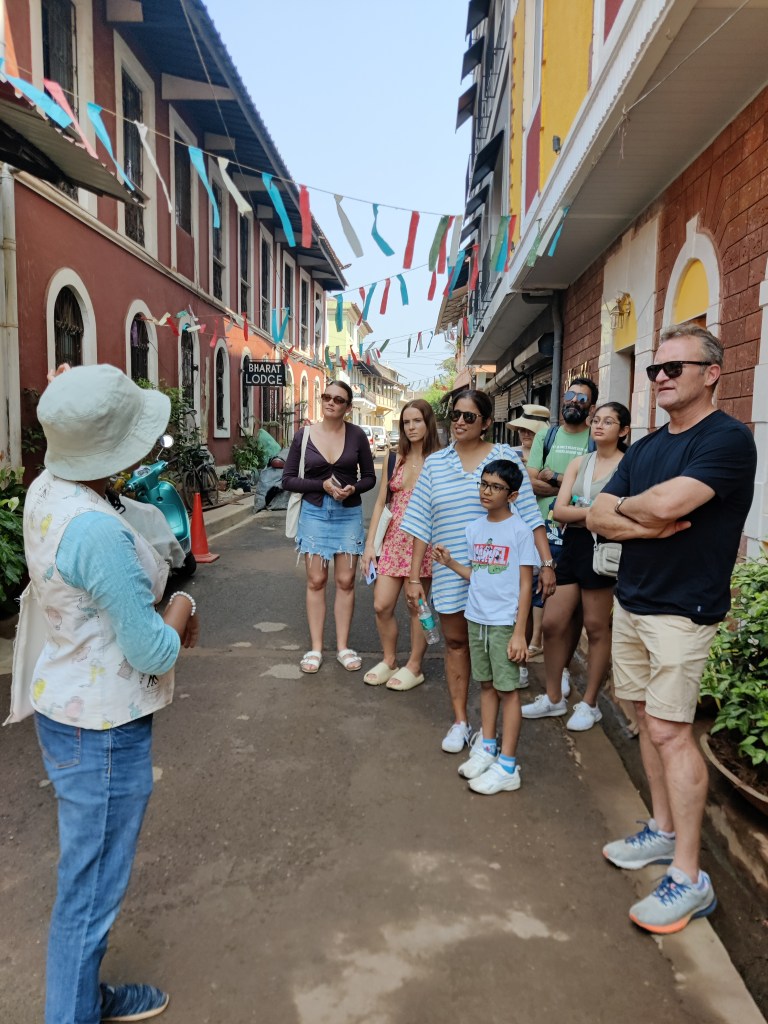
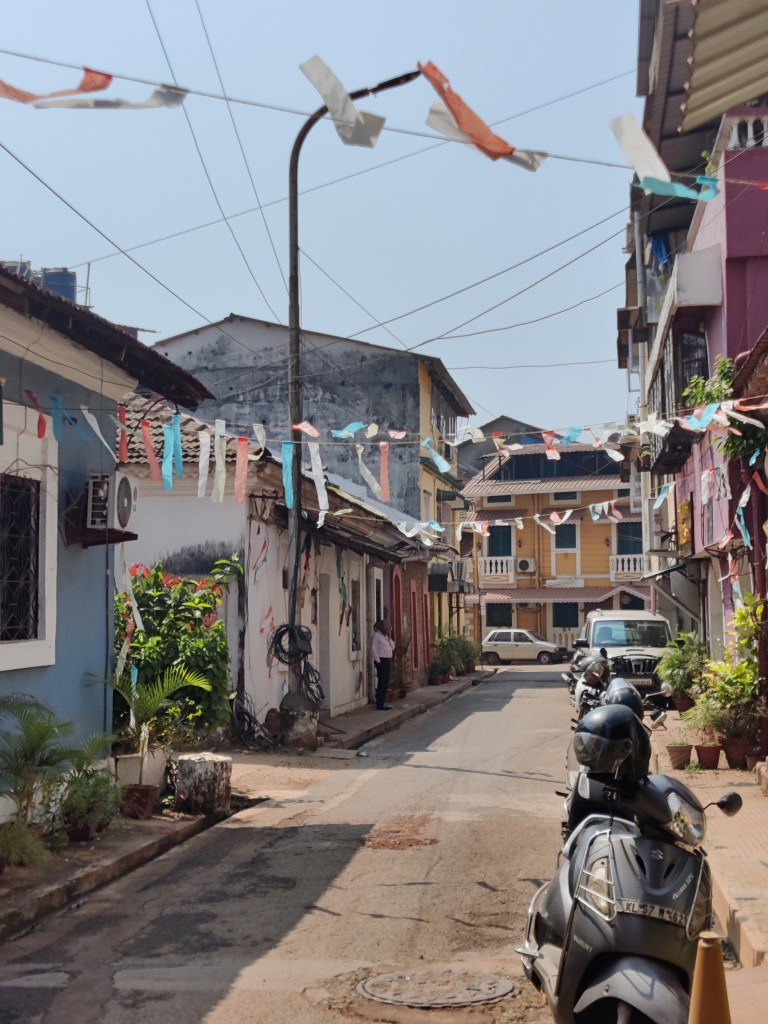
The Fontainhas district was seriously revived two decades ago when little guest houses started to spring up there. The locality is a real Portuguese barrio, a remnant of Portuguese colonialism in Goa. Reimagining life here several centuries ago when a great plague destroyed and forced the move to Panaji from Old Goa, is not hard to do.
Today, we can visit the grand churches of Old Goa, the churches that gave this place the moniker of the Vatican of the East, it was such a centre of catholic power. You won’t find many remnants of the massive city that existed for centuries, a city of yore that housed millions of people from all over the world: colonials, businessmen and traders in horses, spices, silks and slaves. The accompanying populace of catholic religious orders, craftsmen and builders, farmers and families all made Old Goa a very exciting Portuguese city to live in. Until the grand Plague. The Church rescued the people by giving them land to build on, away from Old Goa and the capital was moved as many thousands lost their lives.
What we walked that day was in the footsteps of the craftsmen and workers homes, built against each other, all within the tiny suburb granted to them by the benign clergy.
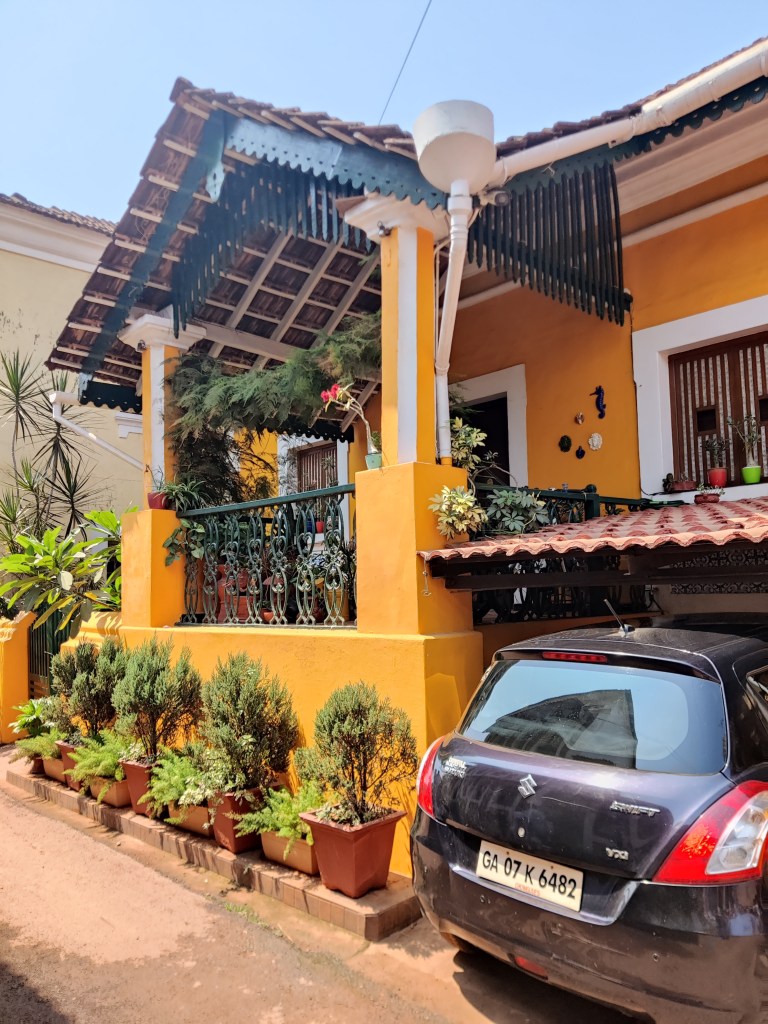
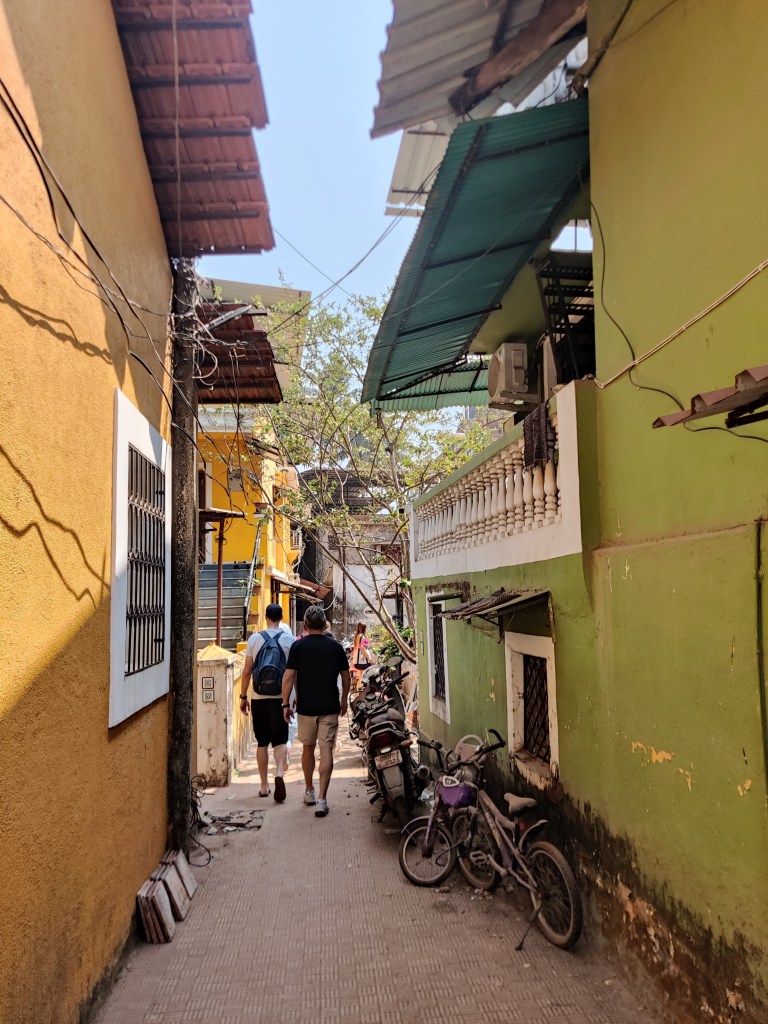
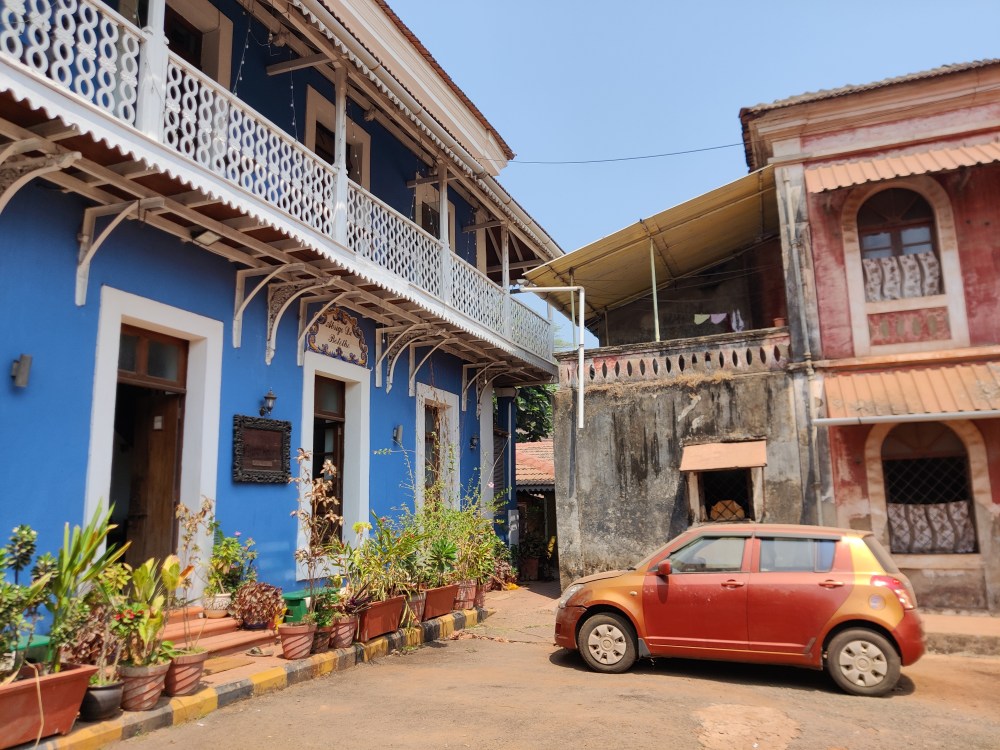
As Amreen explained, the houses were conjoined due to a lack of space but now make for the most delightful buildings, brightly painted and with beautiful touches, and traditional accents that declared who resided within. By church decree, only churches could be painted white which is why most Goan houses are so colourful and happy!


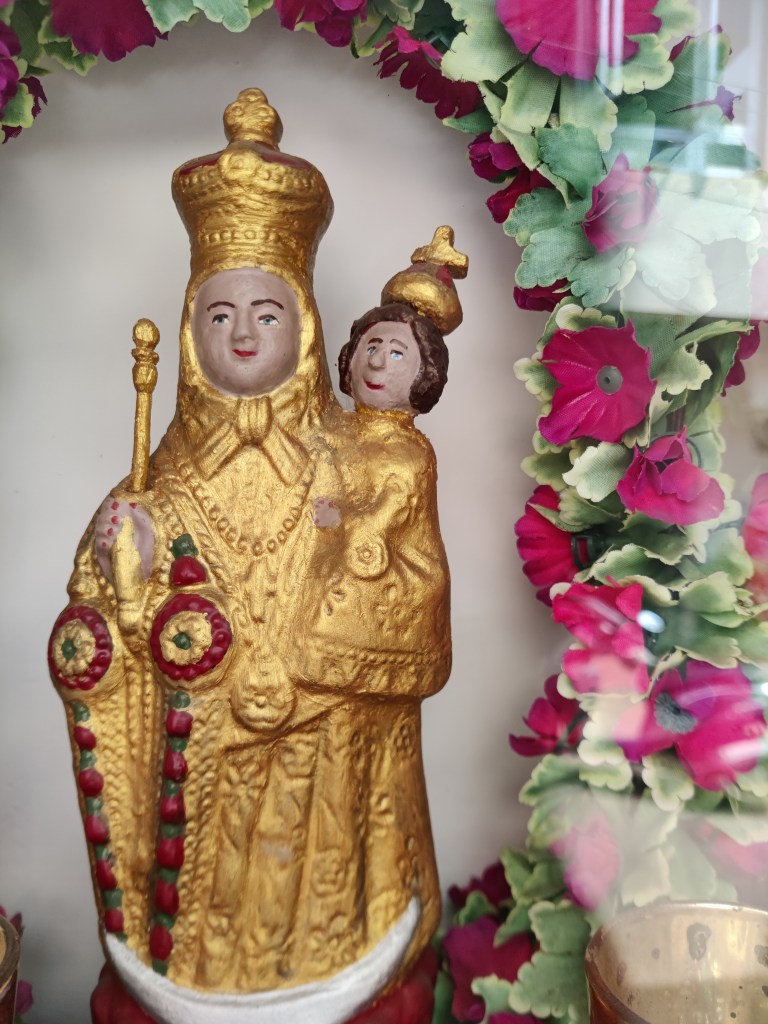
We walked past very old houses dedicated to Saints with devoted shrines embedded in their facade. These shrines had statues of Valankani, St Francis Xavier, St Thomas and St Anthony with Jesus Christ and Mother Mary.

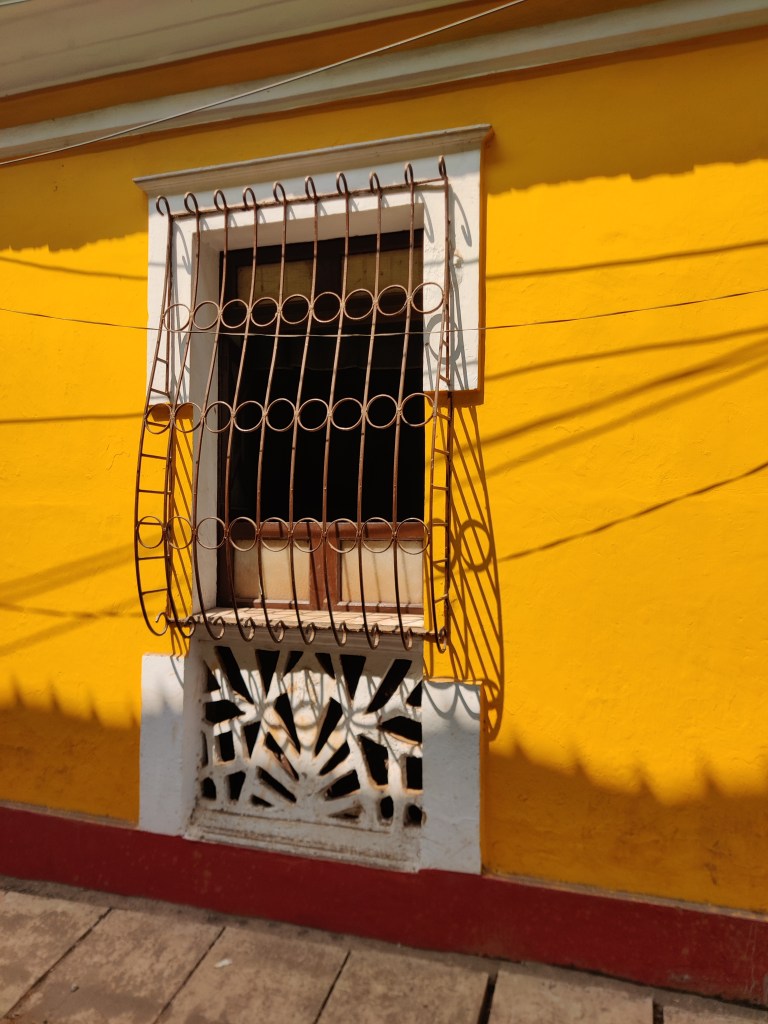

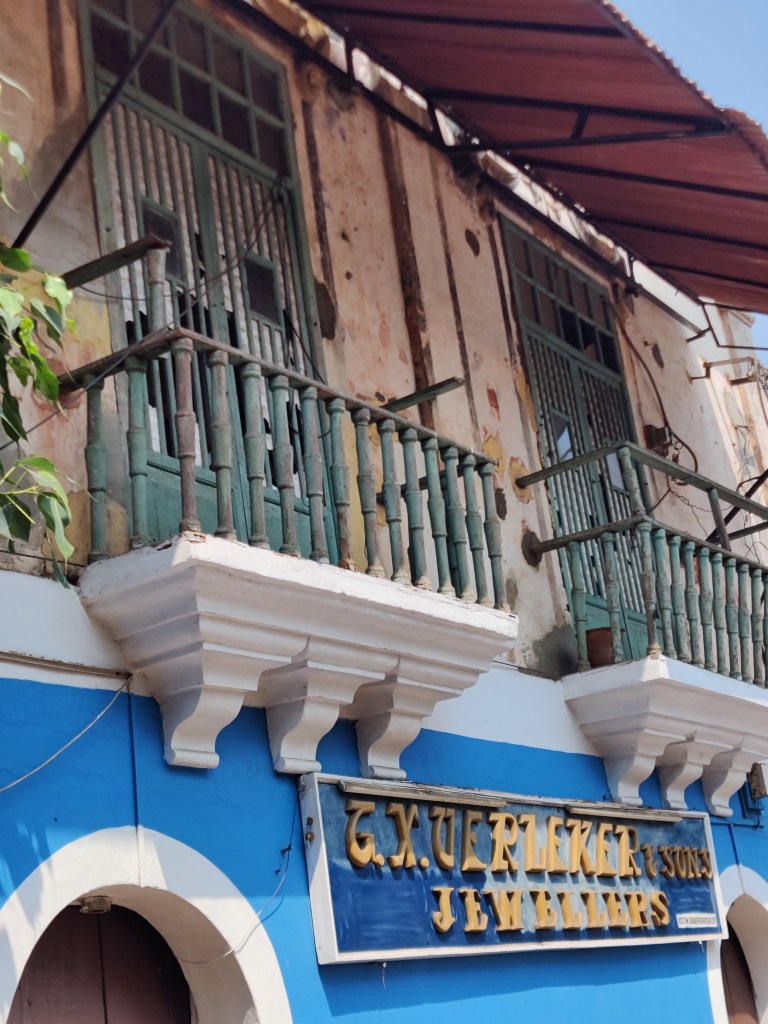


The houses themselves are traditional with tiled roofing and small balcaos for the men to smoke on. Houses belonging to the gentiles were distinguished from those of the common man with elaborate designs above windows and layers of tiles below the roof. Different window styles declared the class of the occupant and traditional mother of pearl windows lent opacity and light to dark corners.


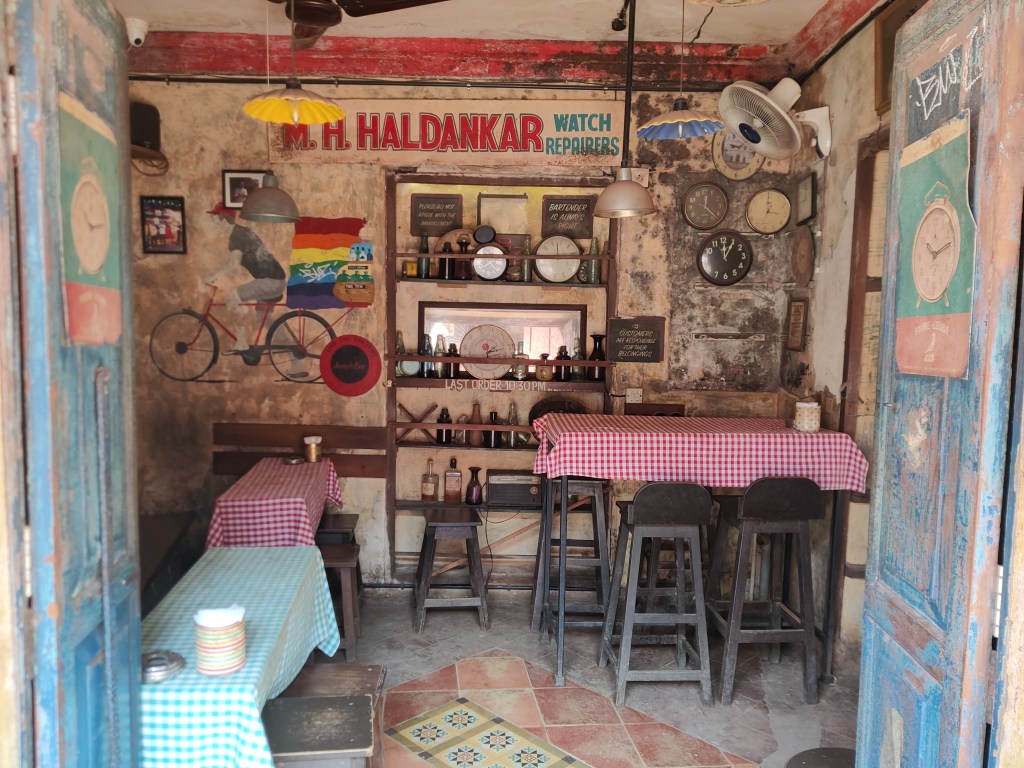
The area is home to people even today, and some houses have a strict no photo policy . It is somehow also touristy with boutiques, tiny cafes and the famous Joseph’s bar.
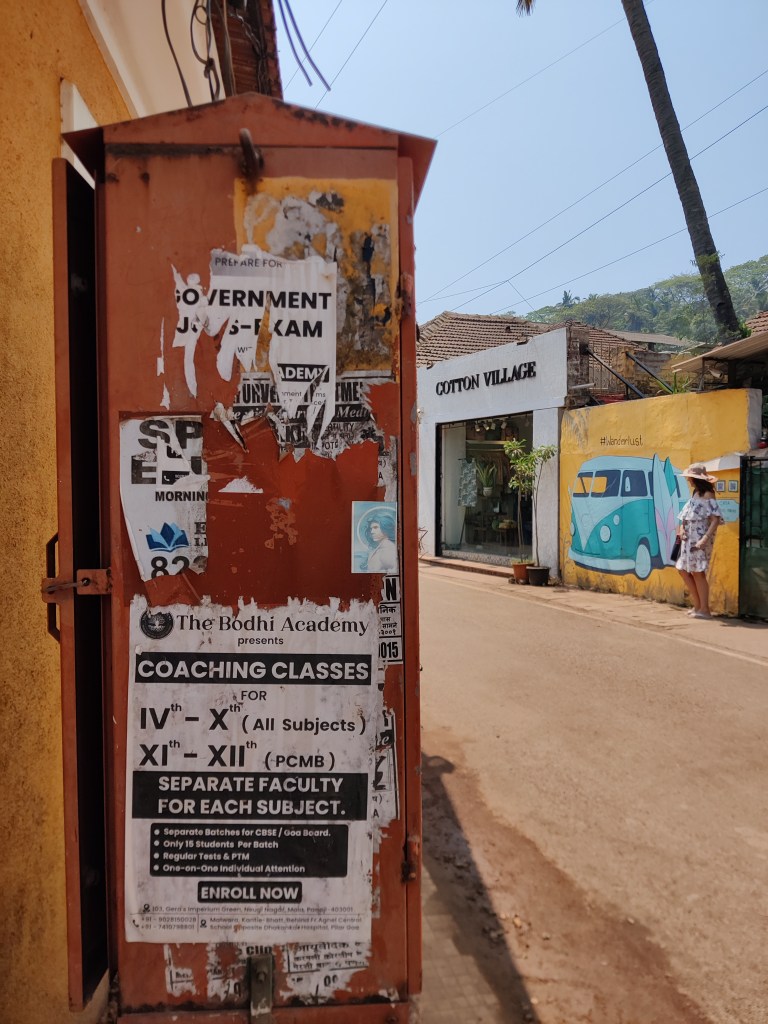
Everywhere there are groups of people walking with guides, posing for selfies in front of the brightly painted walls. They make for a great photo op.


The walk continued through little lanes and many brightly painted houses. The funniest street was one where every house had a strict ” No photography” policy and hordes of tourists were posing for selfies.
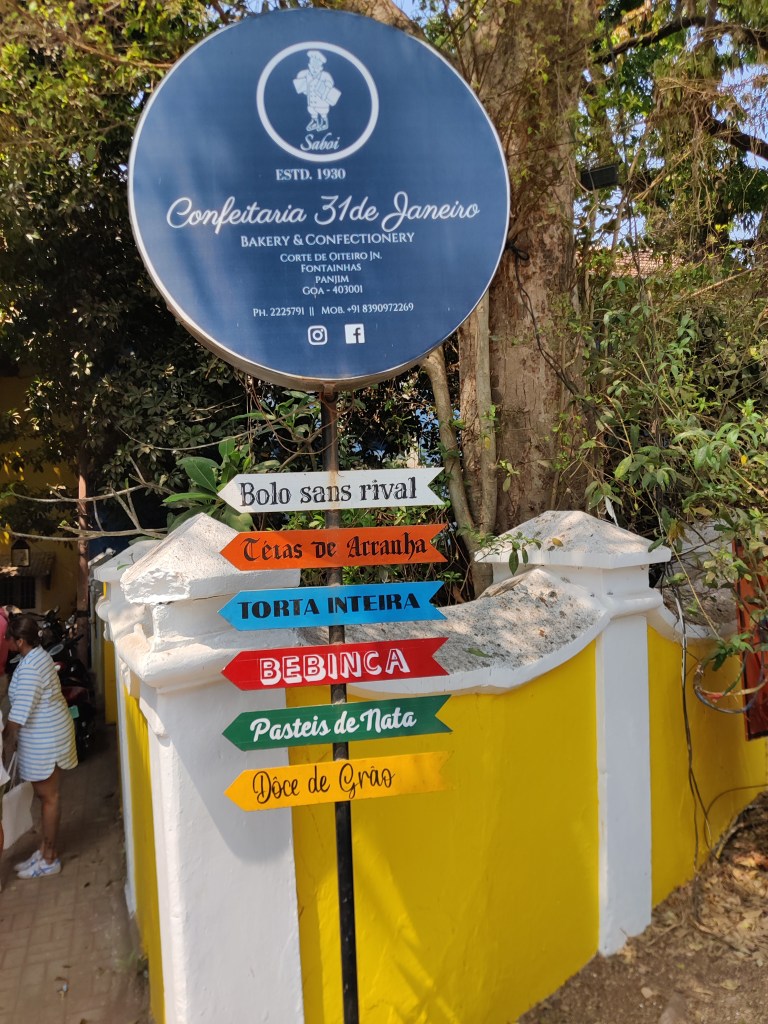


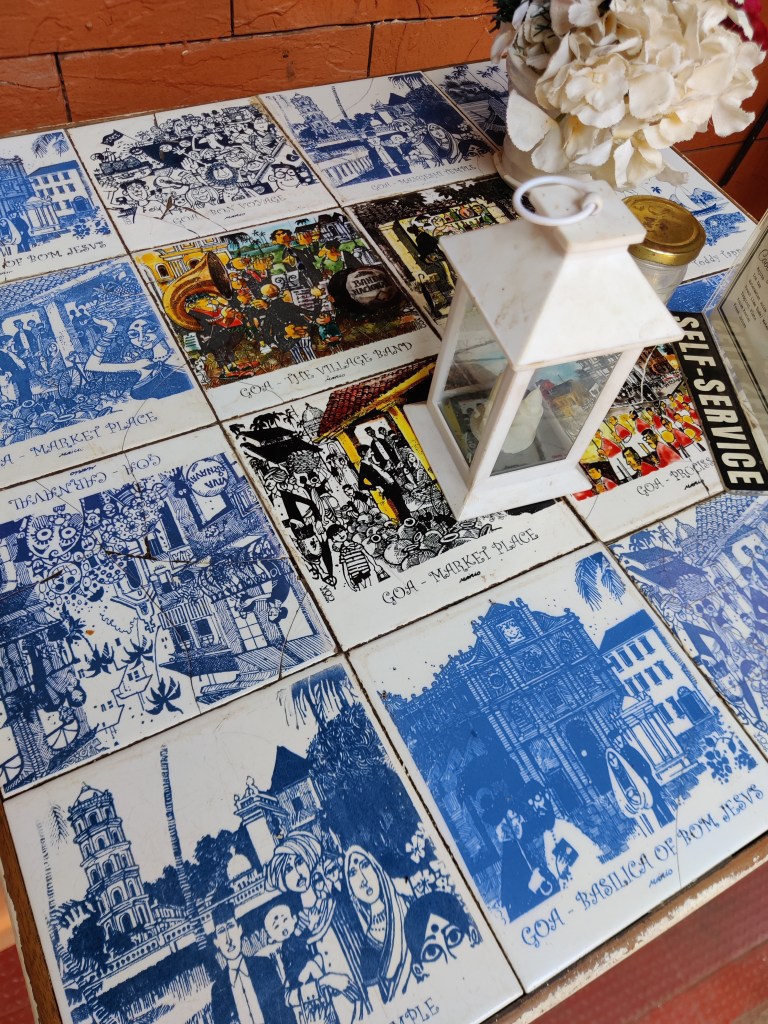

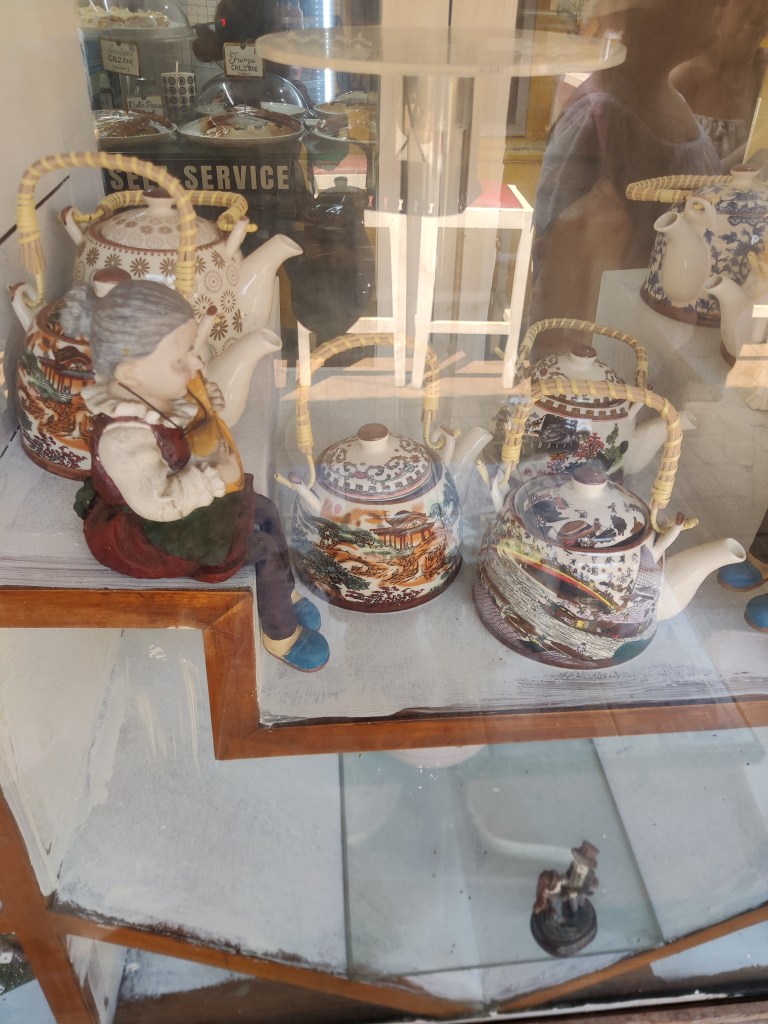
We visited the bakery Confeitaria 31 de Janeiro and were treated to some delicious local sweets all of them some version of rice, jaggery coconut, sugar and gram flour. I love Goan sweets and it was such a treat to snack on them so normally! My favourite delicacy is ghons, tender coconut shredded and coated in sugar, left to harden. I am not a fan of the sickly sweet serradura- ugh!


Some of the more fascinating places we visited was the building that once housed the only Portuguese mint outside of Europe, now a private residence.






The old tobacco factory is now Panjim’s Post office. The post office shares its pin code with Antarctica. Yes Antarctica. To know more about this delicious detail, I urge you to walk with Amreen and listen to her tell it!
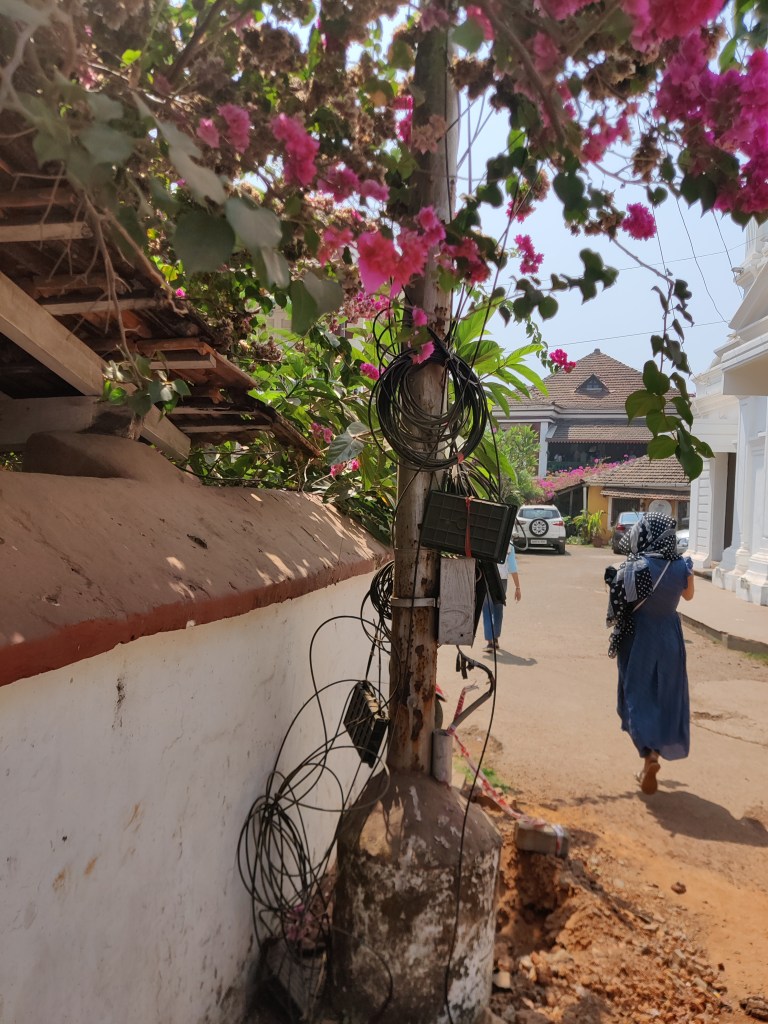
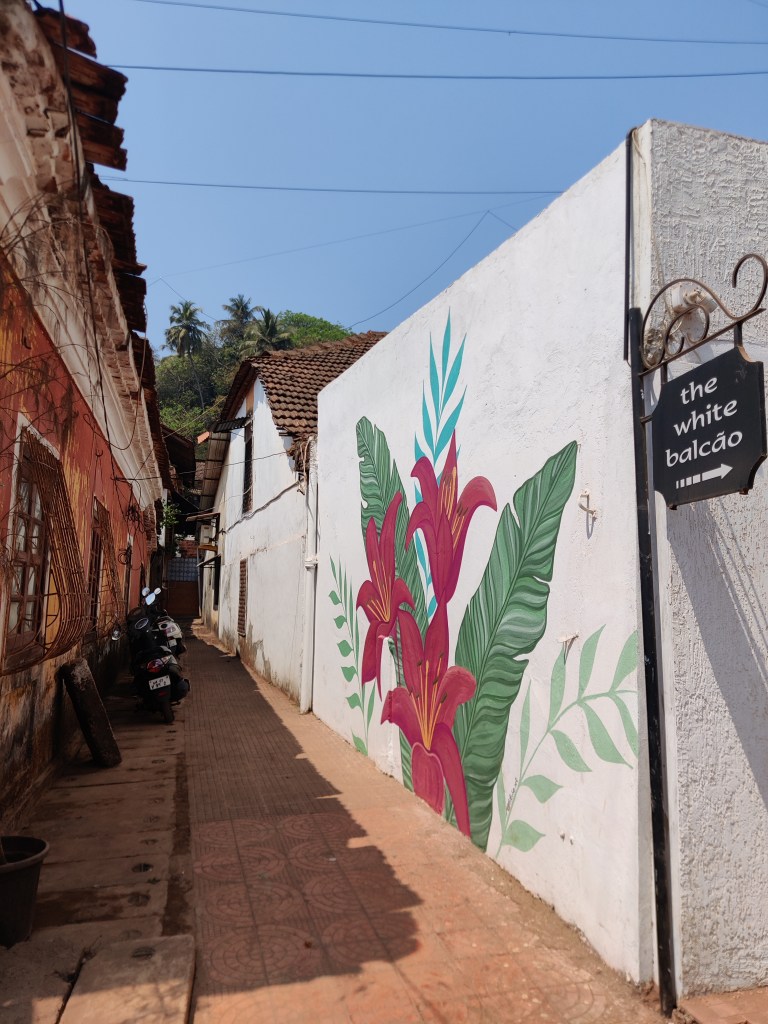
We passed the only local chapels and one church. Bougainville bloomed against ochre walls in the sunlight. Some of the walls have been painted with delightful modern art.


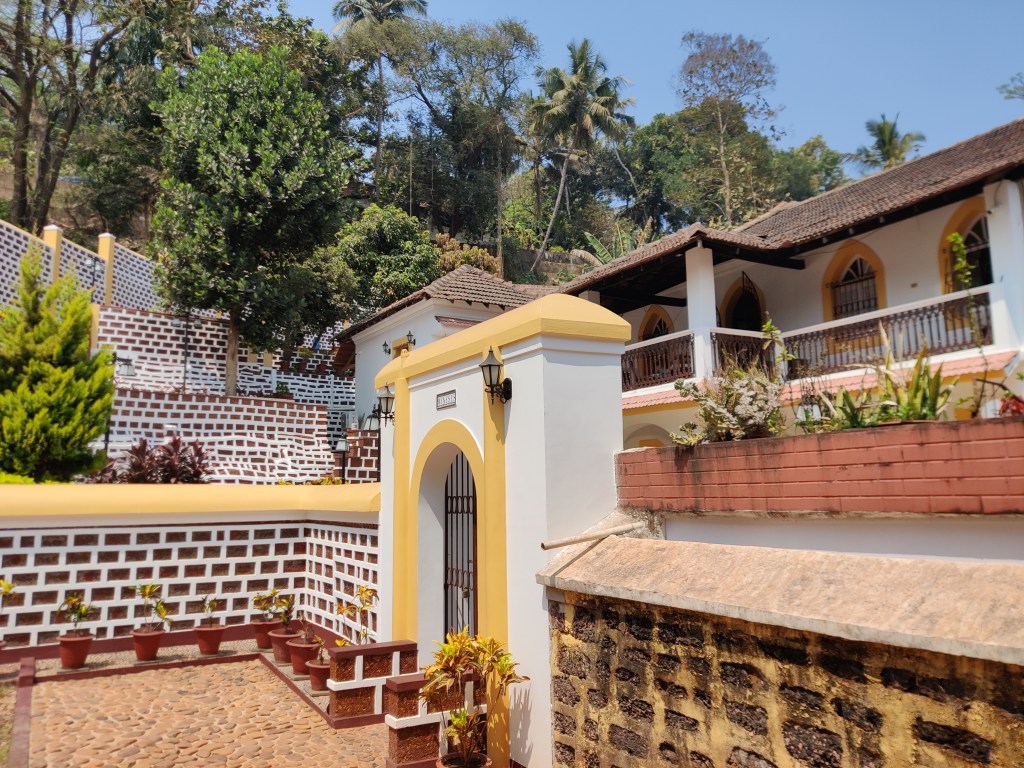
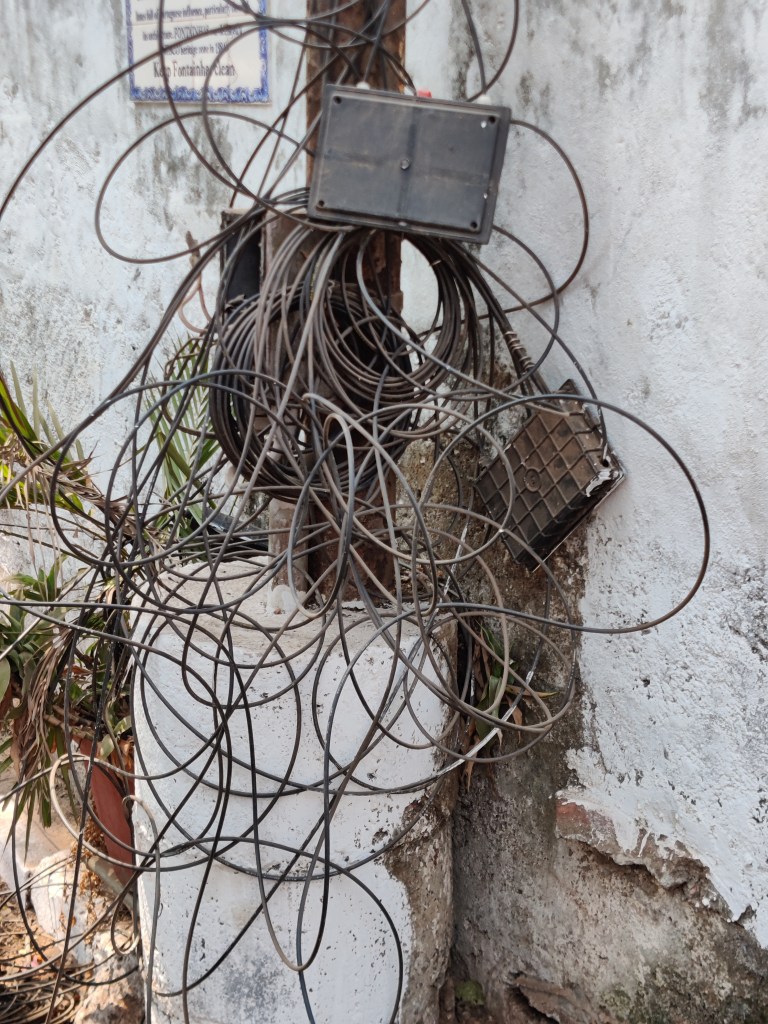
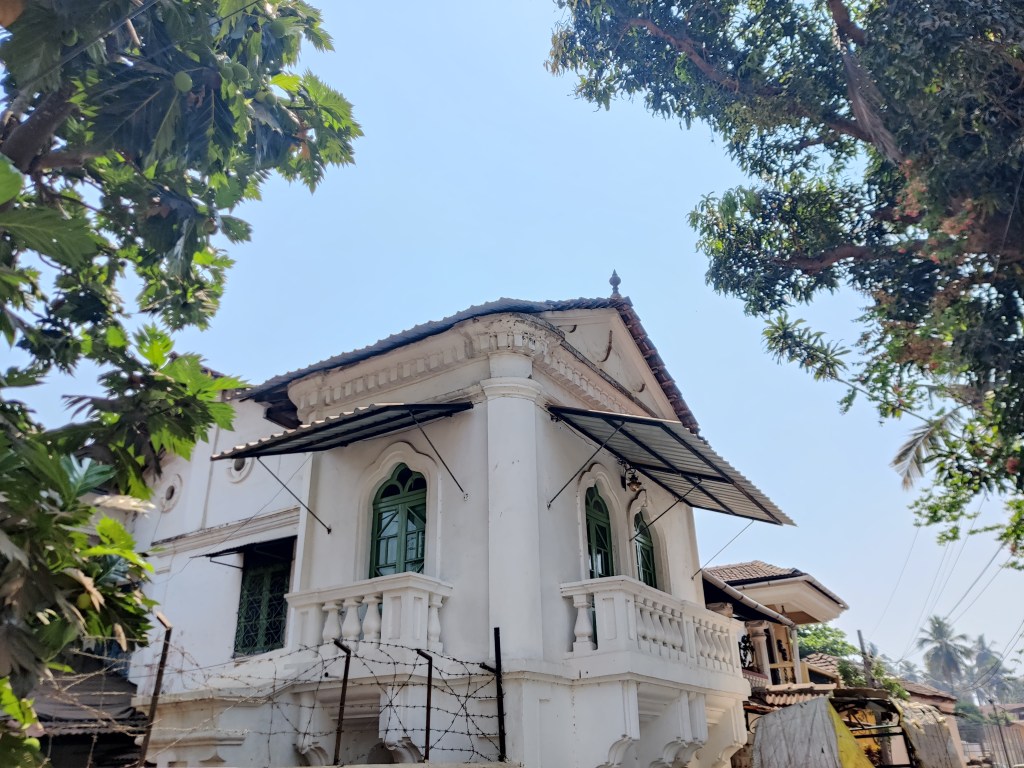

A tiny village square holds a well, a grotto to Our Lady and the grand tradition of New Year festivities where one family takes a turn each year. With fifty families, that’s only once in your lifetime you will get to play host so each family is extravagant as hosts. There is even place for a lice brass band that accompanies the dancing.

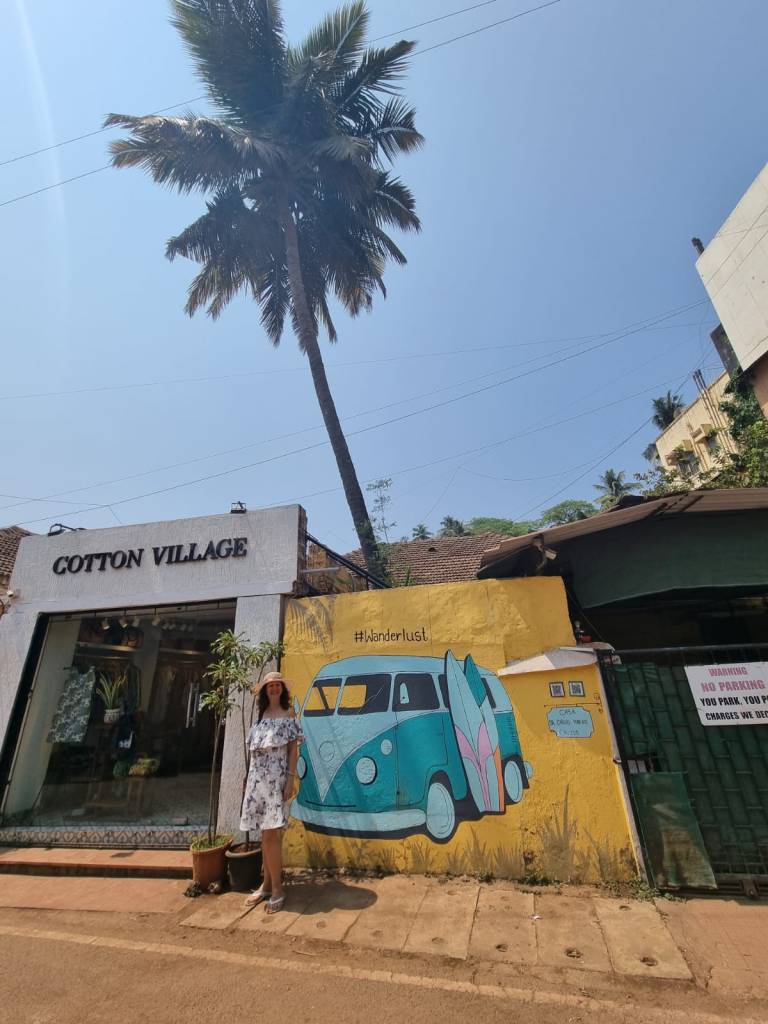
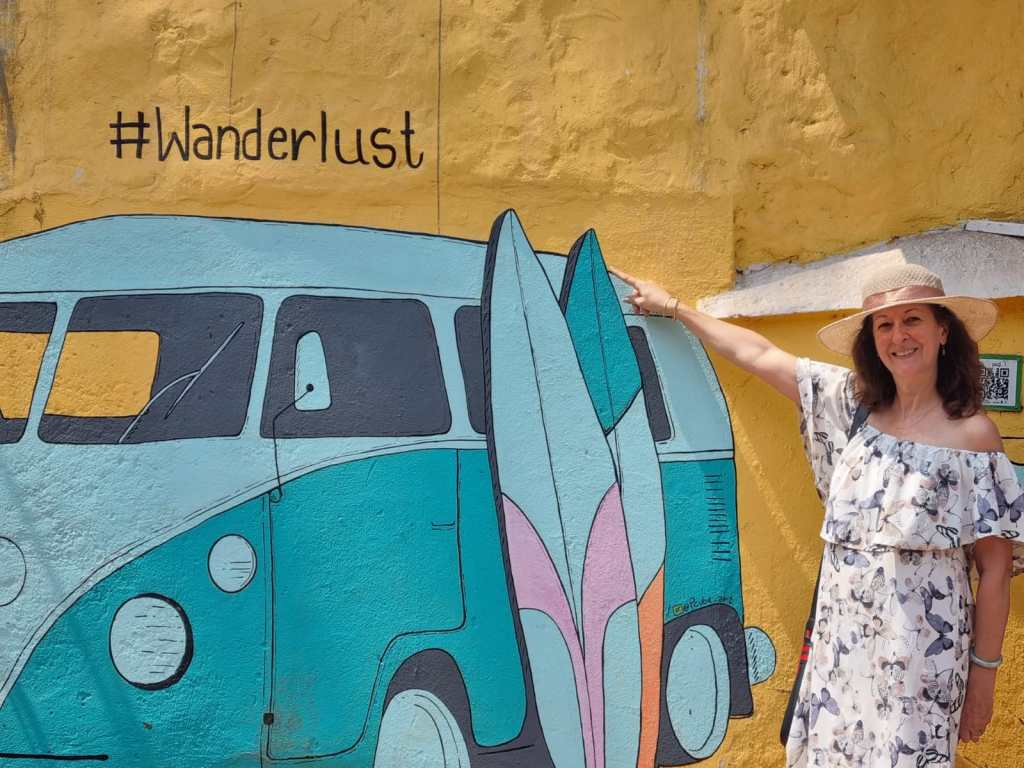


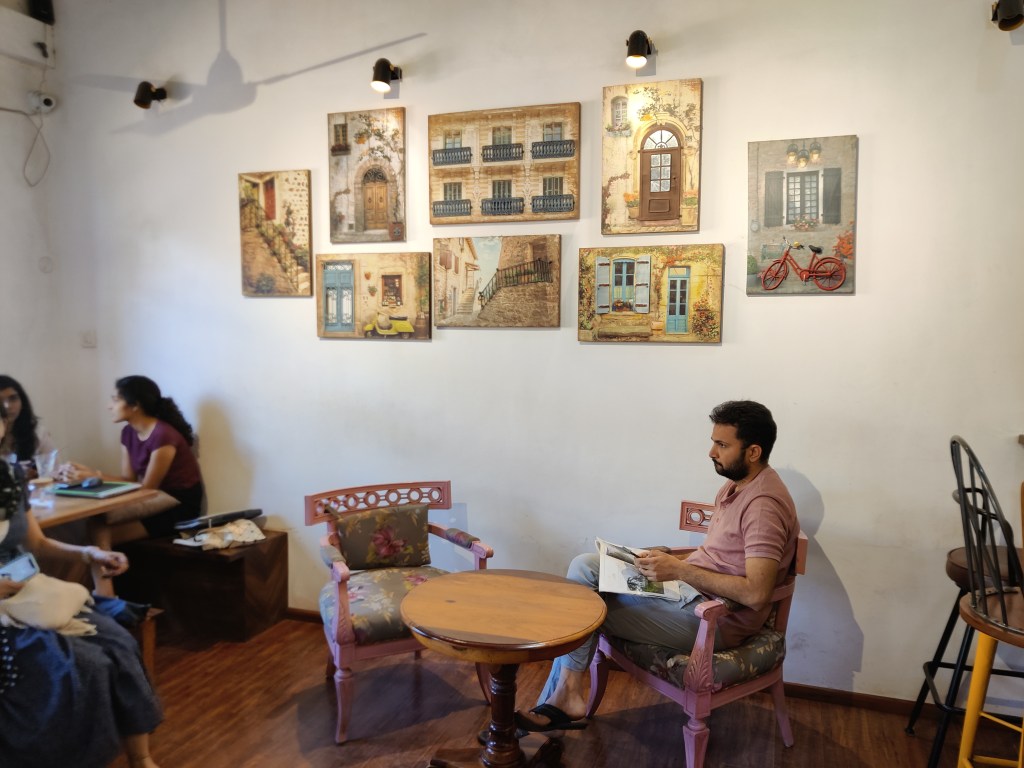

We ended the walk at a guest house with refreshing kokum sherbet and a surprise. we were serenaded by a lovely old Gentleman and his guitar. Outside the sun blazed on the streets as we sang and clapped to Mario’s music and joie de vivre, as we glimpsed the Goan way of sausegado.
Thank you Alekhya for sharing some of your lovely photos here.
 Thewanderingindiangourmet