February, 2023
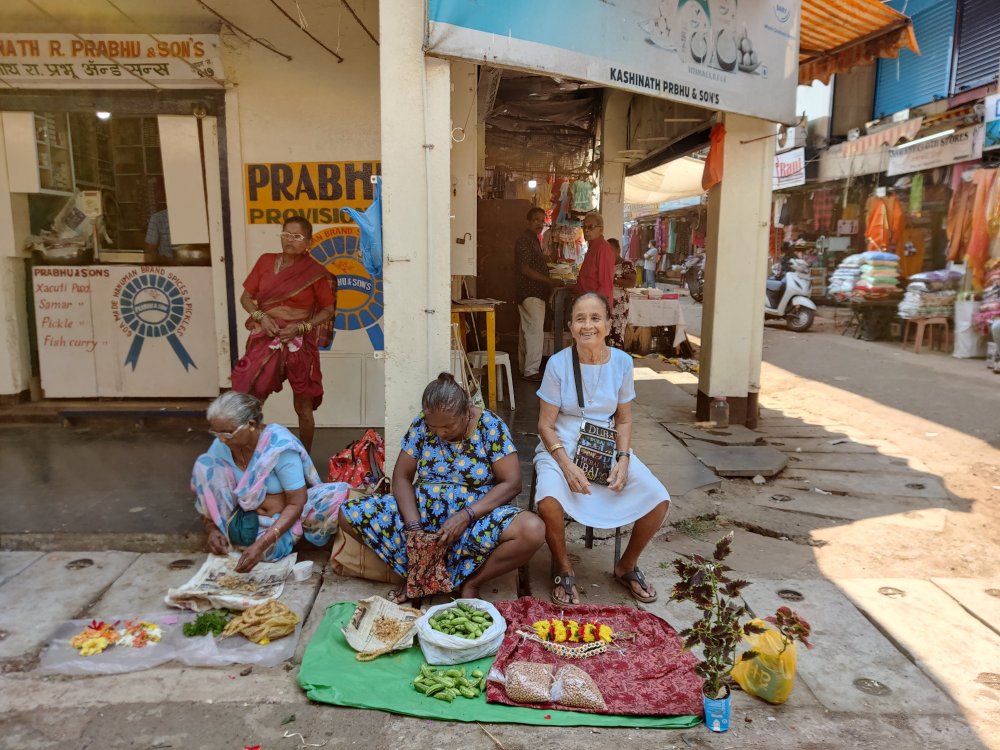
There is no place in the world like Goa’s Mapusa Market. This modern version of the traditional bazaar was built in 1960. Large and spread out, it has quaint old brick and mortar shops, lanes of stalls, large warehouses, and rows of vendors squatting on the street with their wares.
I had the privilege of visiting this furiously local bazar all through my years living, growing up, and then holidaying in Calangute, a beach village nearby.
Those were beautiful days. Mapusa market has always been special and local and vivid in all my memories.
From souvenirs for friends, to gooey rum balls at PVV (long shut down) and two-rupee ice creams at Hanuman Soda, Fridays were always filled with excitement when we were going to the Market. I remember buying this beautiful material from Dekne’s dress materials to stitch my 12th birthday dress from a local tailor. I was so thrilled with myself!
My earliest memory of Mapusa market is chicks. Pretty little chicks, yellow and fluffy. Lots of them, cheeping. circa 1976.
My most vivid memories are of these family excursions, every Friday without fail throughout my childhood. My brother and I were marched around in sandals and sun hats as my mother and her mother would peruse traditional Goan delicacies on display — spices, beans, pickles, groceries, sweetmeats, cane and coconut artefacts, indigenous vegetables and wild fruit, from moira bananas to bimblis and red spinach. And much, much more. Once they had shopped, we were treated to gadbad and juice at the little Hanuman Soda shop.
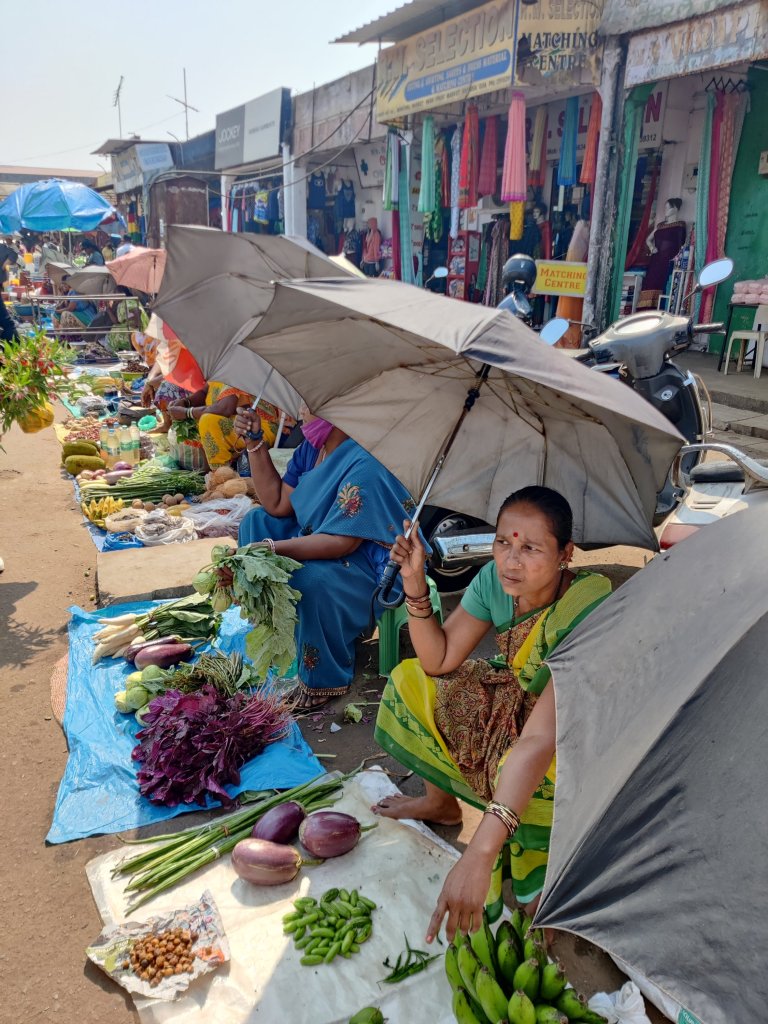

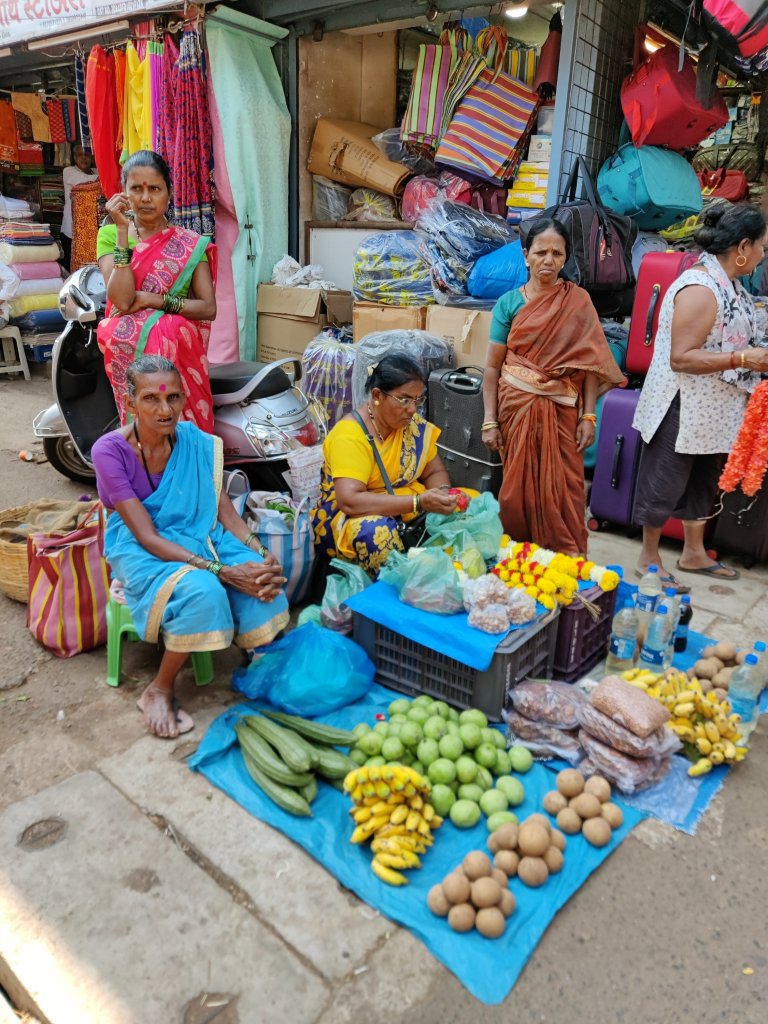
We would enter the main square with its huge statue of a woman with her water pot and a deer. To this day I fail to see the connection. If memory serves right, there used to be a buxom fisherwoman with a pot. All around the central monument of this ghastly statue sat Goan ladies in their traditional best. The Catholic ladies wore European dresses and skirts, sitting under the shade of black umbrellas. The Hindu women wore saris, and flowers in their lustrous, oiled hair. The fisherfolk wore their version of a blouse and skirt in matching, brightly patterned cotton, ribbons in their plaited hair. The ladies were warm and welcoming, loud and boisterous in coaxing you to cane baskets of fish, or organic fruits and berries from their trees at home.
It truly is a local market day for farmers and aunties who grow things. Such joy to buy what someone has grown lovingly in their home and offers it to us with such dignity and grace.
That hasn’t changed much.
On a recent visit to Goa I made sure i went to Mapusa market on a Friday. It was as bustling and exciting as always and the ladies are still there, vying for your attention. Only now there are more lamani ladies pushing for you to come see their phulkari shawls, which you don’t want to buy at all.

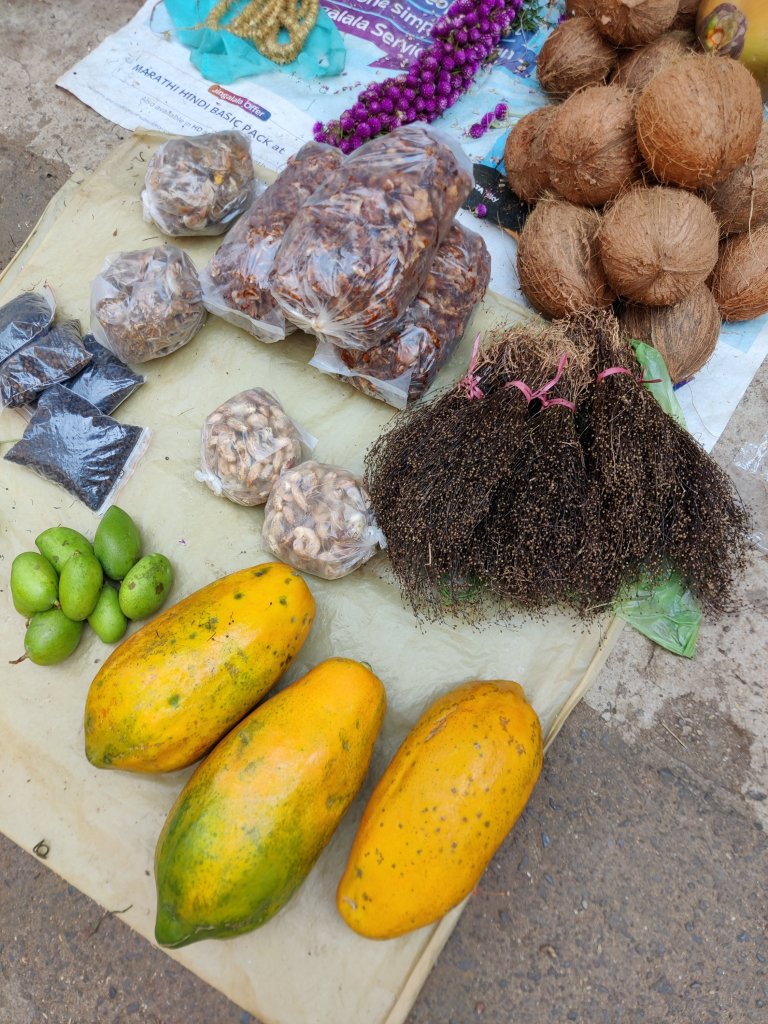
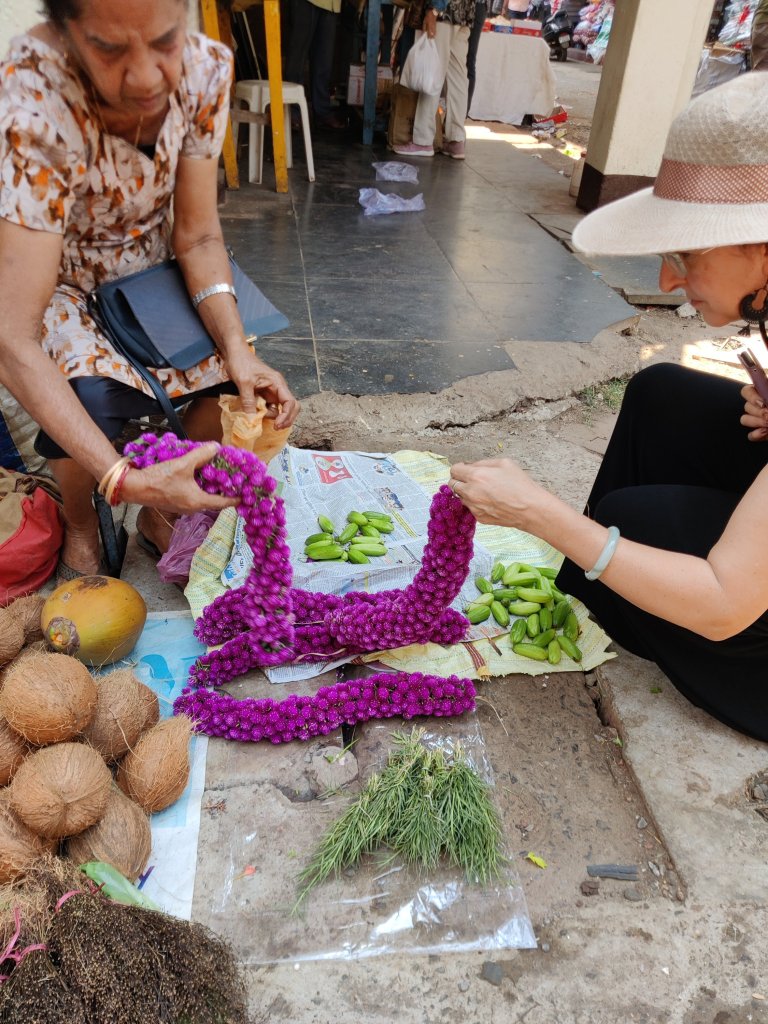

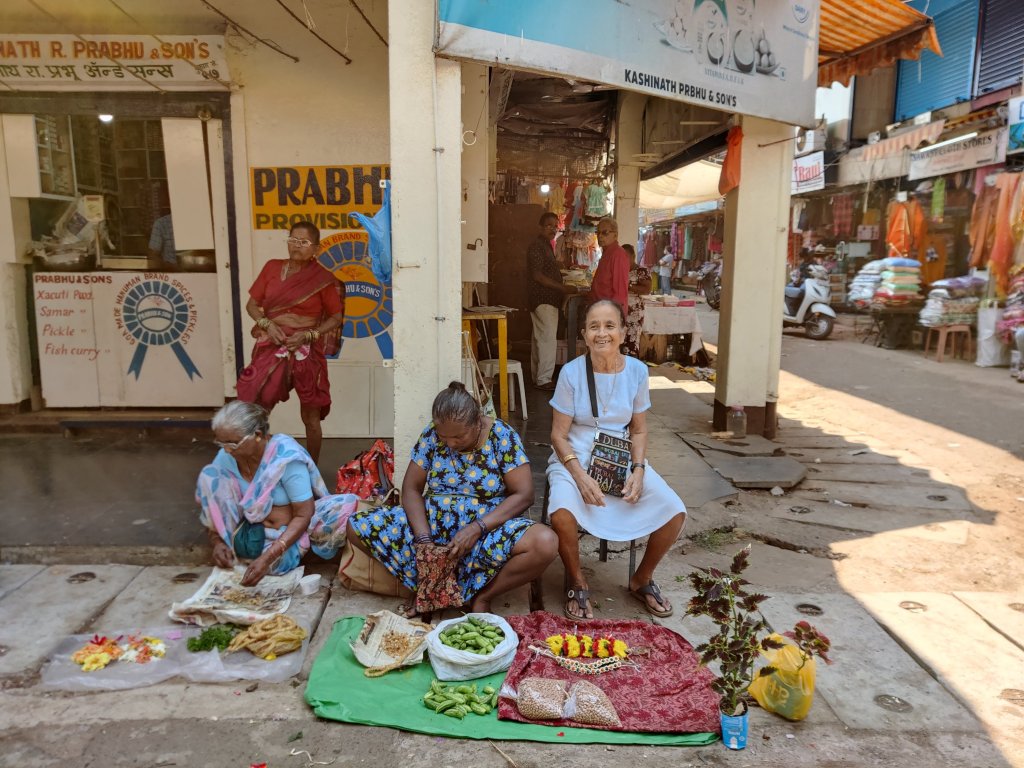
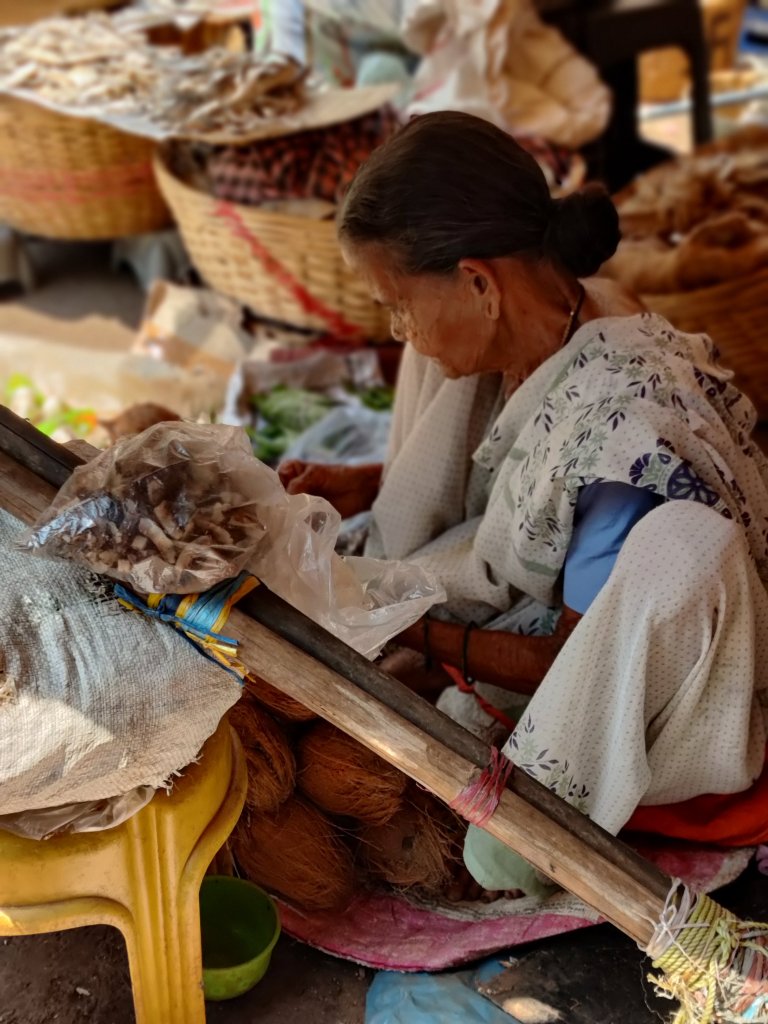
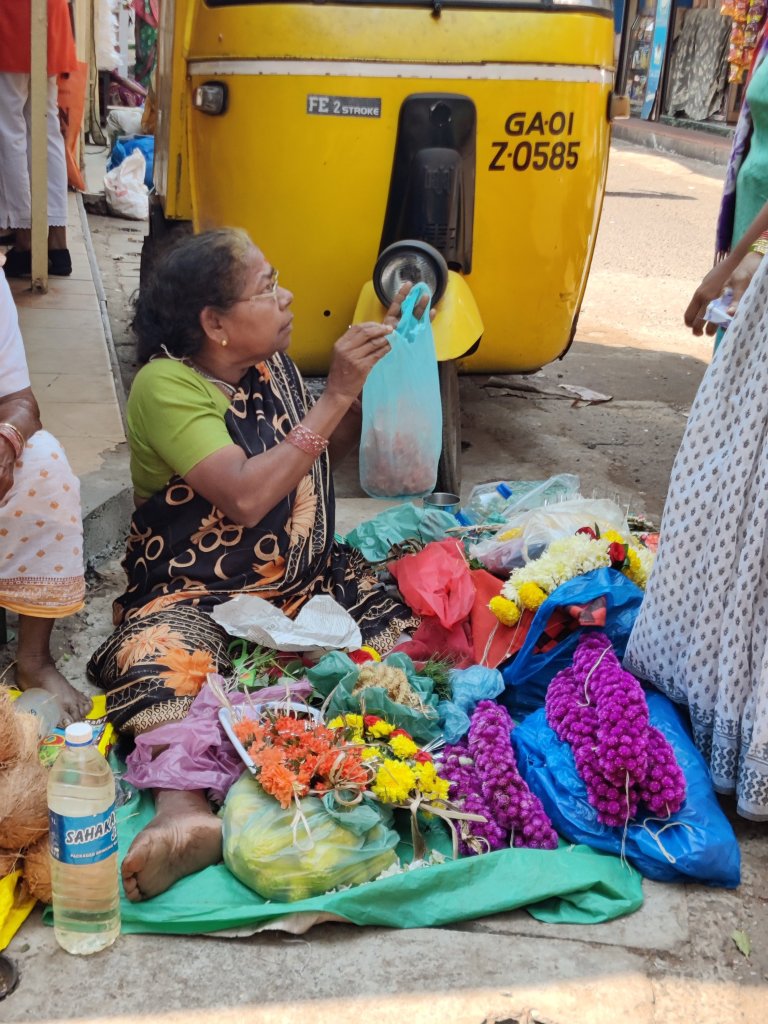
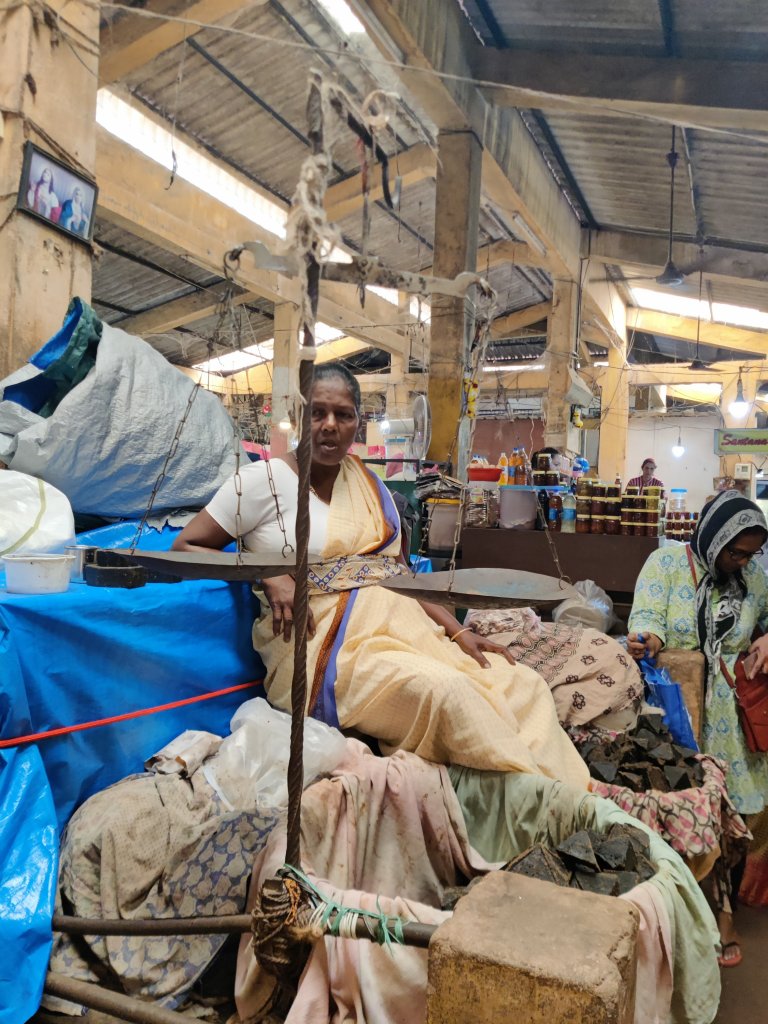
Each lady is a portrait by herself. She comes in all shapes and sizes and ages. And it’s fascinating to see what she has to sell, and how she perches on her haunches, offering you wild flowers plaited into garlands or little bimblis to sour your gravy.
She is delighted when you speak to her in halting konkani and smiles brightly at you. She is flattered I want a photo, and visibly preens for my camera, through her large black spectacles.
It is Friday, she is here only today, dressed in her best with bounty made or grown in her own home, her fields. I once counted over twenty different varieties of bananas and did a photo album on FaceBook about the market, ages ago. Here is the link for my photo essay from 2009
https://www.facebook.com/media/set/?set=a.98786096919&type=3
Many traditional ways of sustainability exist here with the organic fruit and veggies, the free-ranging berries and herbs. There are traditional methods of pickling and preserving fish and vegetables in spicy, vinegary hot pickle, and chain links of home-cured Goan chorice sausages, sour and lacking heat.
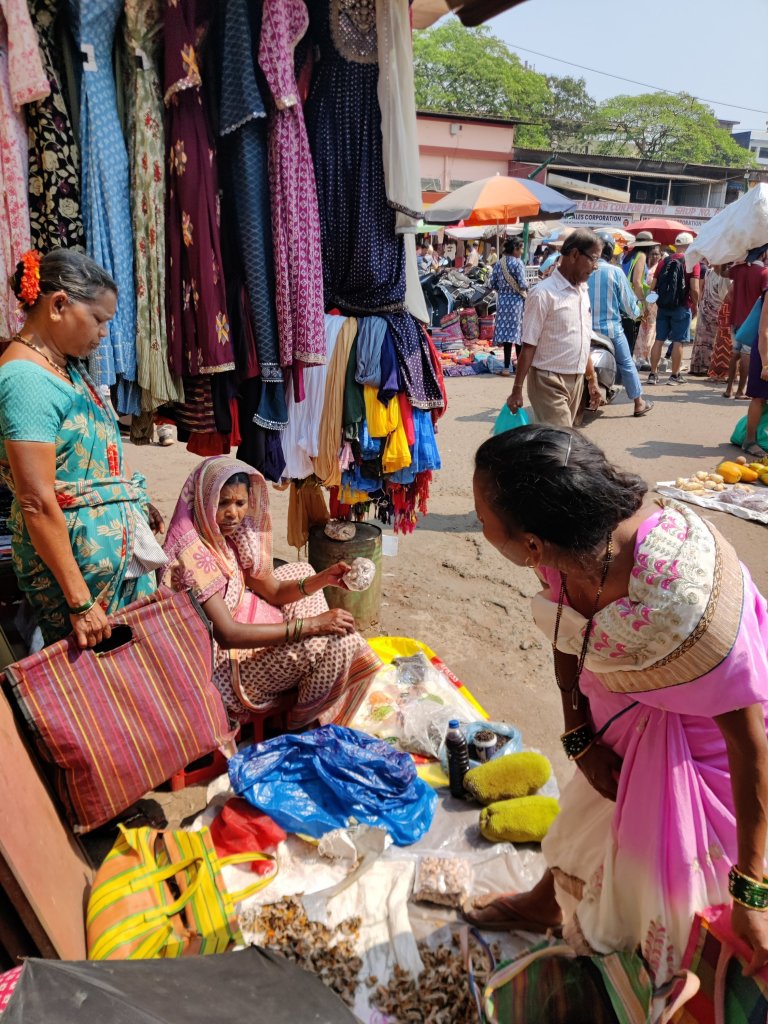

There are grains of short red unpolished rice, measured in the old measure, and not by weight. There are local Portuguese feijoad beans for a pork stew, and lots of dried fish but no gold stadard bacalao, that the Portuguese Goans crave.
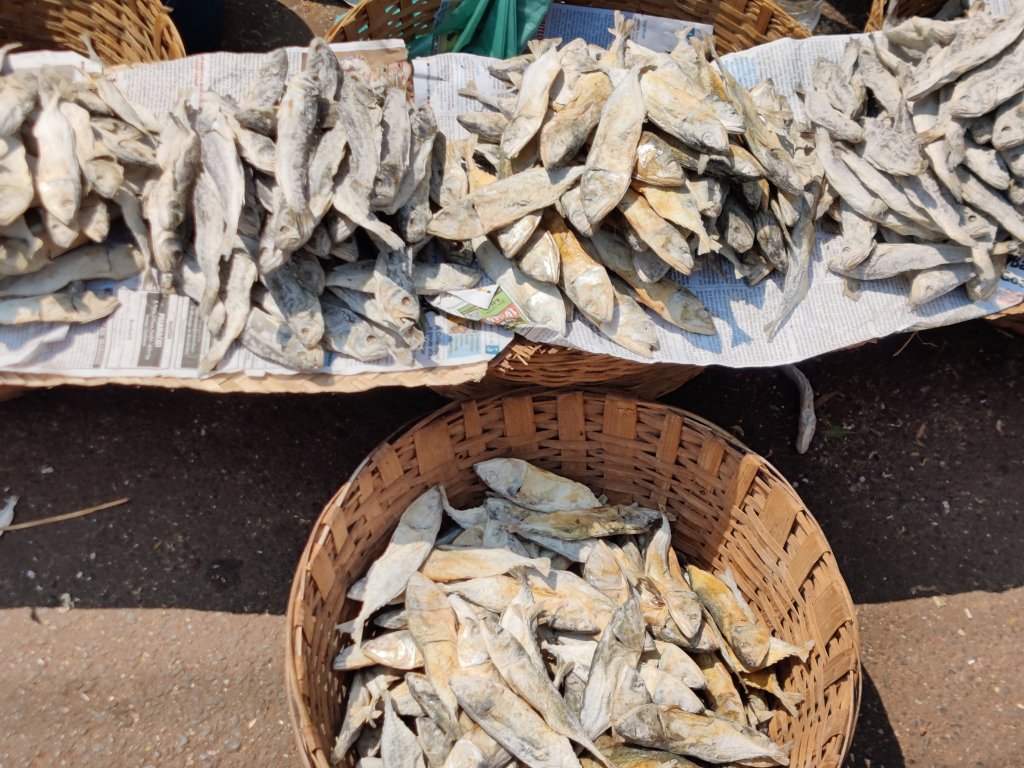
The market smells heavenly. Aromas mingle, spicy and sour and exotic. My stomach rumbles as I gaze at rows of homemade curry powders and tangy pastes. Platters of dried fish glare at me as does the lady selling them. I convince her I cannot possibly carry stinking baby sharks in my suitcase. The silver fish gleam bright in the sun but I am not cajoled into this purchase.


I love the bakery section. Simonia makes the best bebinca and is very famous for their biscuits and sweets. I do fall in love with the goodies from Pascoal, a tiny stall that only accepts cash and runs out of their sweetmeats very soon. There is Doce, Bol, Dodol, coconut cakes to die for that take me back to childhood tea time in Goa, where we snacked on local batika, coconut cake, salty wind blowing on our balcony, as we watched waves break on the beach before us. ( It’s all gone now, Goa has been destroyed and my slice of paradise remains a mere memory). There are many more delicious local sweets all containing a version of palm jaggery, coconut, coconut milk and channa dal / gram. I buy little knobs of jaggery and rice flour sweets, several mini coconut cakes and doce, little diamonds of chickpea flour and coconut.
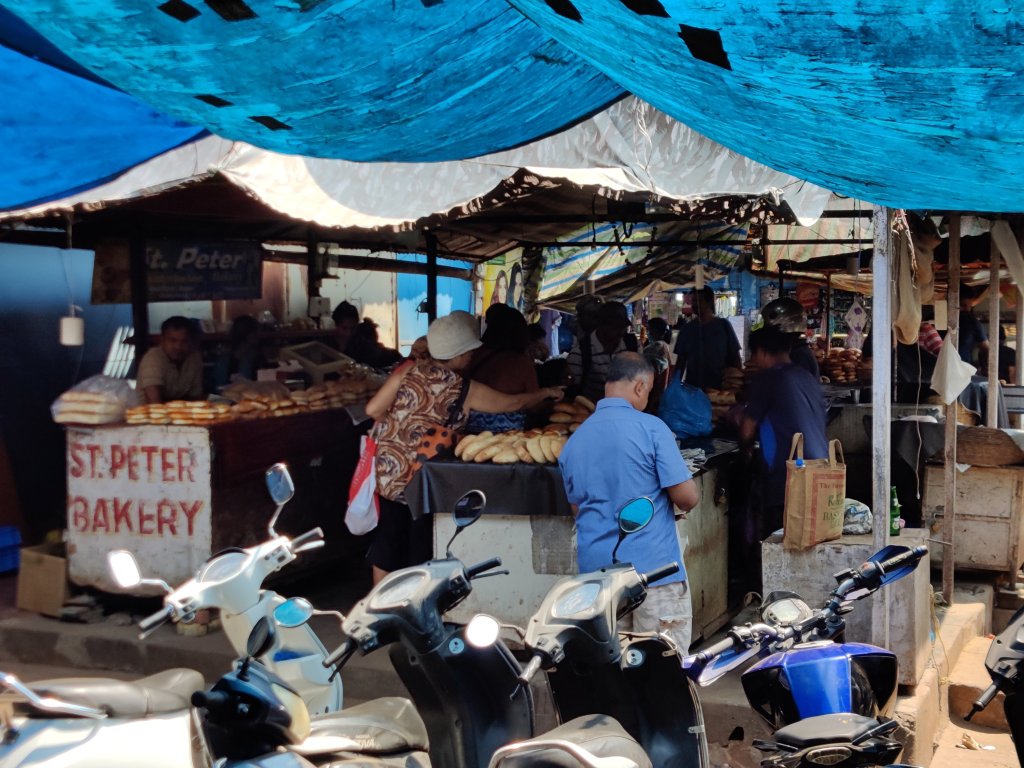
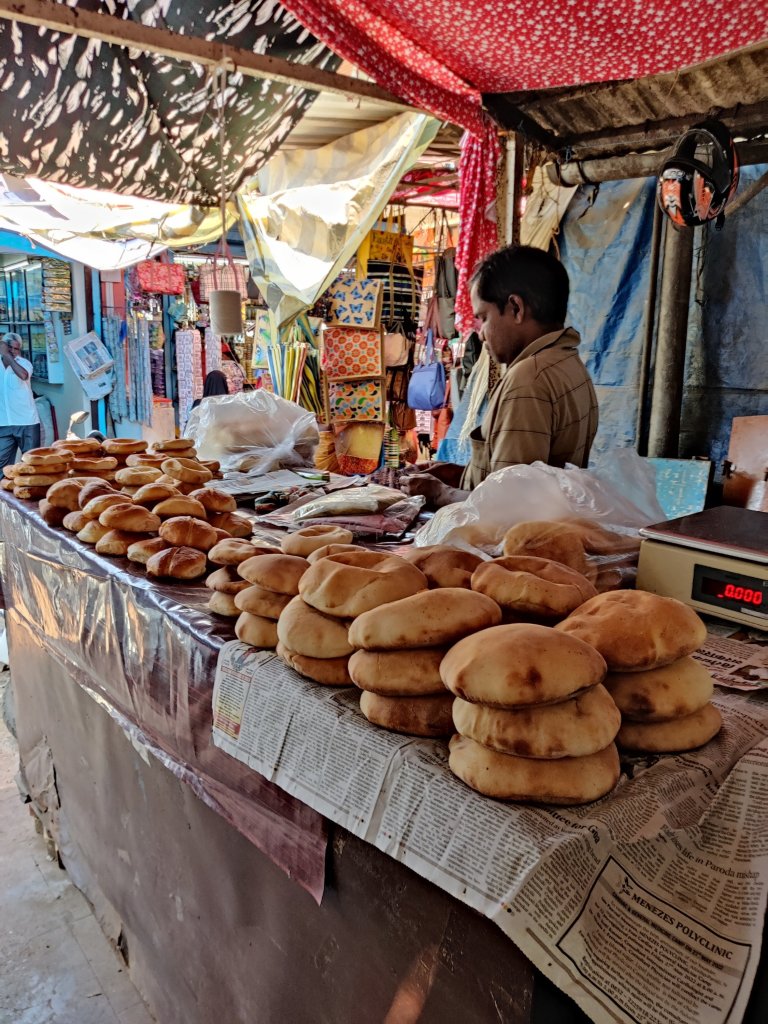


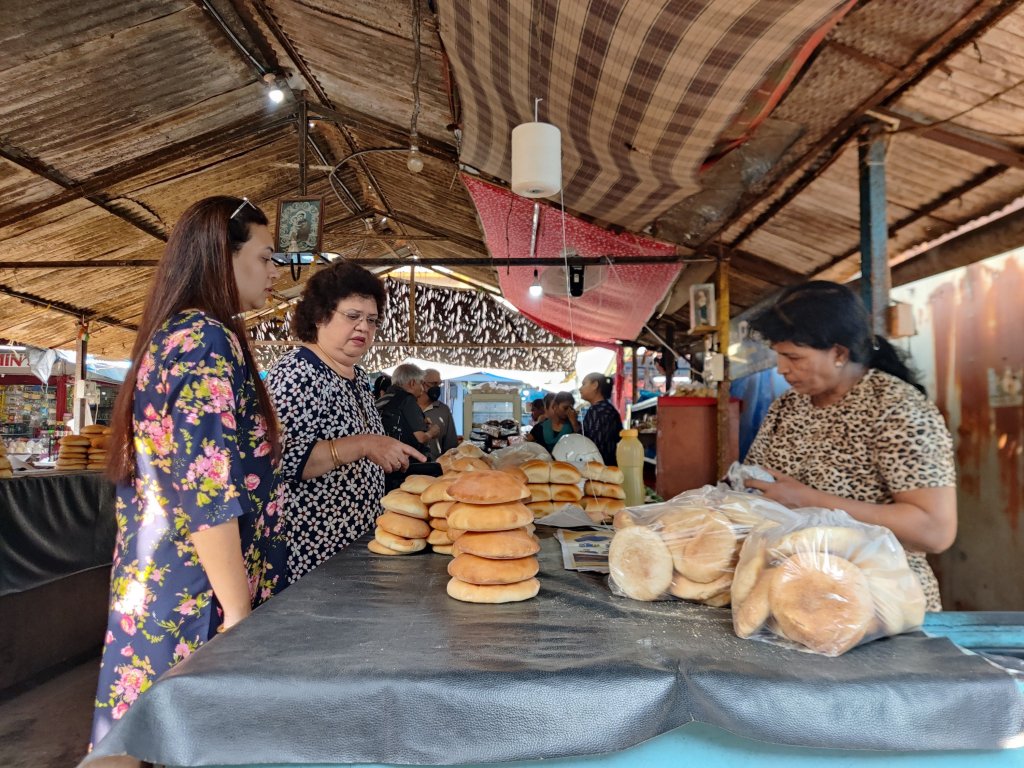
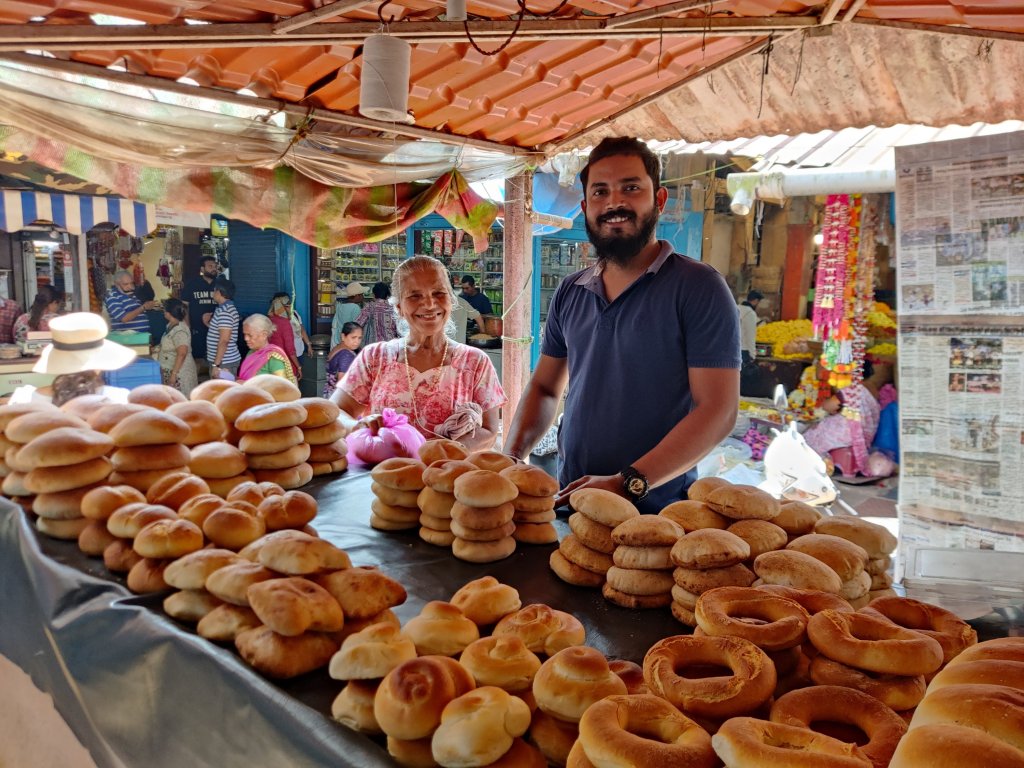
I am drawn to St. Peter’s Bakery where mounds of freshly baked local bread lies heaped on large tables. Goan nibbles like fresh sannas (yeasted rice cakes) and snacks are available too. The breads are of many varieties, in texture, chewiness and shape. There are crusty baguette style boules, chewy local poee to dip into your vindaloo or enjoy with butter and marmalade, bread rolls and loaves. I would shop in this magical market every day if I lived in Goa.
As I wander deeper into the labyrinth and try to escape the harsh sun outside, I dream of cooking holidays where I come here each day and shop the freshest, finest produce and go home to make large, passionate meals a la the Barefoot Contessa. I am tempted to visit the wondrous fish market nearby and gaze lovingly at lobsters and prawns, snapper and clams. I remember many feasts I cooked decades ago, after shopping here, a singular sea food feast never to be forgotten, in my old home before we had to leave it. Ah, memories!
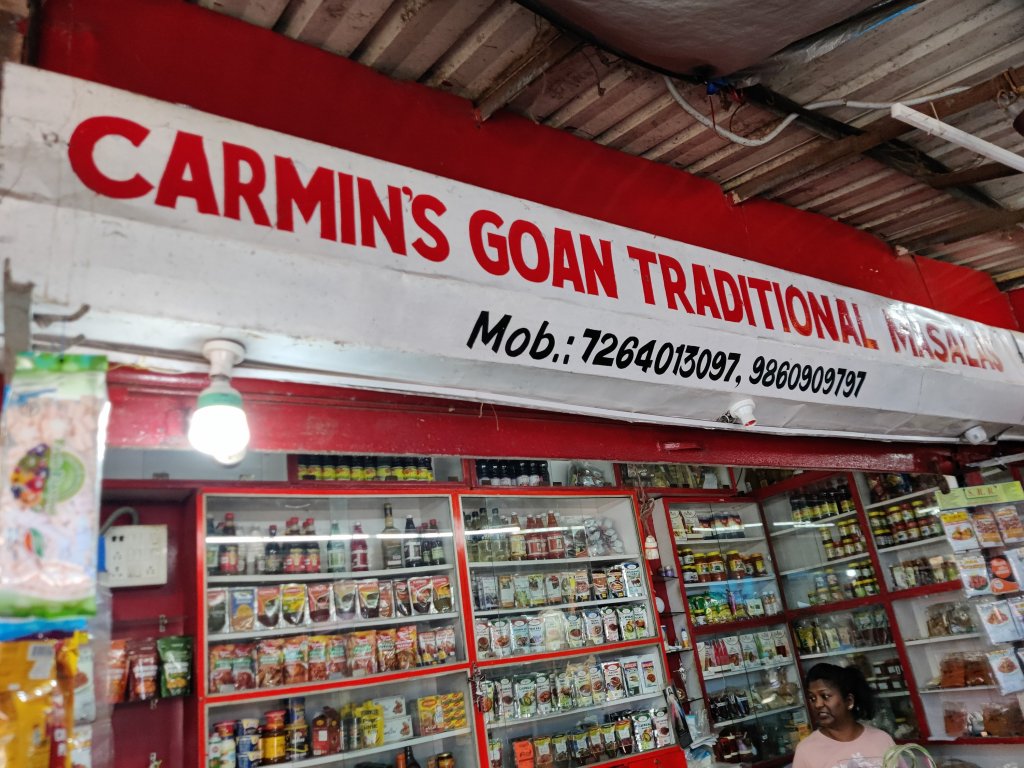

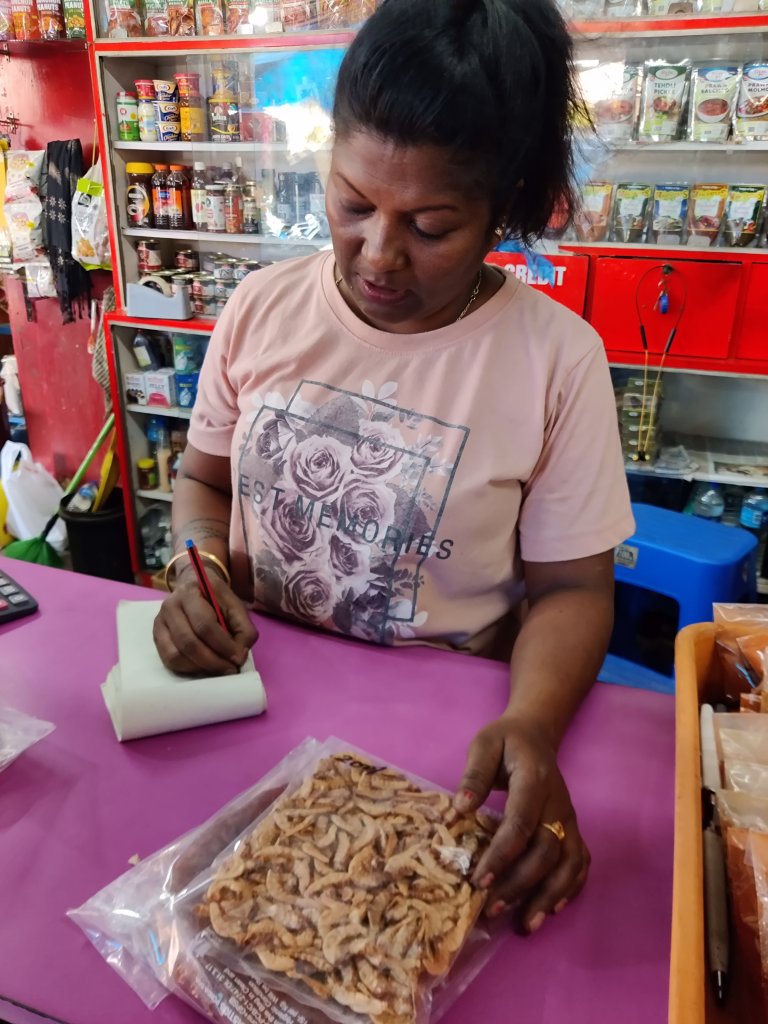
The market continues to entice and I stop at Carmin’s grocery where she sells fantastic local, homemade goan sausages, or chorice. I buy cashews and some spices, coconut oil and vinegar.
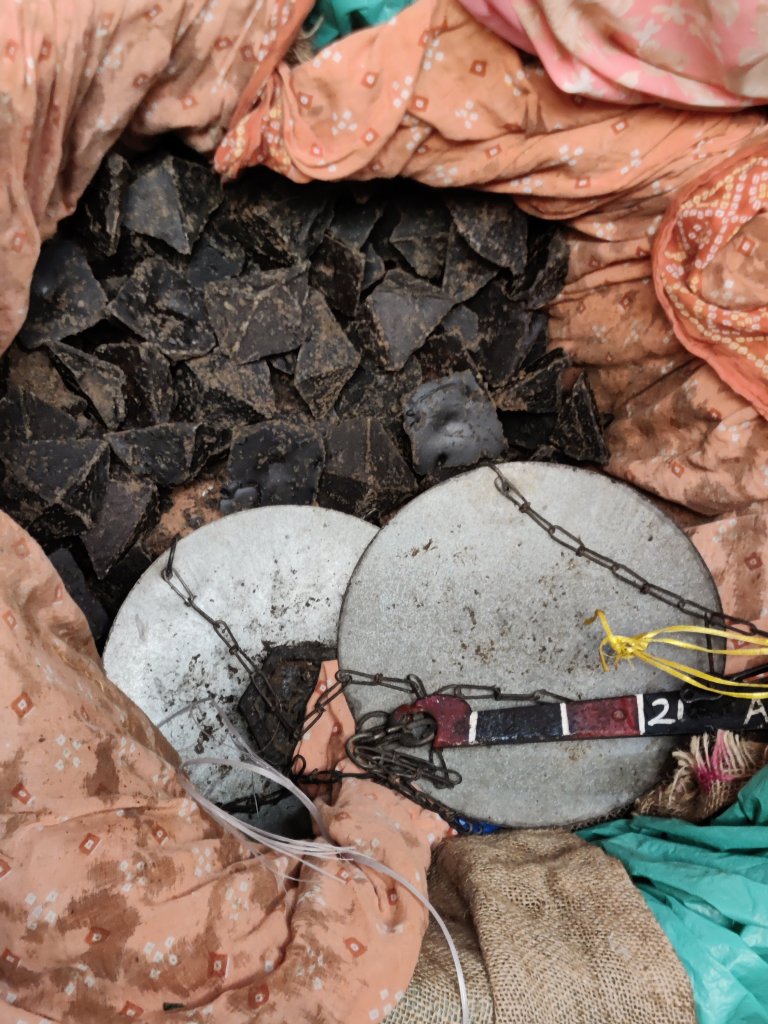
I go further inside to buy kokum butter, homemade, and delicious dark black palm jaggery that tints the curries and sweets I love to cook. the jaggery comes in little diamonds, and smells divine. My friend Dani is thrilled and manages to finish her bag of jaggery in a week!
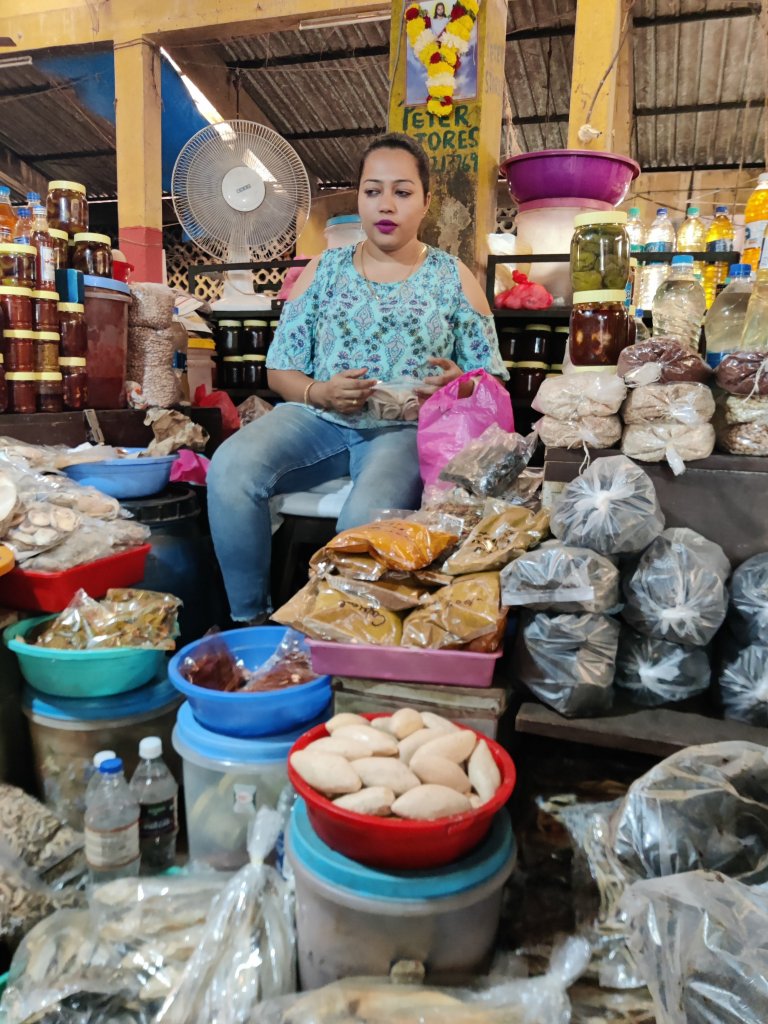


Then it’s time for the cool interiors of the flower market. Goan women love their flowers and floral prints. I love that they love flowers too!

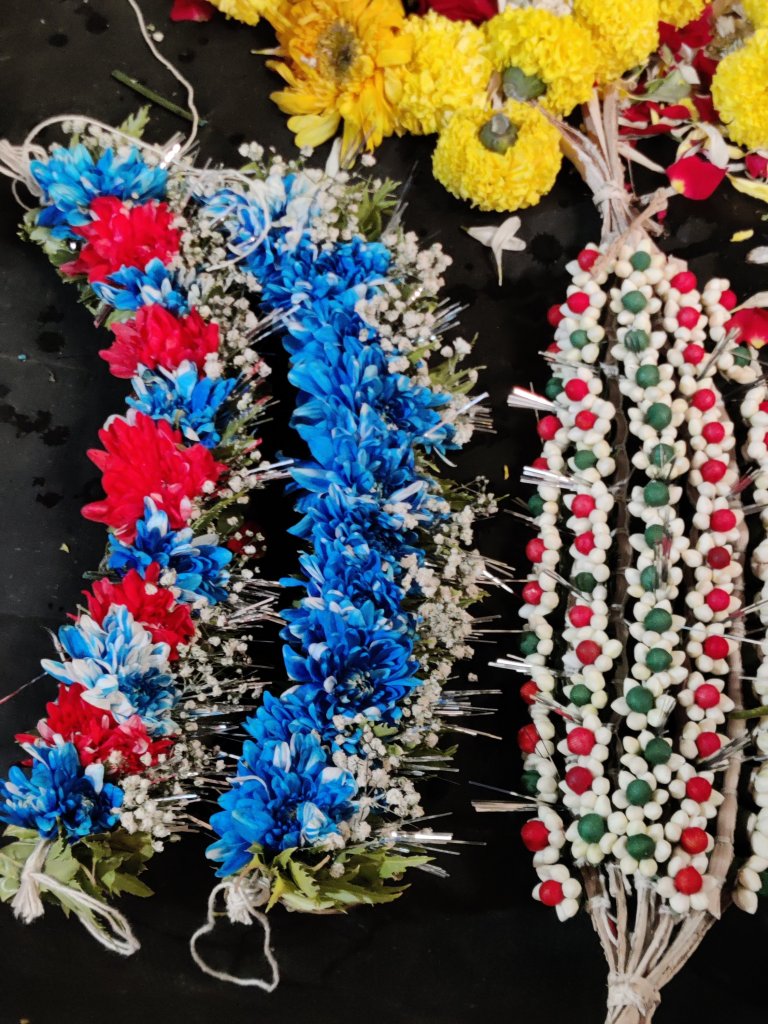

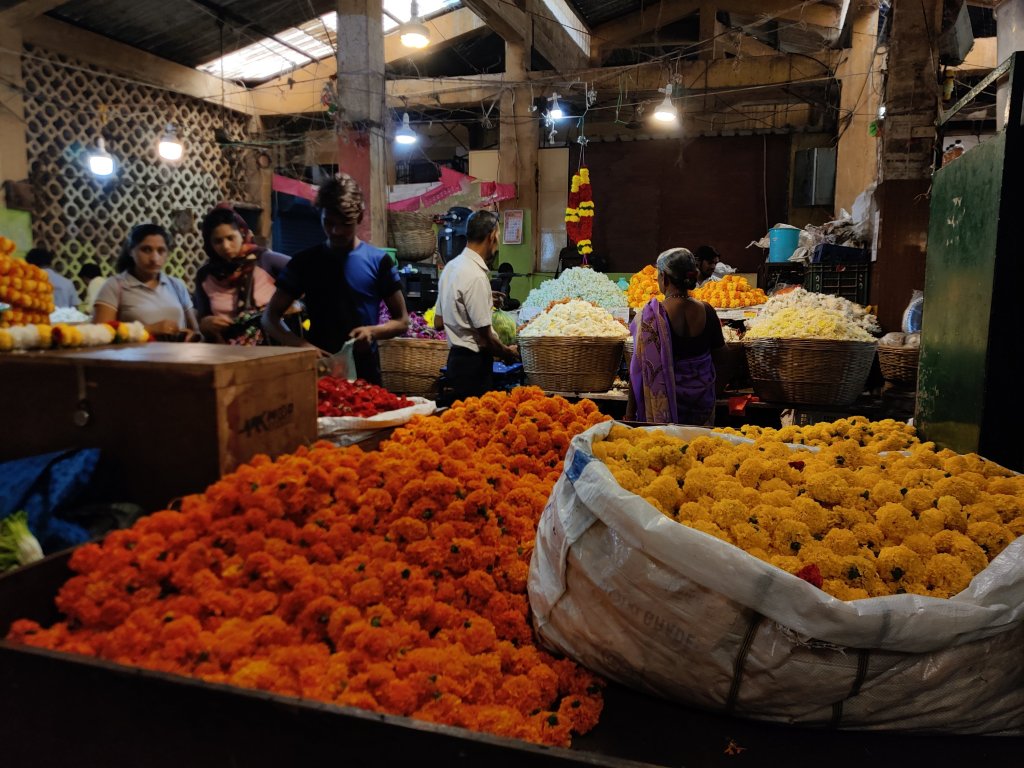
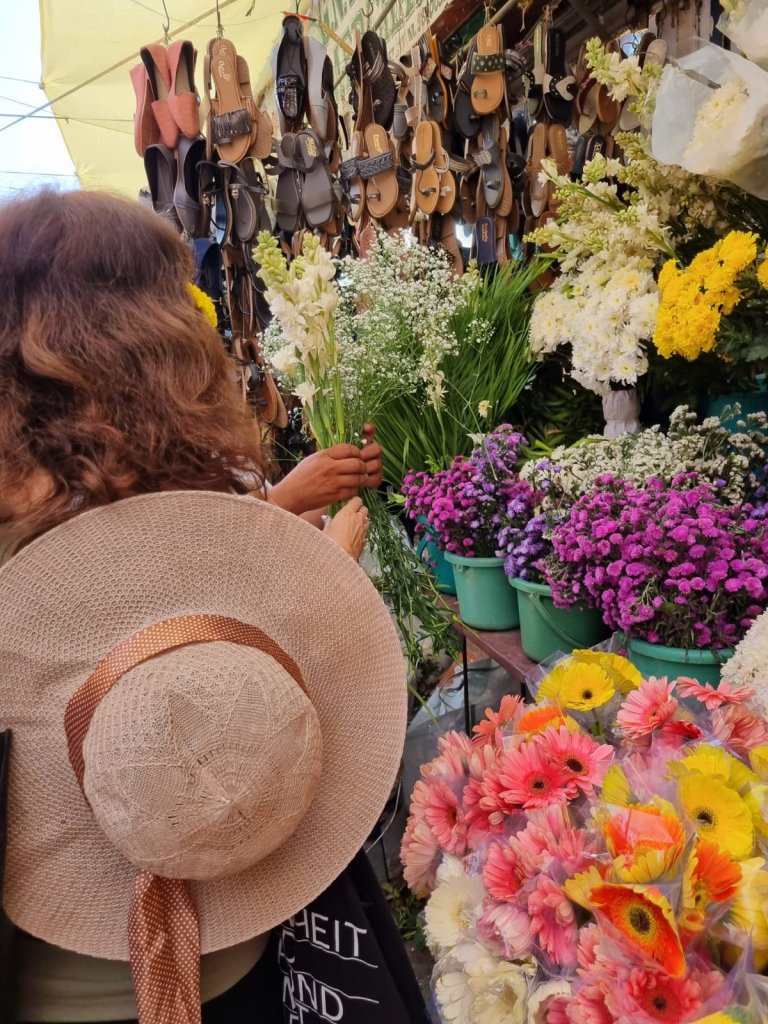
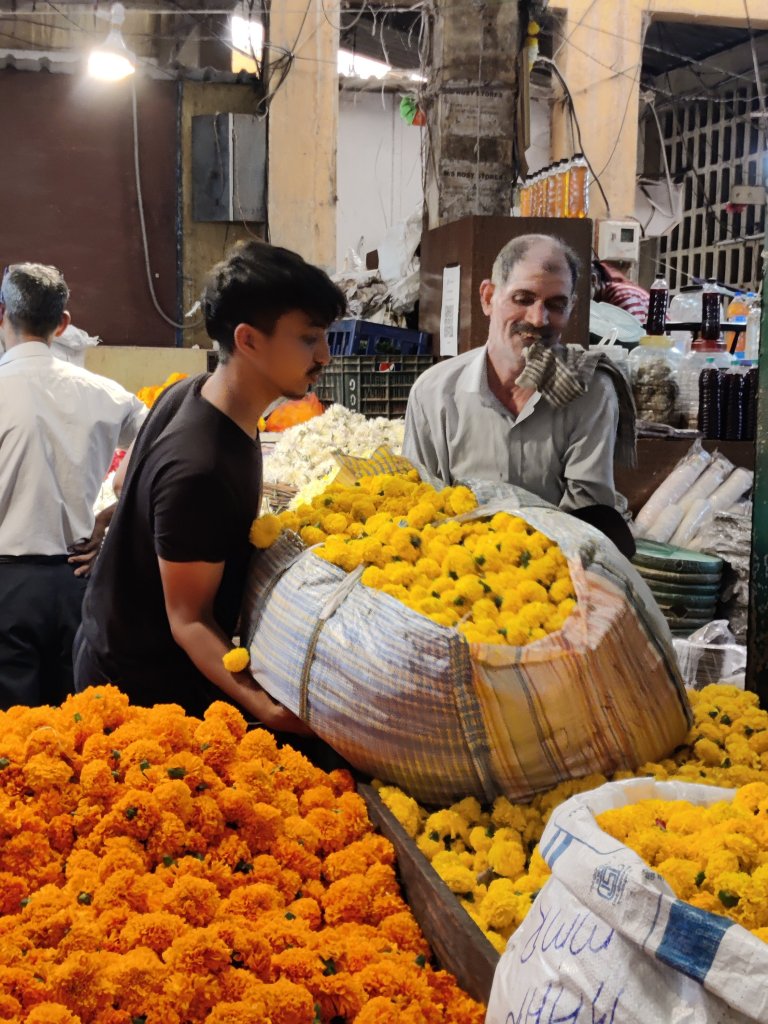


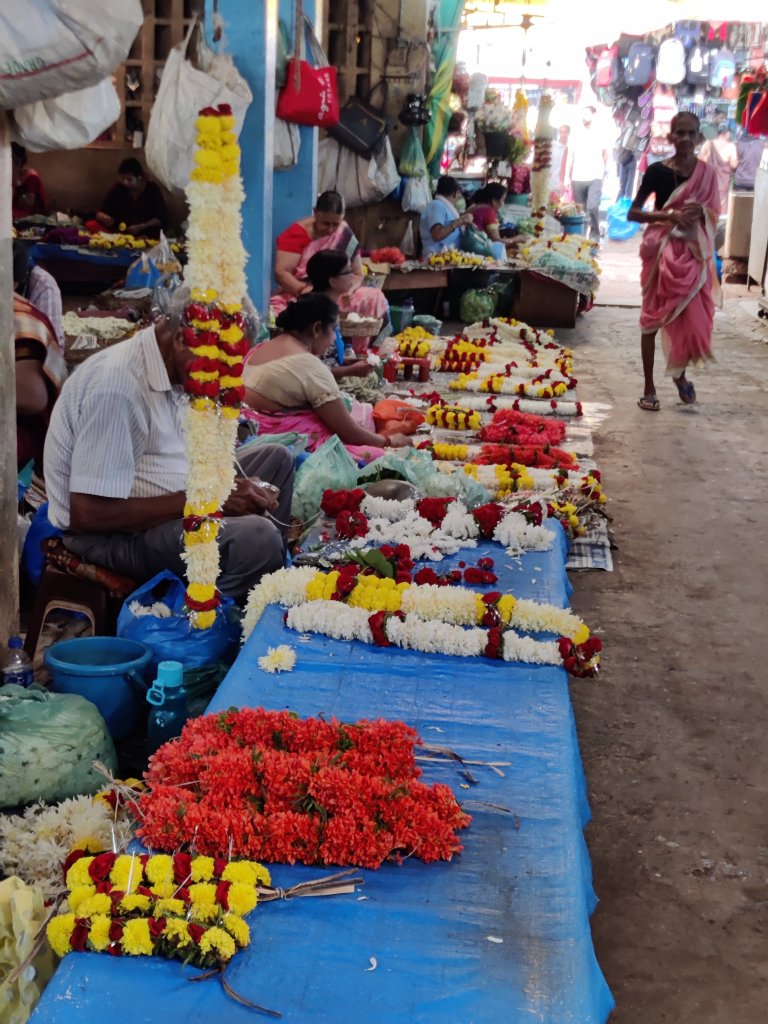
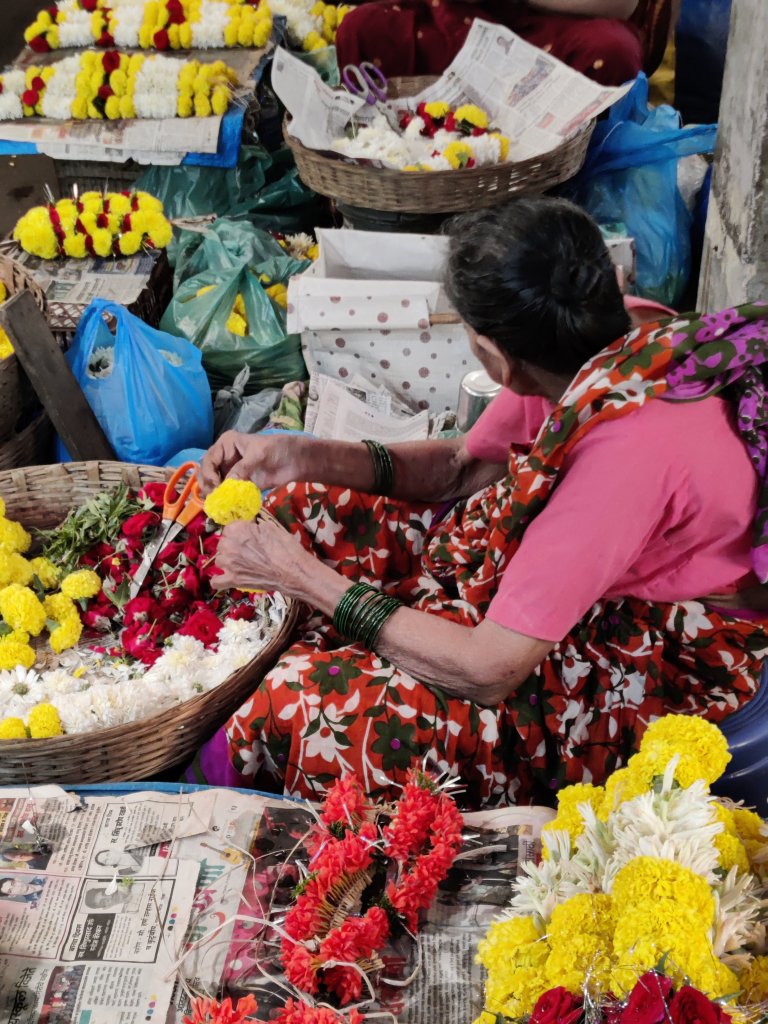
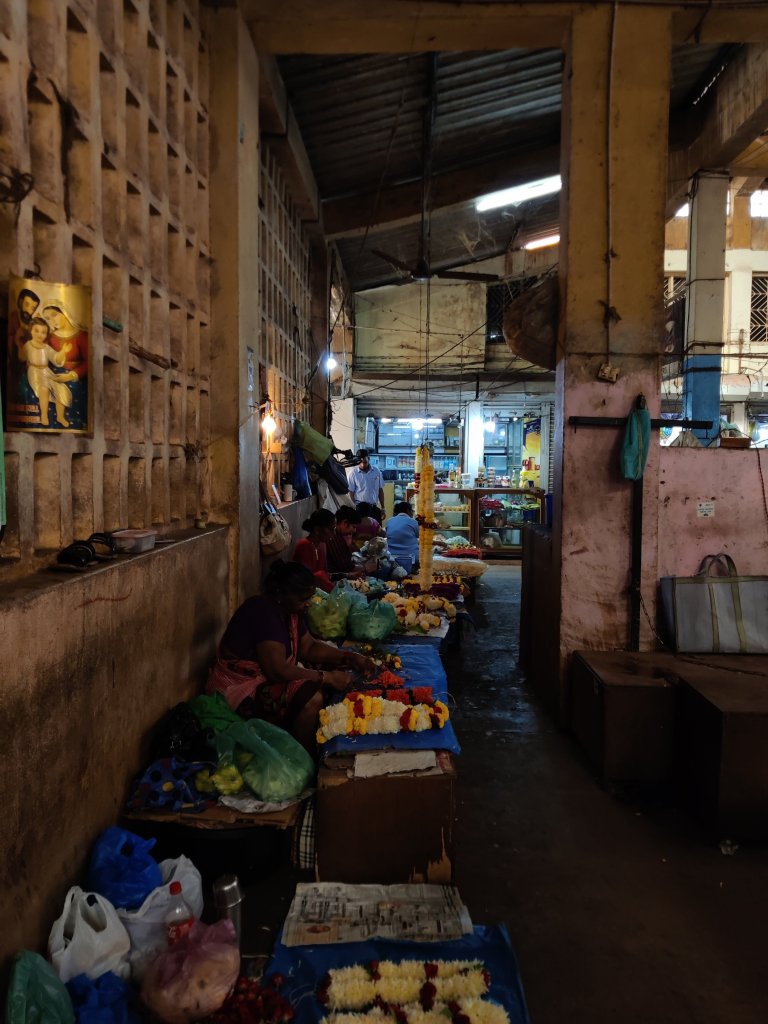

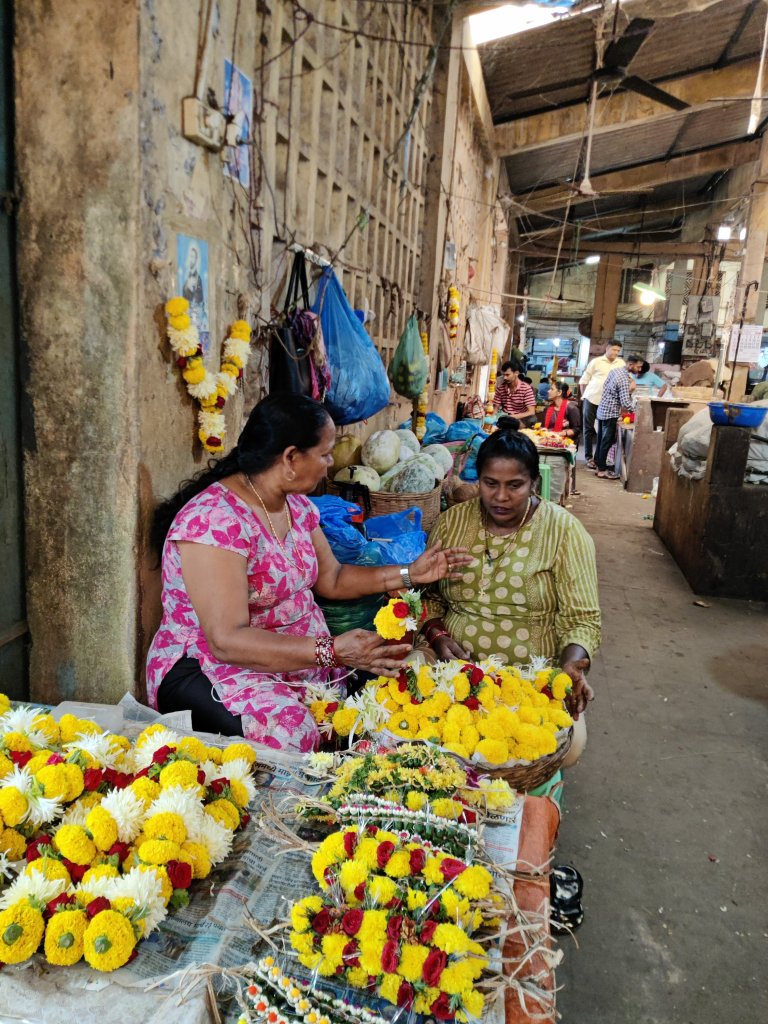
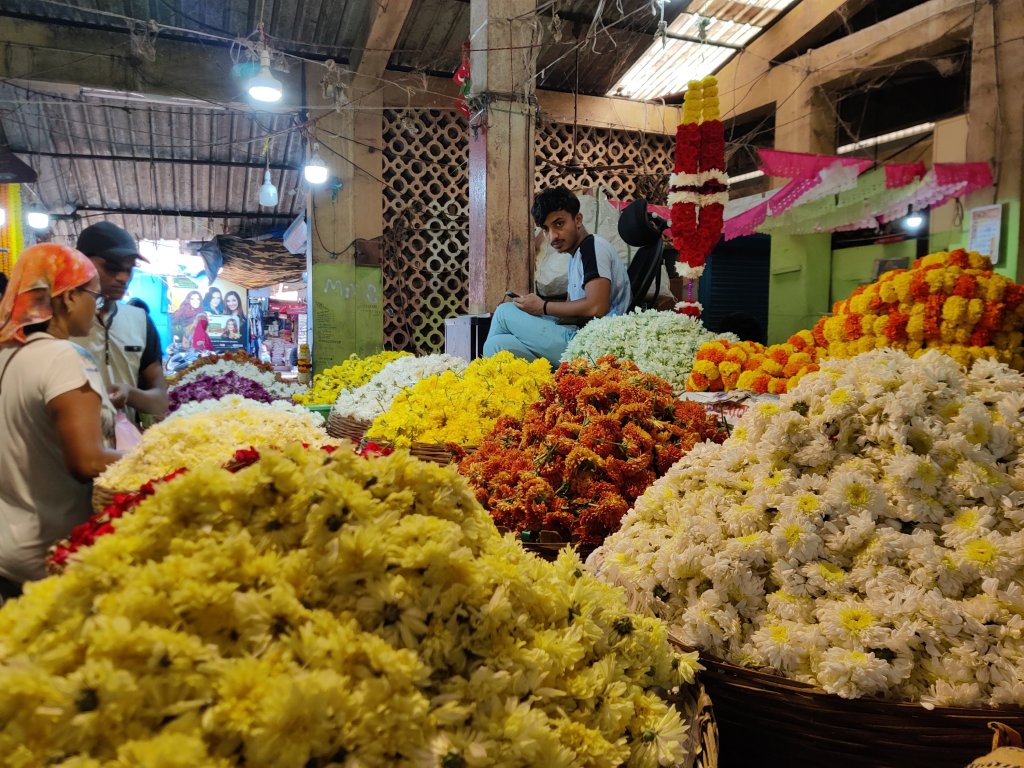
There are stalls selling the latest horticulture flora, bright gerberas, delicate carnations, loud lilliums and fat, fragrant tube roses. But I am enchanted by the local flowers, woven into intricate garlands for deities and venis for the hair, spangled with metallic thread by ladies who sit threading flowers on vicious looking long needles, surrounded by huge baskets of marigolds and asters, bring carmine roses, creamy white and fresh green tube roses, burnt orange and sunshine yellow marigolds, white pompoms of asters and green foliage to weave into little works of fragrant art.
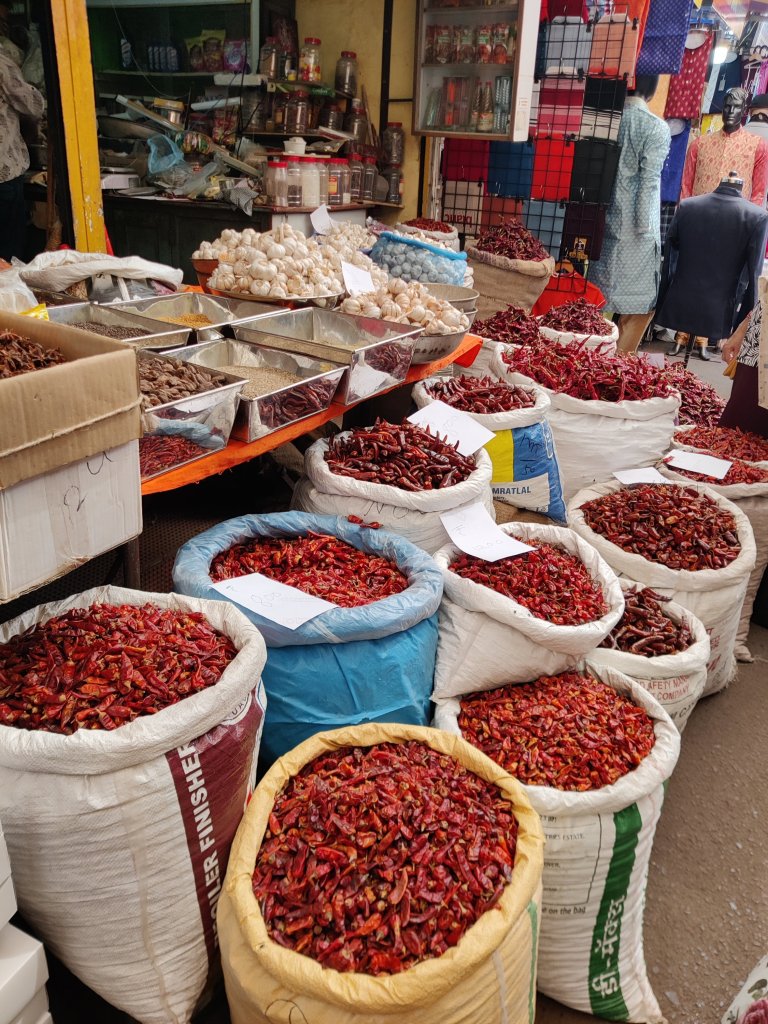

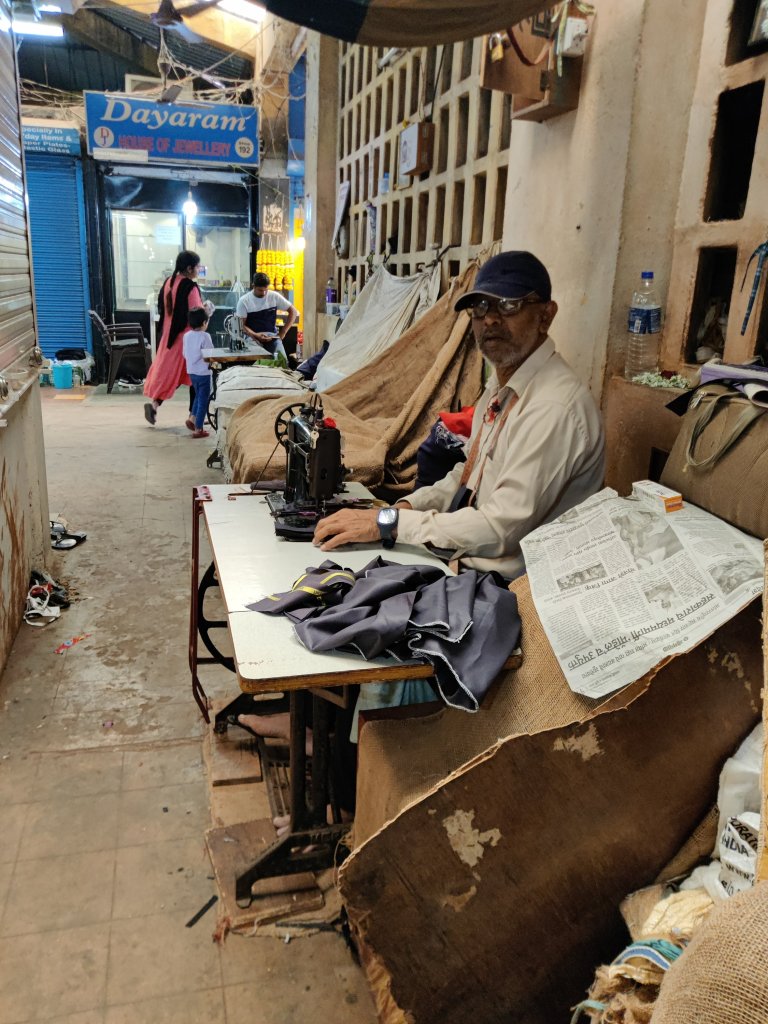
There is an avenue of tailors, in line, buzzing away on sewing machines. Rows of alcohol shops offering liqueurs of all sorts and bottles of choice booze call out to me. I am not swayed. I am saving space for the current rage of Indian craft gins widely available here. Cashews of all flavours and sizes are available to buy. Remember, shape and size do matter, whole large cashews cost a lot more than smaller, broken pieces. I give in, buying some roasted, salted nuts eschewing the chilli and pepper flavours.
I buy homemade xacuti masala from the large grocers off the main square. And I buy local feijoad pink kidney beans from an old lady who still uses the old wooden measuring cup to weigh out my beans. My mother will be happy making this old slow cooked stew with bits of pork, beans and onion.
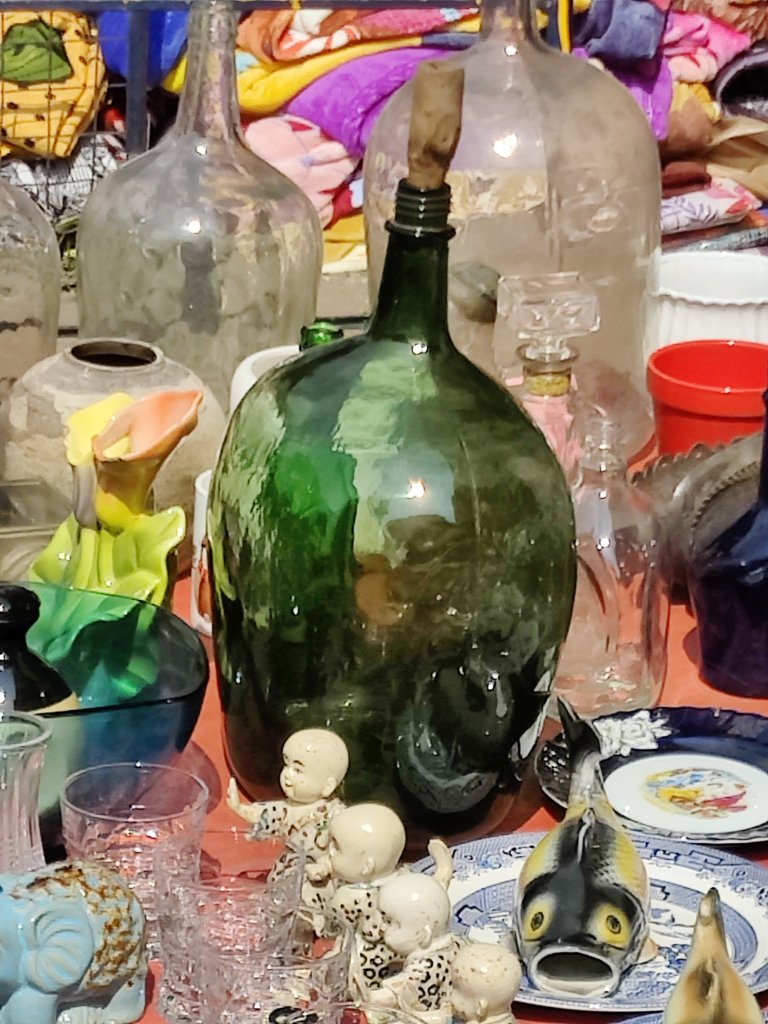

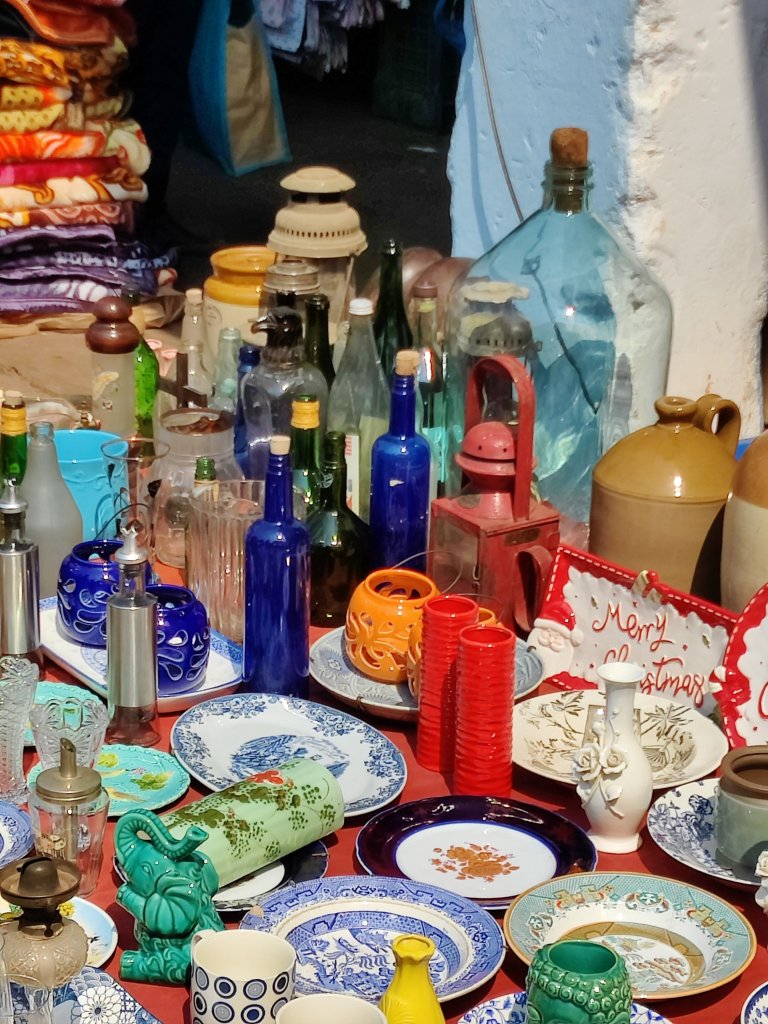
I gaze fascinated at the so-called vintage stall. I love the old glass, and pottery, and vinegar and pickle jars, but obviously cannot carry them home. The charlatan is trying to sell me cheap crockery as vintage but I do know my ceramics and refuse to be convinced. Some of his stuff is simply salvaged rubbish or remnants of old Soga sets! Any thoughts of antique Portuguese blue pottery are swiftly quelled, and I would be better off visiting the impeccable Ranji in Sangolda for the real deal.
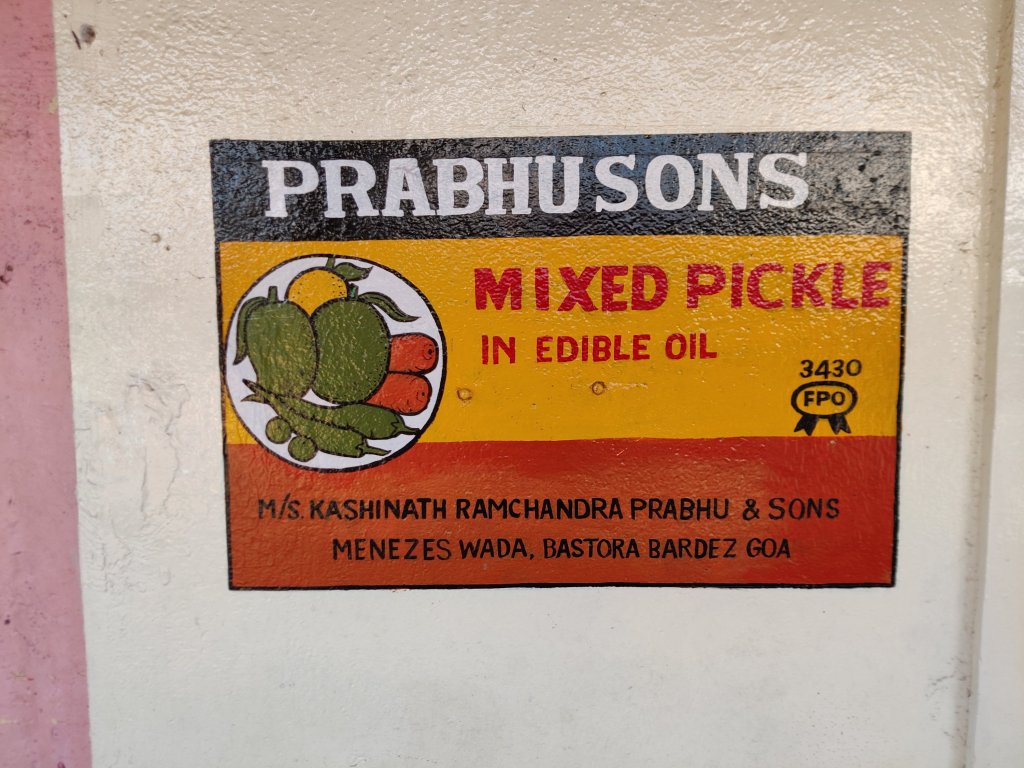
Old ladies selling several varieties of mango and lime pickles beckon, but I cannot possibly carry any by plane. There are more mounds of cheap cotton clothing and pants. Once, long ago, Mapusa had the latest and best cottons from export reject houses, even better than Colaba causeway. Not anymore. It is a national malaise to buy horrible prints and combine them with even worse.Look how elegant all the local aunties are in their pretty dresses and chic saris!
I gaze fondly at what used to be PVV or Pedro Vincent Vaz, makers of the famous Goan Port wine we all bought by the bucket. They had a bakery with rum balls and croquettes and little Portuguese style yummies. They also had the best souvenirs, back when the pink fish on a rope was a thing, and net bags of shells, monkeys carved from whole coconuts, and boxes of bebinca and ashtrays were all one could buy in Goa. Ah yes, the famous candlemakers from Calangute, how many little cherubic angels we bought, how many beautiful wax candles.
One of the Vaz family was an old time photographer who specialised in aerial photography, back in the 1970-80s. We spent a delightful afternoon seeing his photo collection of Goan forts, churches and mother of pearl windows. He was a pioneer, back then. We never met him again and his little atelier seems abandoned.

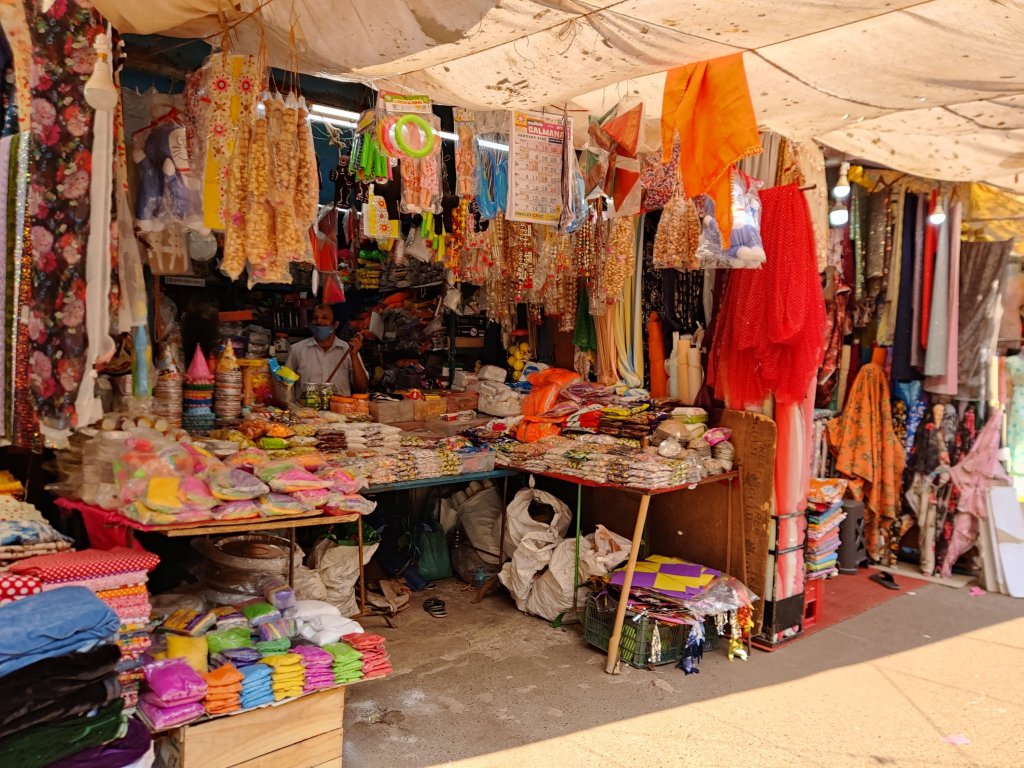
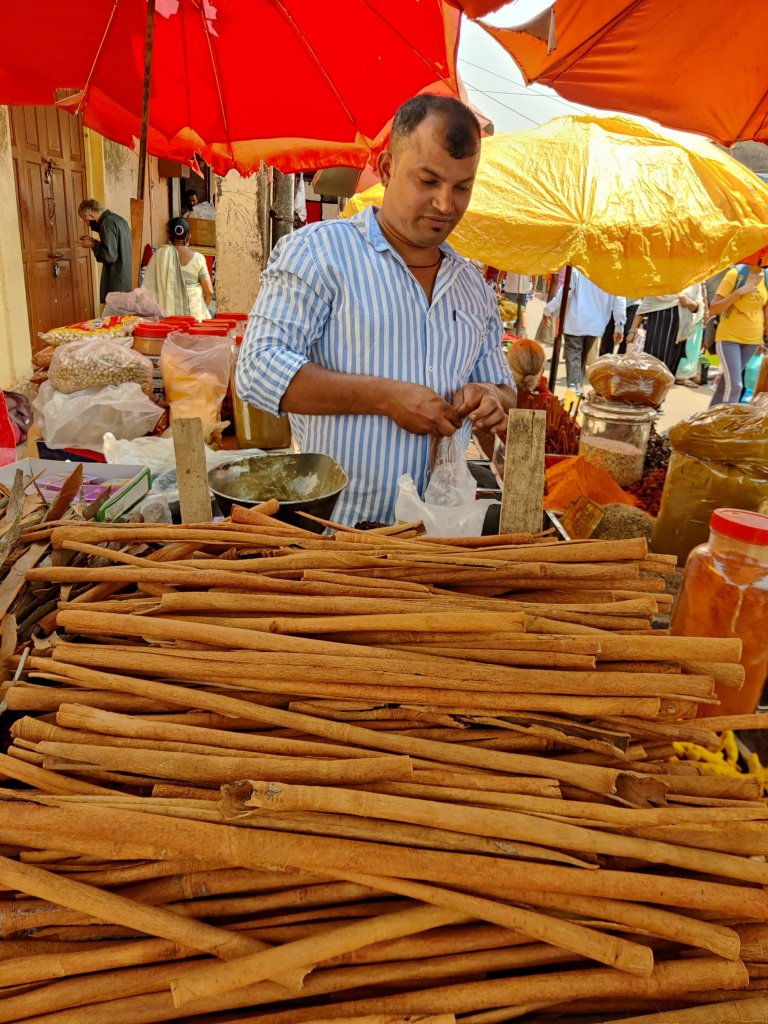
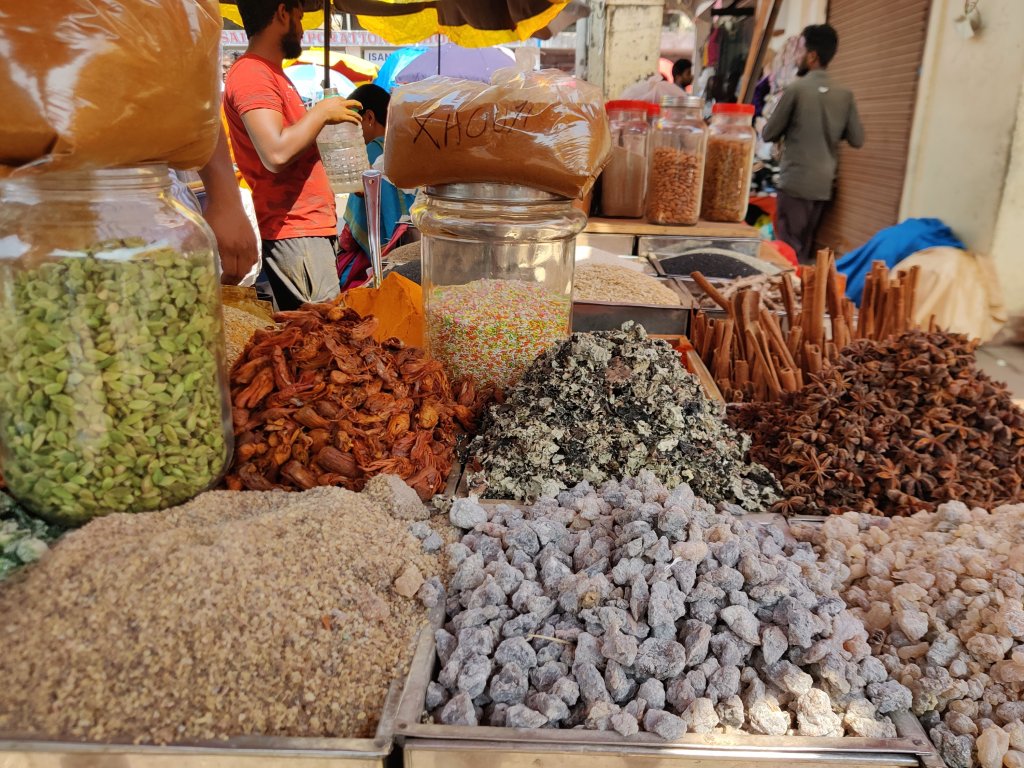

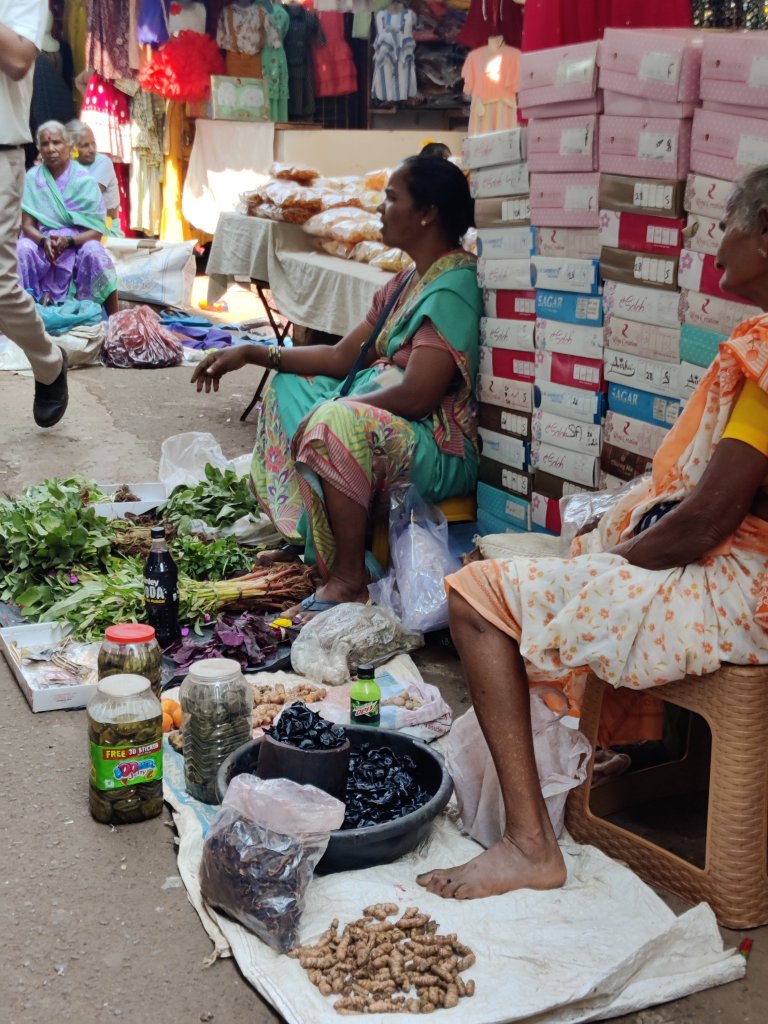
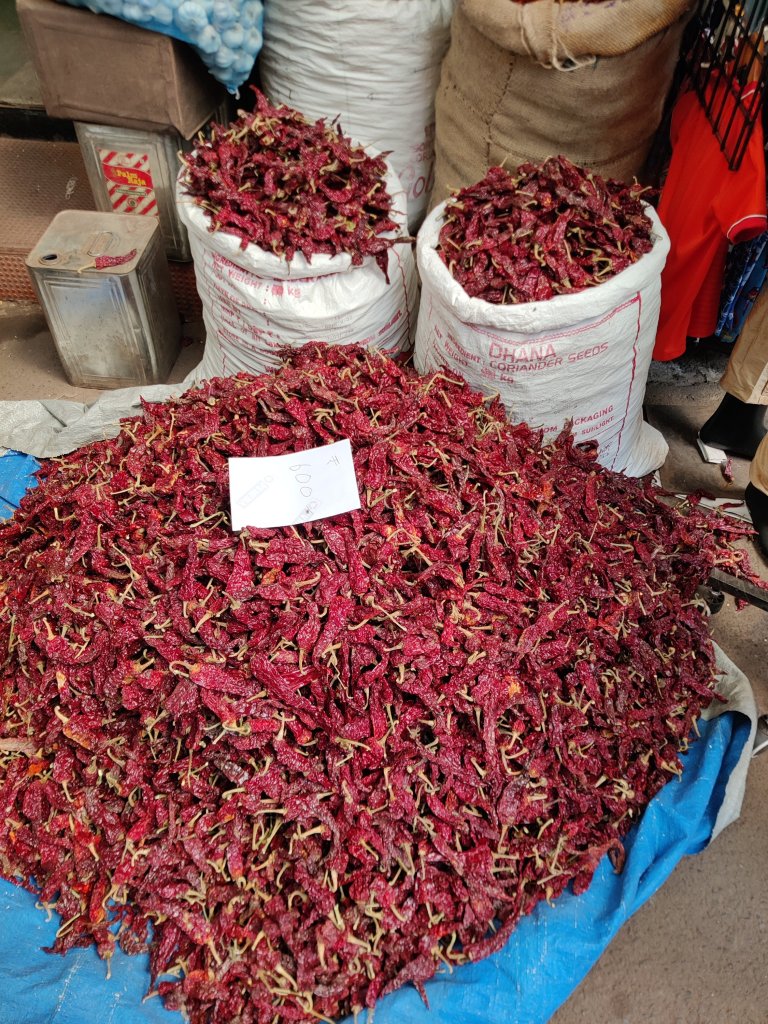

I am grateful Mapusa market continues to be as local and Indian and quintessentially Goan, Portuguese. There is still pottery, and handwoven cane. The vegetables and fruits are grown locally in backyards, and old ladies will sit with a little square of cloth heaped with home-grown heirloom tomatoes or wild berries, herbs, leaves and pepper. I am happy the spice vendor is still where he always used to be, selling the most aromatic and colourful dhoop for cleansing auras and spaces, foot-long sticks of curled cinnamon, local bay leaves, cardamom so fragrant it is breathtaking, and curry powders.
I am grateful that I can walk through the two entrances and come upon the main square and see that the more things change, the more they stay the same. I am grateful I can see local people and not a cabal of agri agents, and that my dime goes directly to the person growing the food. The food is real, it is authentic, as fresh and local as it gets. I am sure the vegetable section that supplies all of the North has stashes of avocado and even local Swiss cheese, but Friday market is the real deal.
As I said before, would that I could live here and shop here every day, I would be the Mapusa Market Queen!
 Thewanderingindiangourmet
My go to place in Goa for all my masalas, pickels, little kitchenware and more…I can be here for hours!!! Captured and articulated so well Radhika…its always such a pleasure to read your blogs…its like you take me on the journey with you!!! Thank you
LikeLike
Mapusa Market is a vibrant confluence of rural and urban life, locals and outsiders, diverse languages and regional cultures! Goa’s #Mapusa weekly bazaar has everything you can imagine. The pre-monsoon market is especially famous for its storage essentials. I covered this beautiful Friday market at the end of May for my upcoming book ‘गावोगावचे आठवडी बाजार’.https://www.facebook.com/share/p/1Zg2aJbzxw/
LikeLike