A magical journey filming across the country during Covid


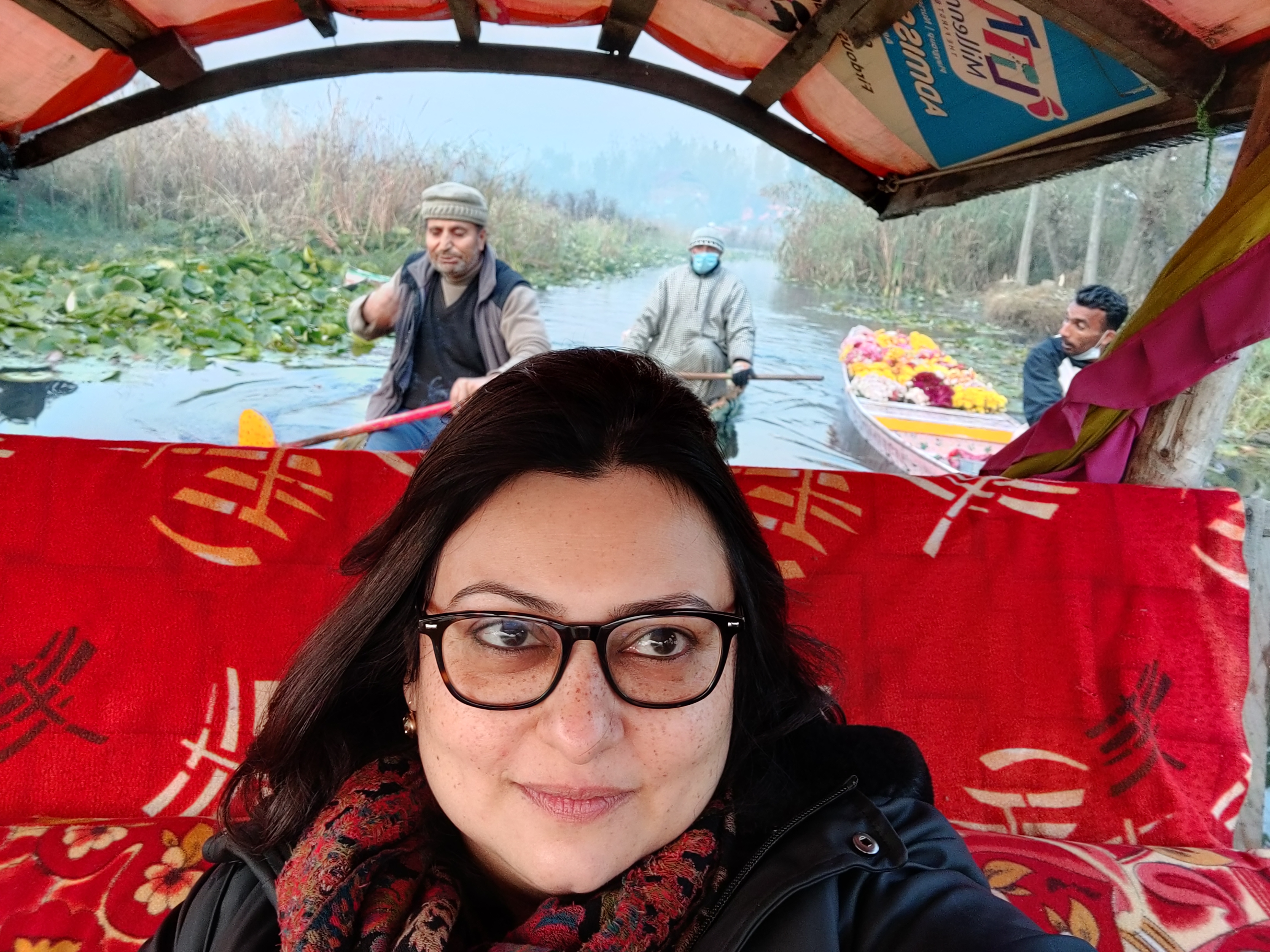
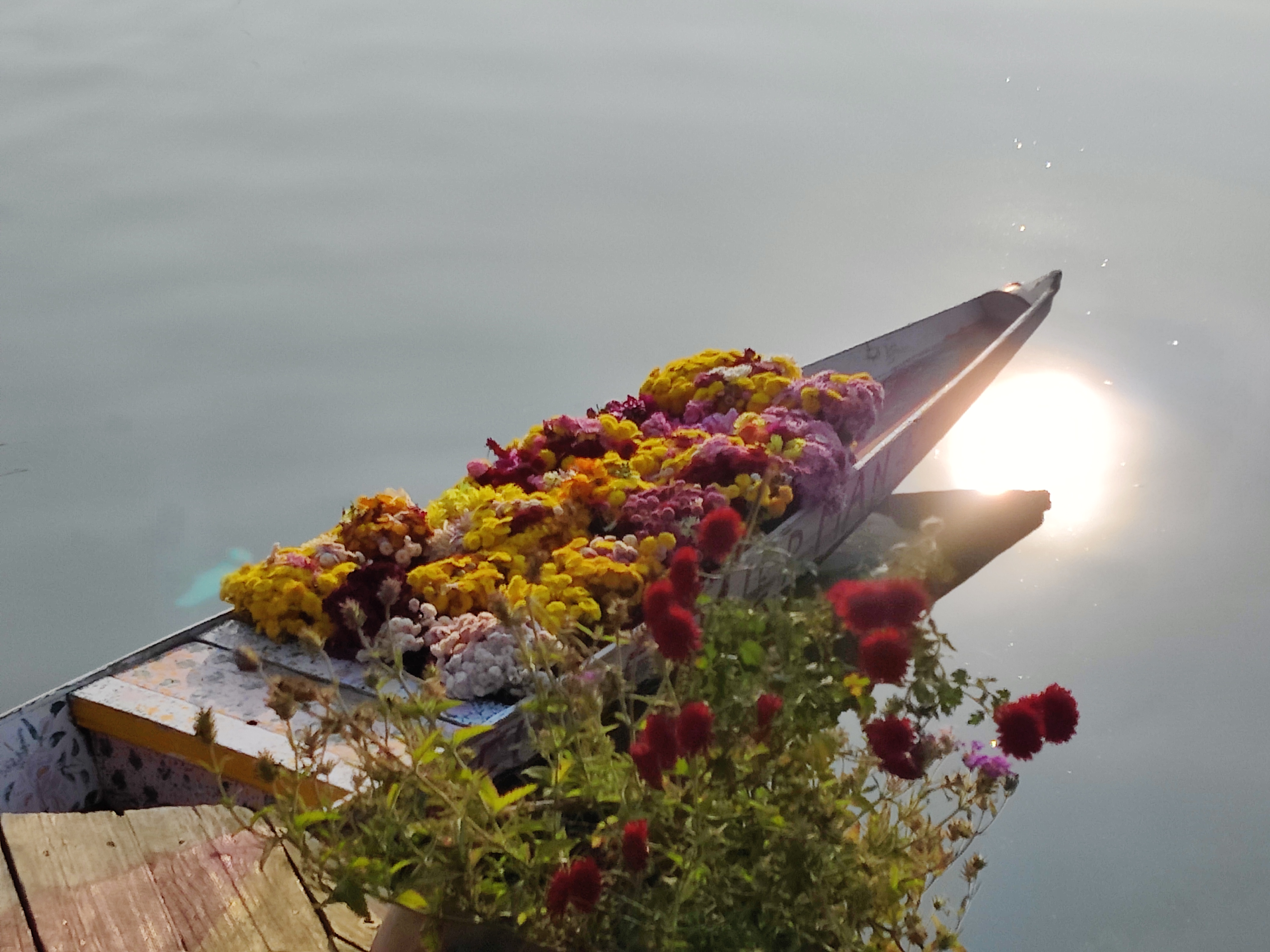
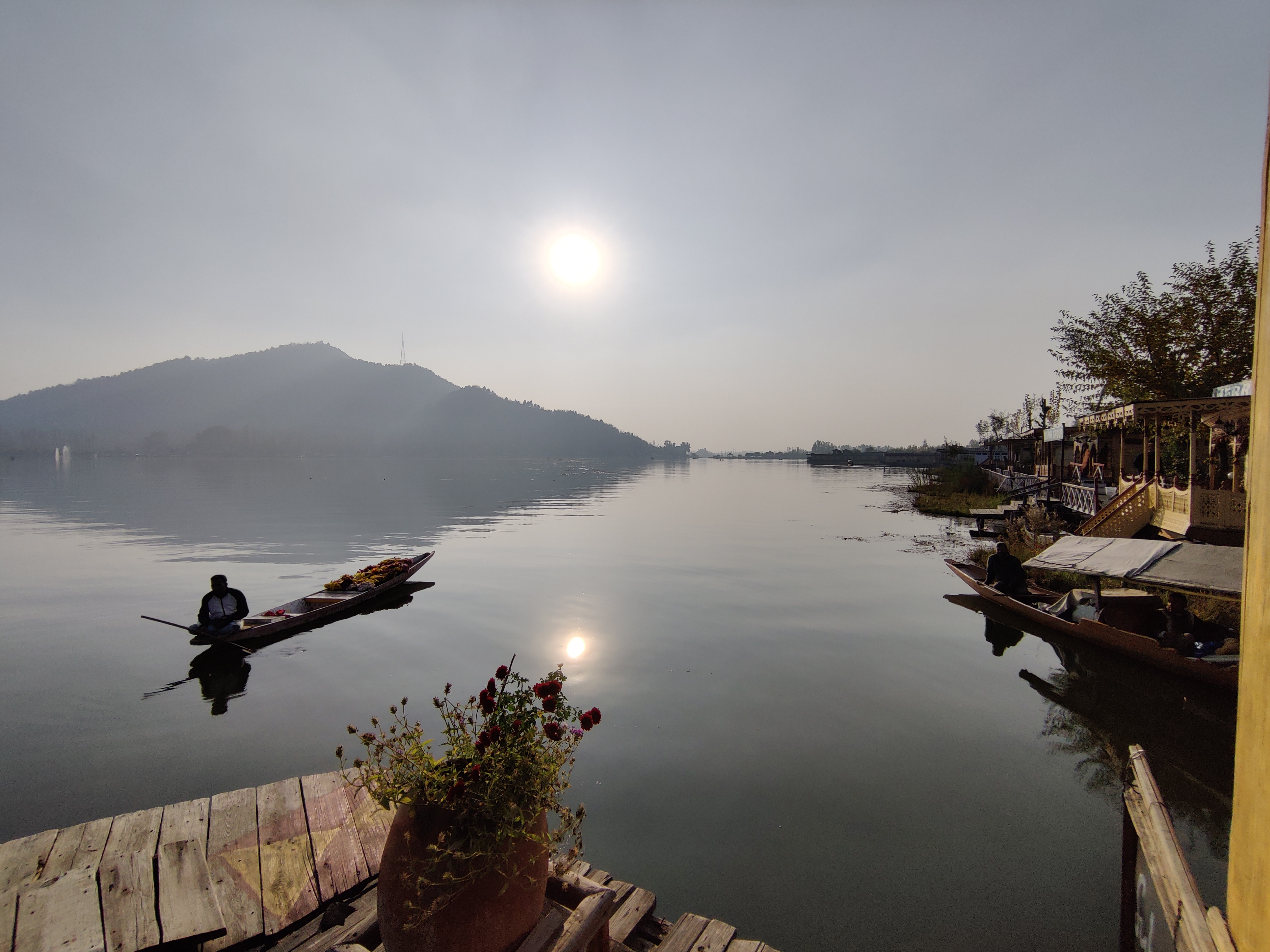
7am, November 2020, Dal Lake
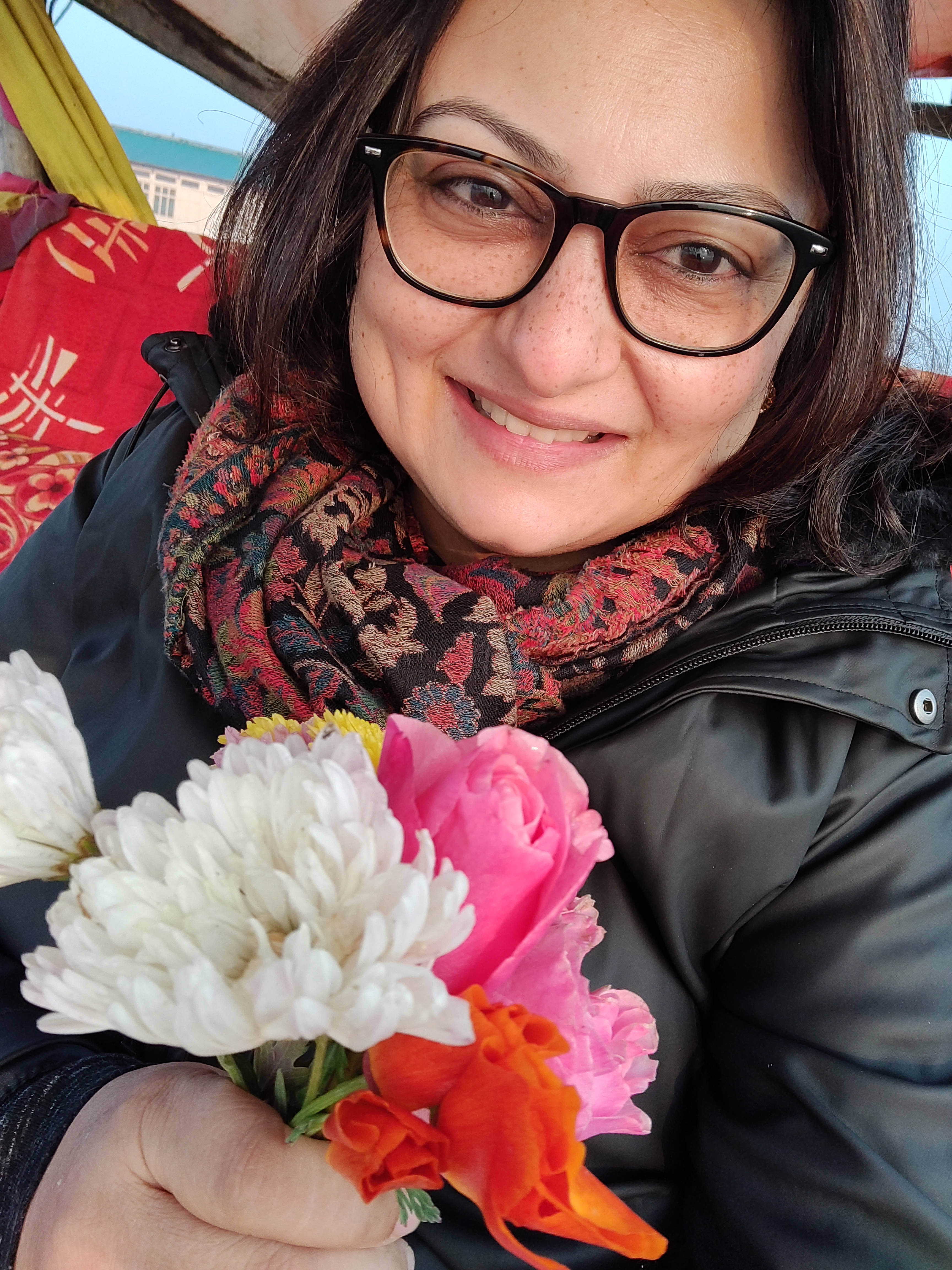
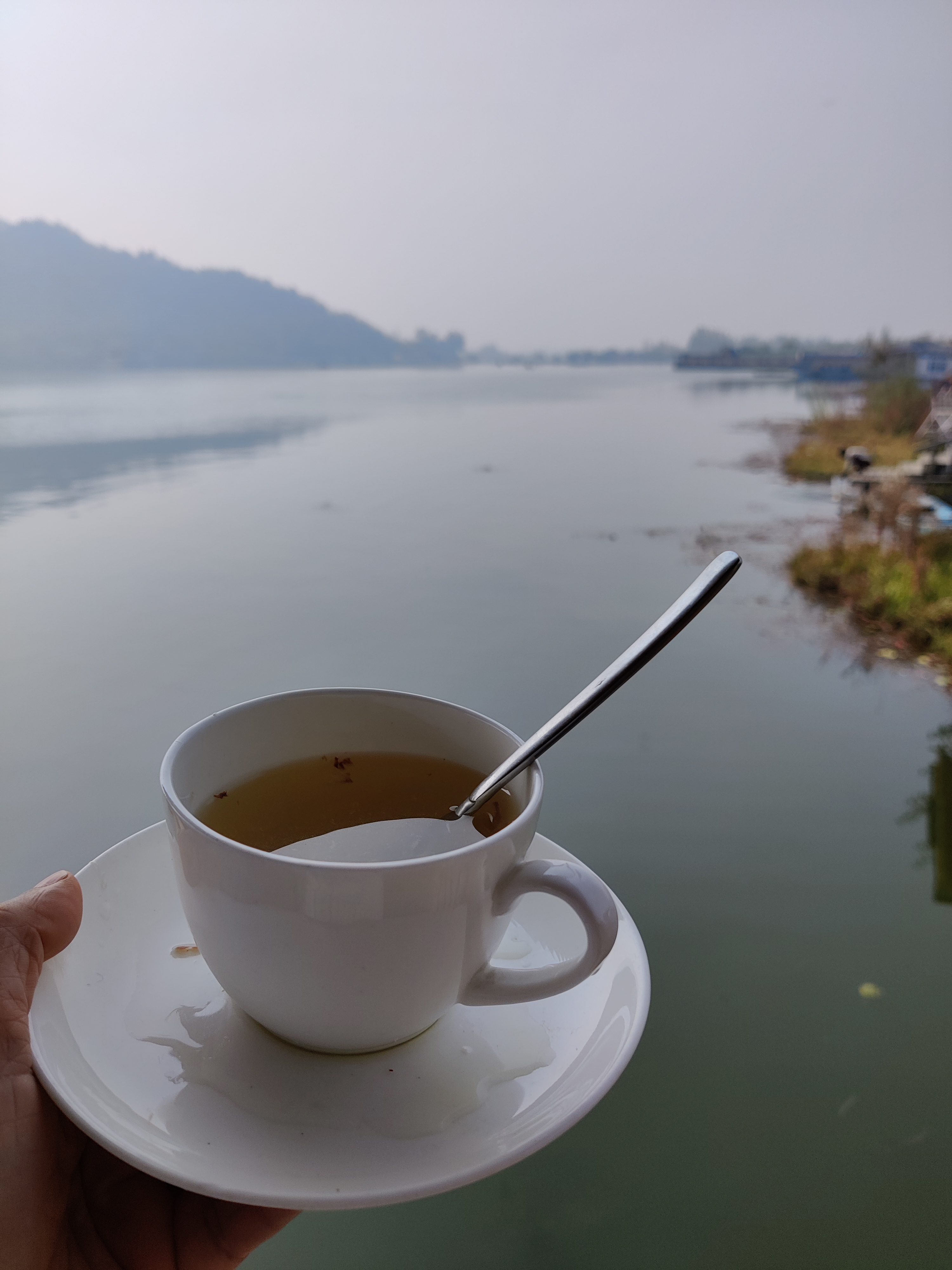
I am entranced when my boatman whips out an unexpectedly fancy Tea for me in a china cup and saucer, and a snowy white linen napkin. These are now balanced precariously over my velvet razai. The sunrise over the mountains throws pale silvery warmth over canals teeming with dried rushes and stalks of lotus. I look like an Ewok, rotund under layered blankets and my heavy coat. Any thoughts of ‘Kashmir ki kali’ sadly remain just that.
There are barely any tourists, perhaps two or three more shikharas, after all it is Covid, 2020.
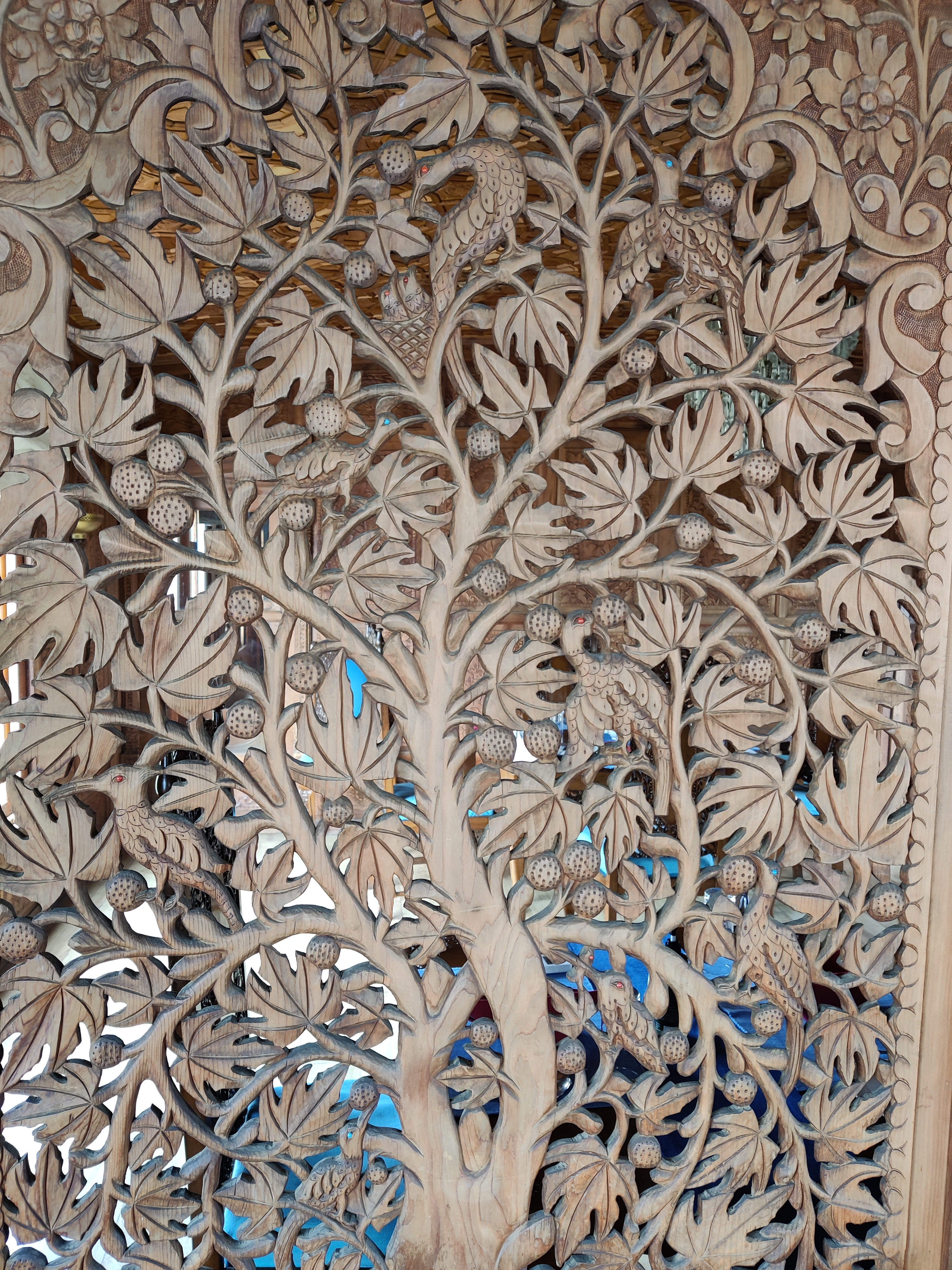
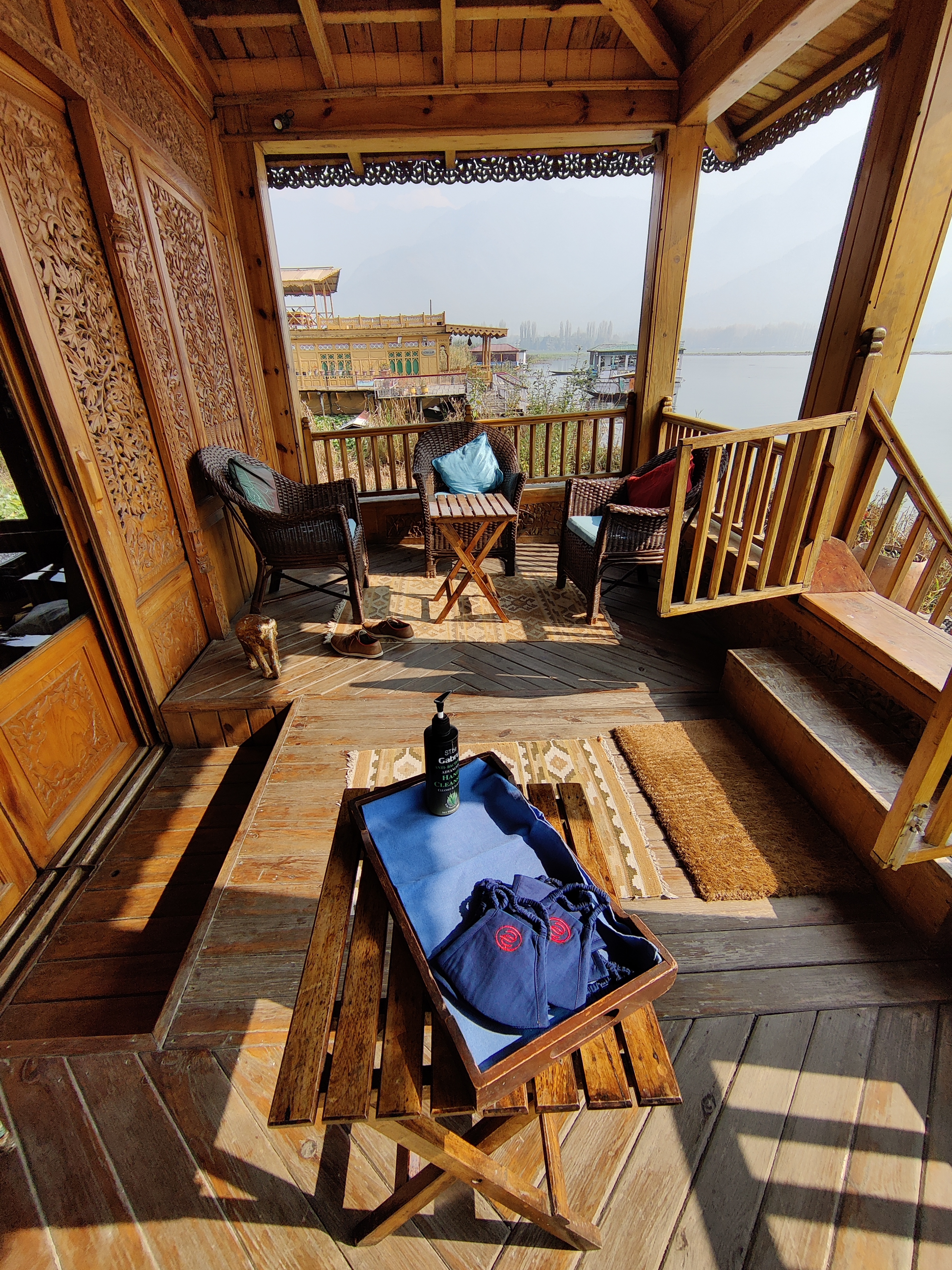
We have arrived at the famous floating market at the Dal Lake, in Srinagr, now reduced to nothing due to the Pandemic and the ‘Harud,’ autumn season. The same iconic market immortalised on celluloid in the aformentioned movie. The bustle and activity is the most I have seen on the lake, where we have been staying in the most sumptious houseboat, Sukoon, this past week.
Around me, kashmiri farmers everywhere, in earthy, woollen pherans, wield their oars, slipping and sliding into any available gaps as they tease and compete with one another to haggle and sell stems of freshly harvested nadru or lotus stem, washed and gleaming white, or bundles of deep viridian saag, or white and purple hued kashmiri shalgam ( turnips) and what greens may grow, from their narrow boats. I love their sturdy bearded faces, their wide toothy grins, their faces so elegant despite the hardships they have weathered. Tourism has come to a standstill and it is a particularly harsh winter they face.
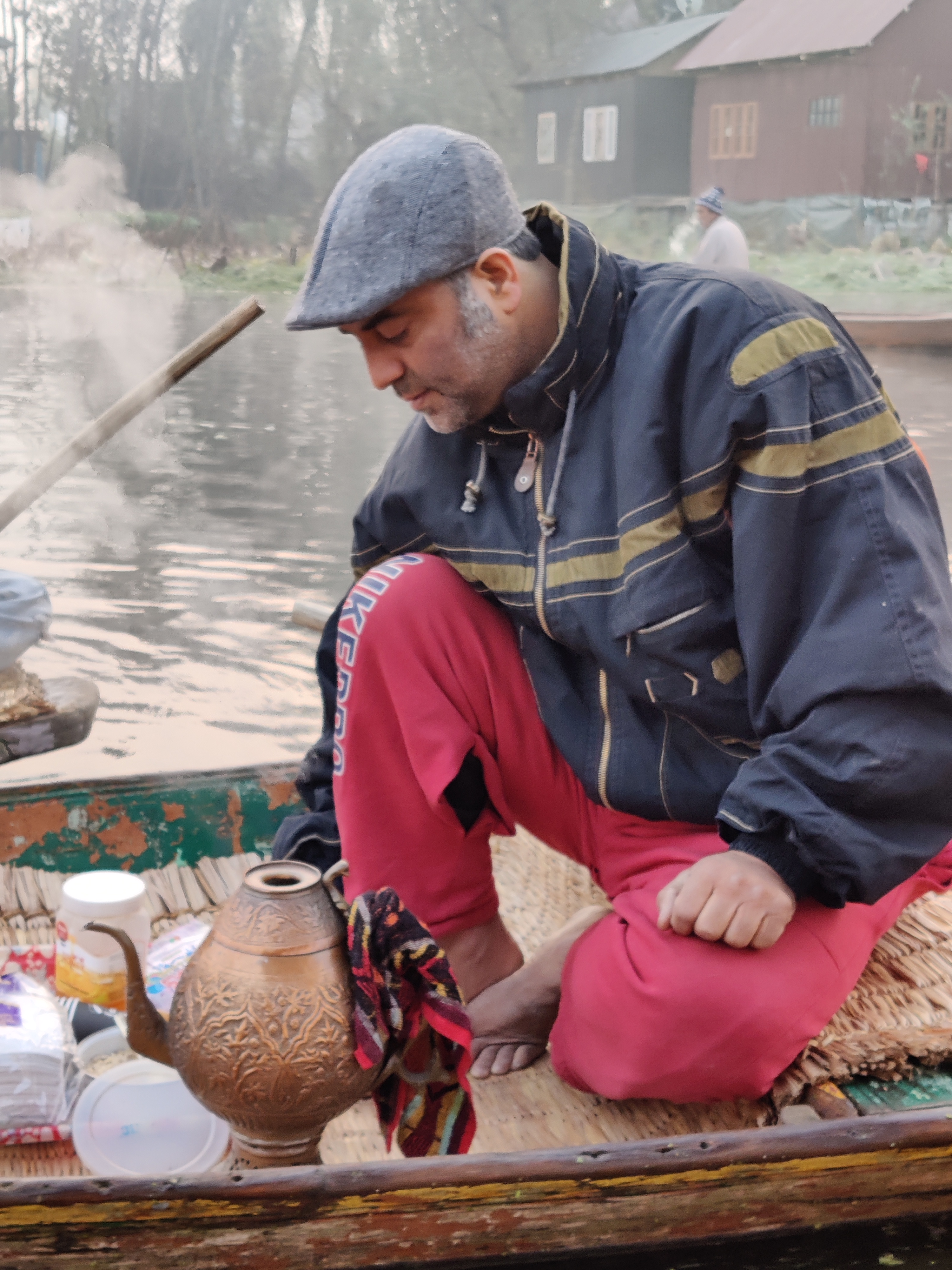


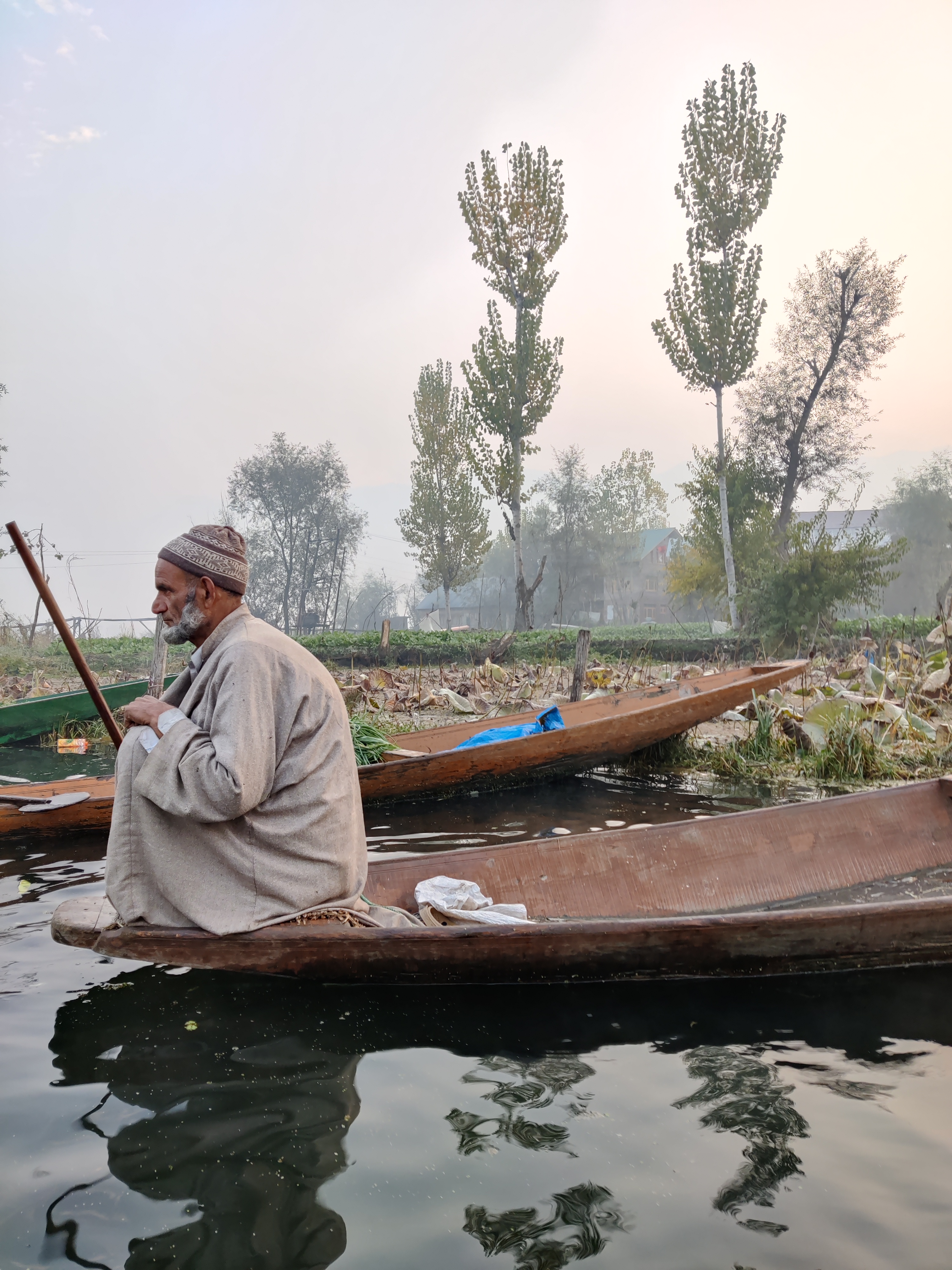
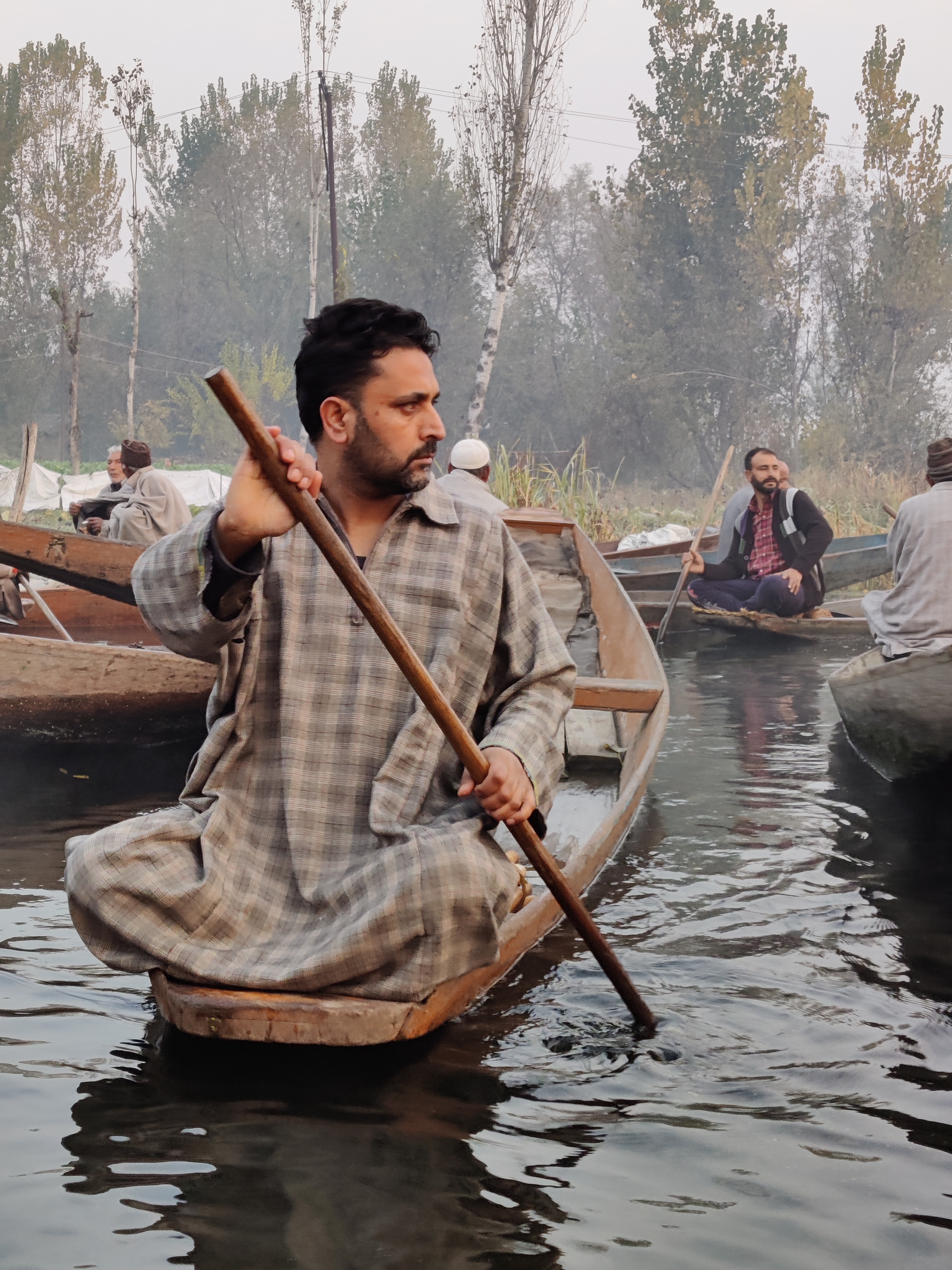


These are farmers who grow things with their toil, fruit orchards in the hills and vegetables in the plains.
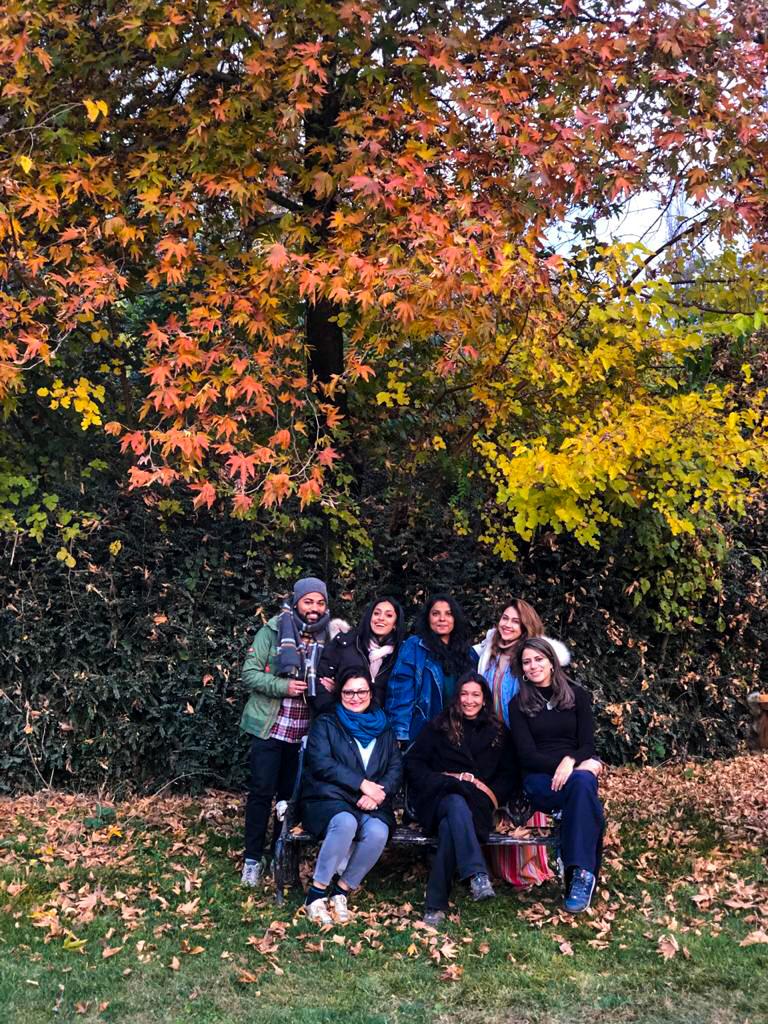
Much later we are back here at the market as a film crew, with multiple boats and much equipment to shoot yet another sequence about Indian farmers and their lives, the real behind-the-plough deal. We film a young Kashmiri girl in her home as she gets ready for her work in the fields. The Director is gifted. The cinematographer is Kashmiri himself. They spin magic, always.
Later on we move, like a large lurching elephant, to the vast open saffron fields of Pulwama, where we film the girl as she works in the setting sun, backlit, with a million delicate purple crocuses in the hard, barren earth. The visual is stark in its beauty.
This time more saffron pickers join her, dressed in colourful pherans and headscarves. We wait for just the right minute of the ‘golden hour’ for the perfect shot. People throng from nearby to gape. We are the most entertainment they will have for some time.
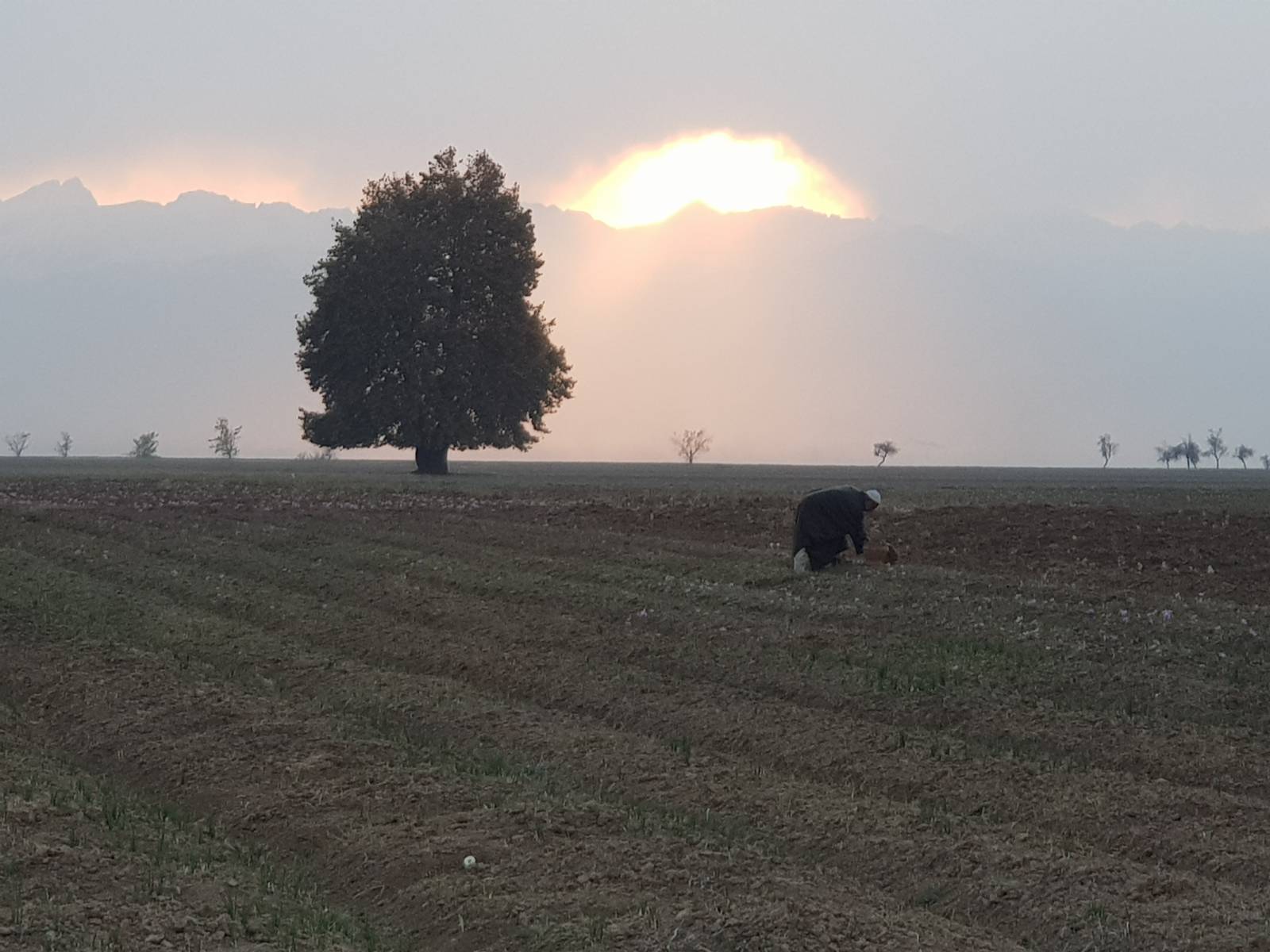
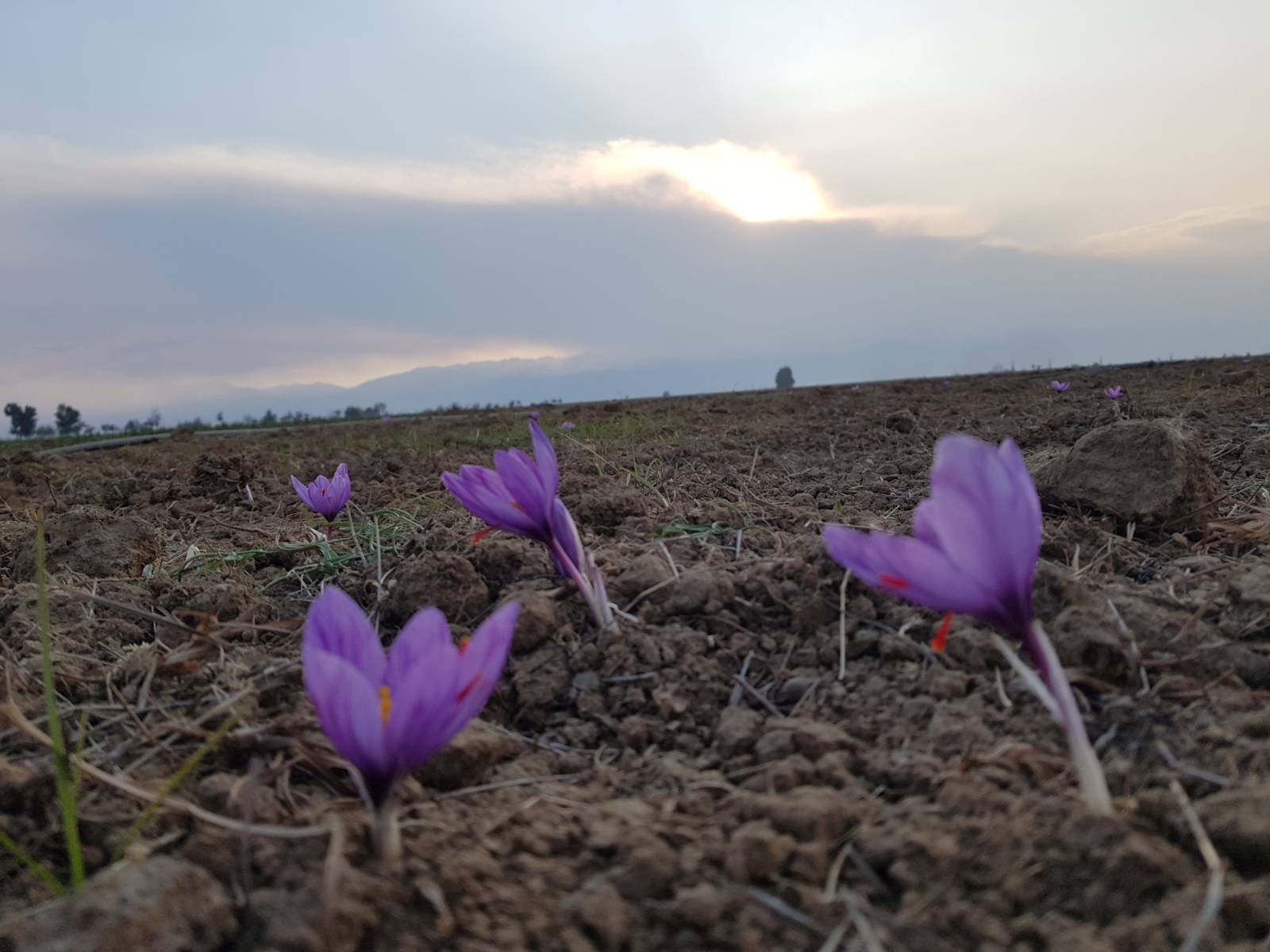

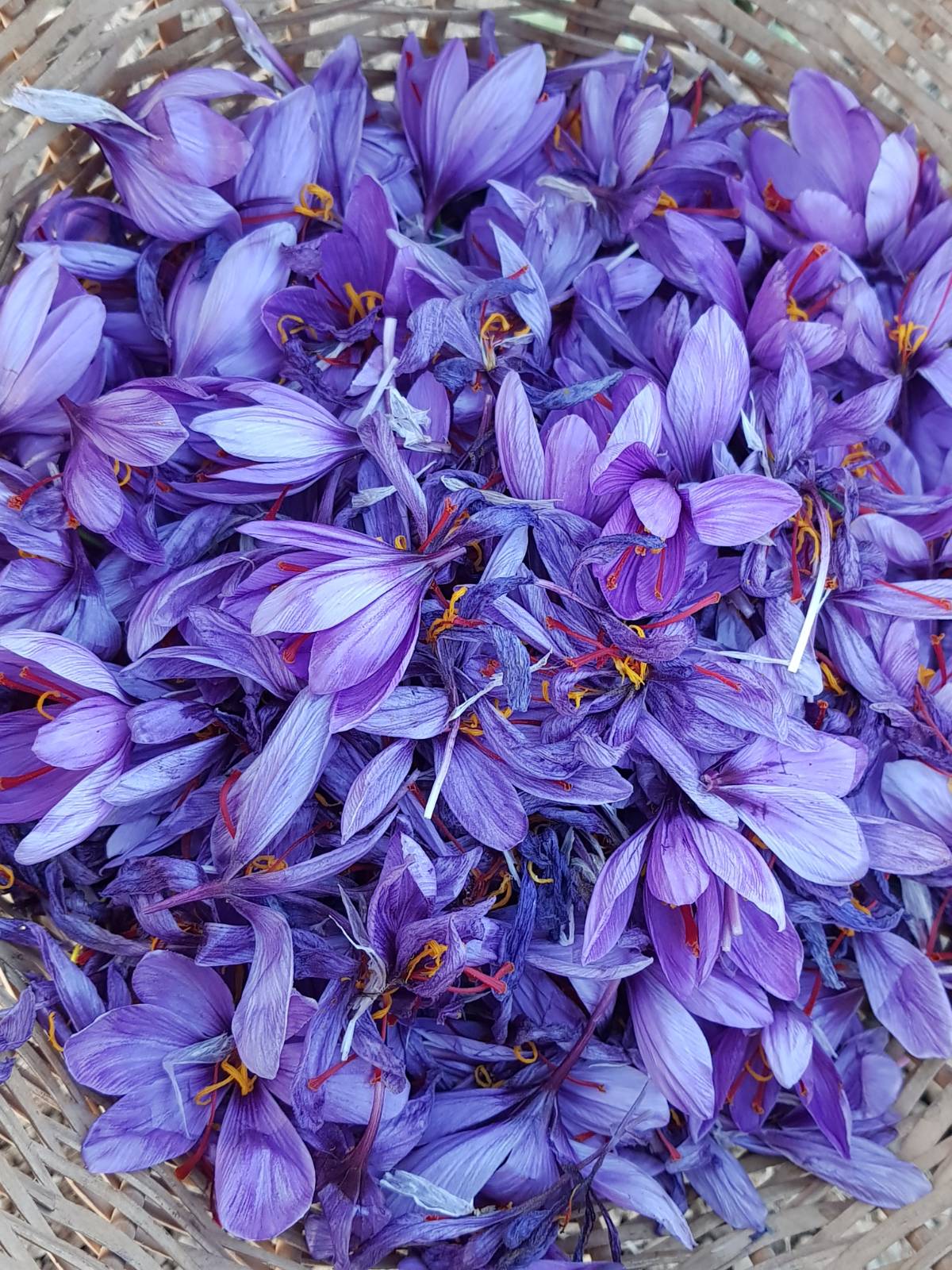
Hard to believe this very place is more known for deadlier news and military updates. Still, the saffron tradition in Pulwama continues. Fields stretch for miles. Crocuses are delicate and must be plucked when just right, millions of them, to satiate our fascination for their delicate kesariya stamens for kheer and biryani. I wander around, shutter happy, trigger happy, amazed at what we farm and how hard traditional agriculture is, yet how beautiful.
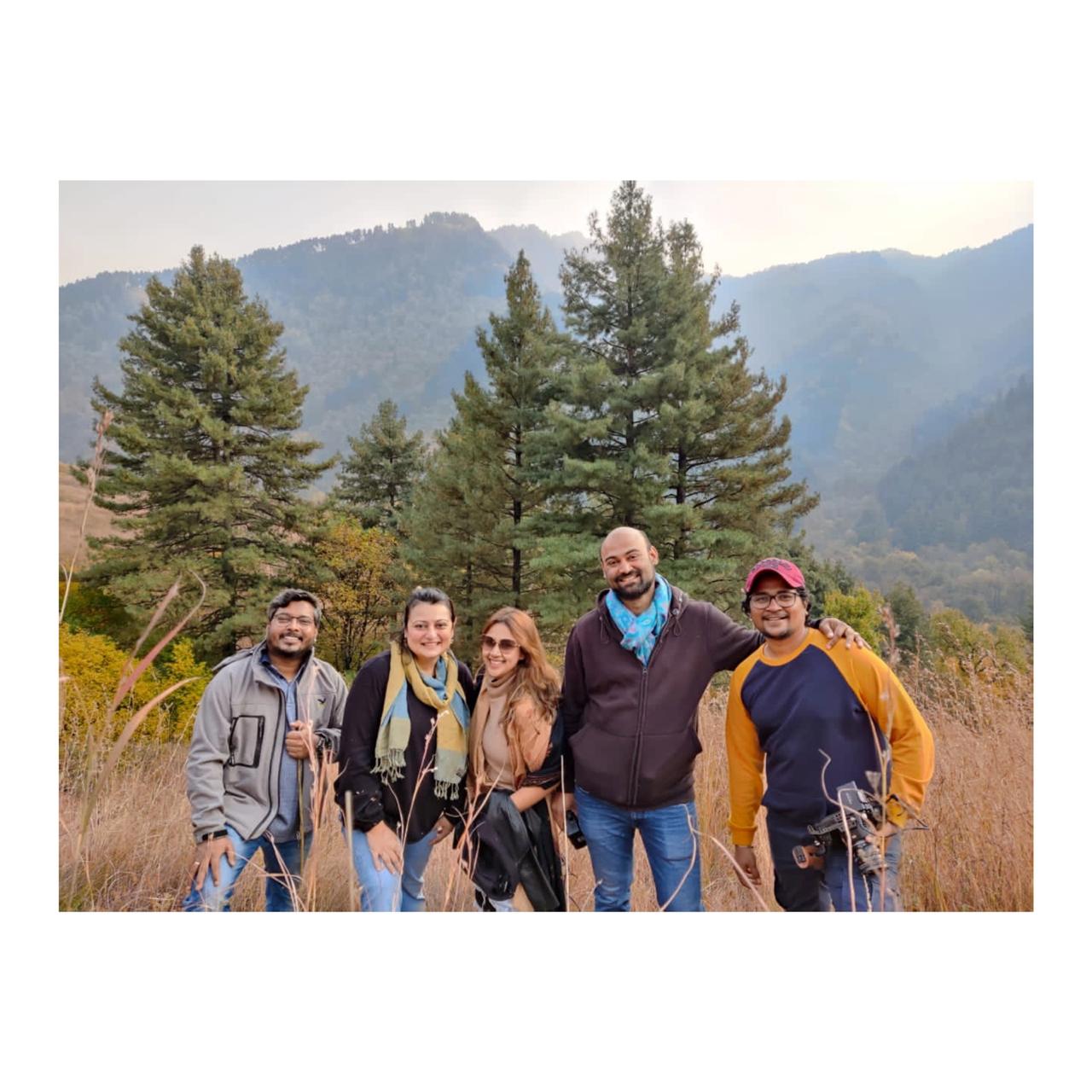
The land tells tales of its people. Our assignment is to shoot for a brand whilst telling the story of India’s farmers and, of course, Director Bob Chaturvedi will make it the most haunting and beautiful visual story ever, because that’s what he does. And the man behind the camera, Tassaduq Husein will make it even more so because that’s what he does. And the crew works around them to bring that vision to life. I just happen to be part of the crew because that’s what I do/did for the most part of my life.
What are we doing here but telling yet another story of poetry and magic? Because this is such a beautiful part of my beautiful country that it needs to be told! And then, there is so much food to be spoken of.
Behind all that magic lies reality: we march on our bellies too!
Film crews are the hungriest, most gourmand lot of people in the world, with a de facto understanding to be fed well at all times. We make the most of our travels by exploring local food away from home. This time has been no exception.
The chilly weather in Srinagar has us sipping salted noon chai and chewing on local flat bread, appetites robust, every moment we get. We bond as a crew over kababs by a roaring fire and roasted chestnuts from Ghanta Ghar.
We dig into a breakfast of Harissa, a fortifying meat stew made overnight in enormous pots the traditional way. I visit a local harissa legend, and am immediately transported back in time in the all- male kitchen where the fires never run out as pots bubble away for days, slow cooked, and incredibly hearty. Harissa came to the Valley from Central Asia and is now a winter and wedding staple.
I get to spend a morning at a very old local market deep inside the Old Town of Srinagar, touching barrels of the most vivid purple garlic, magenta rhododendron, rosy cheeked turnips and umber hued spices. The omnipresent kesar strands are everywhere. Pink rajma beans, sweet almonds, knobbly walnuts, gnarly dried apricots: the summer harvest has already been pickled or dried for the long freeze ahead. How do people survive without hothouse tomatoes, fresh chillies, green vegetables and bhindis?
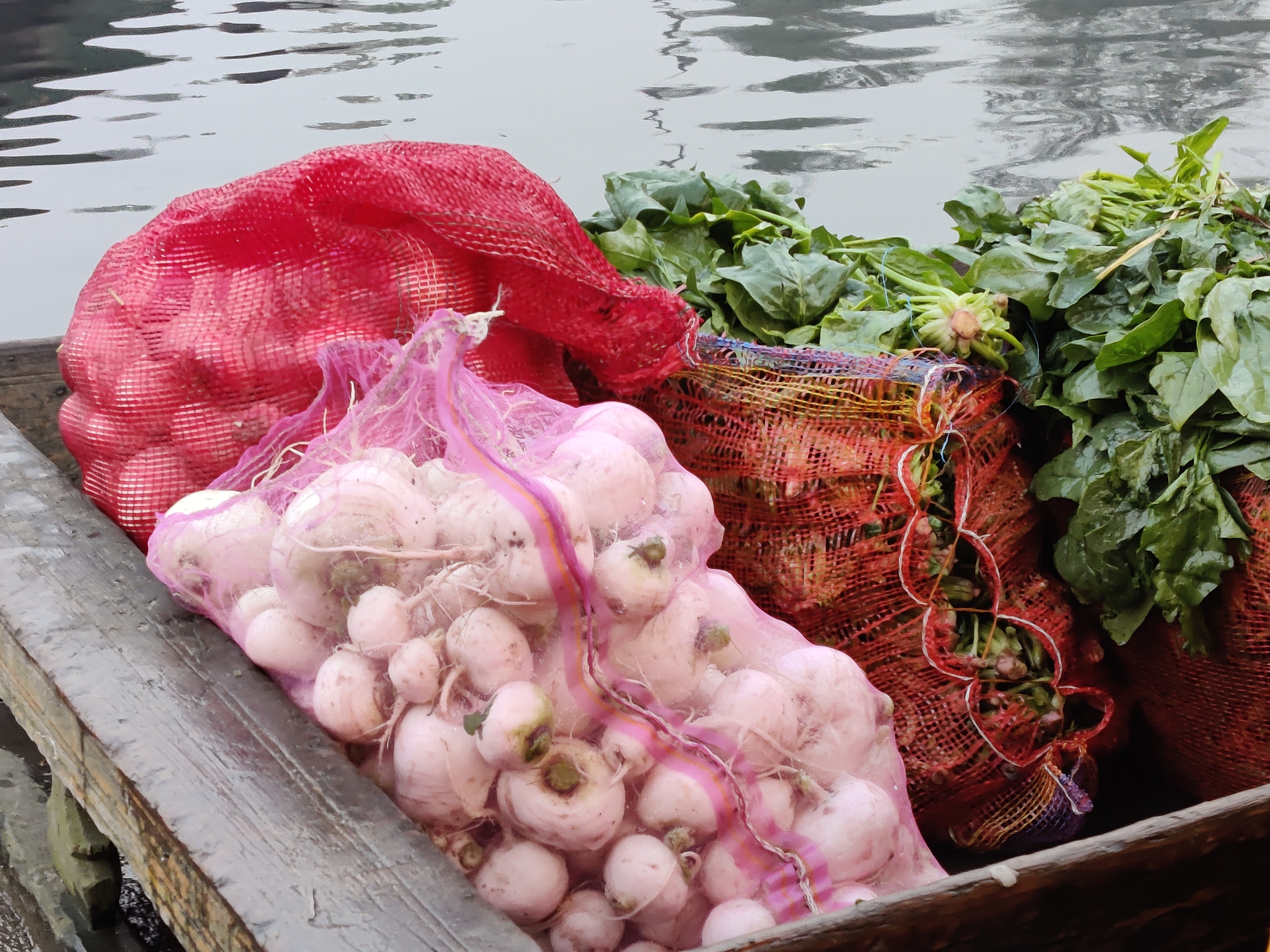

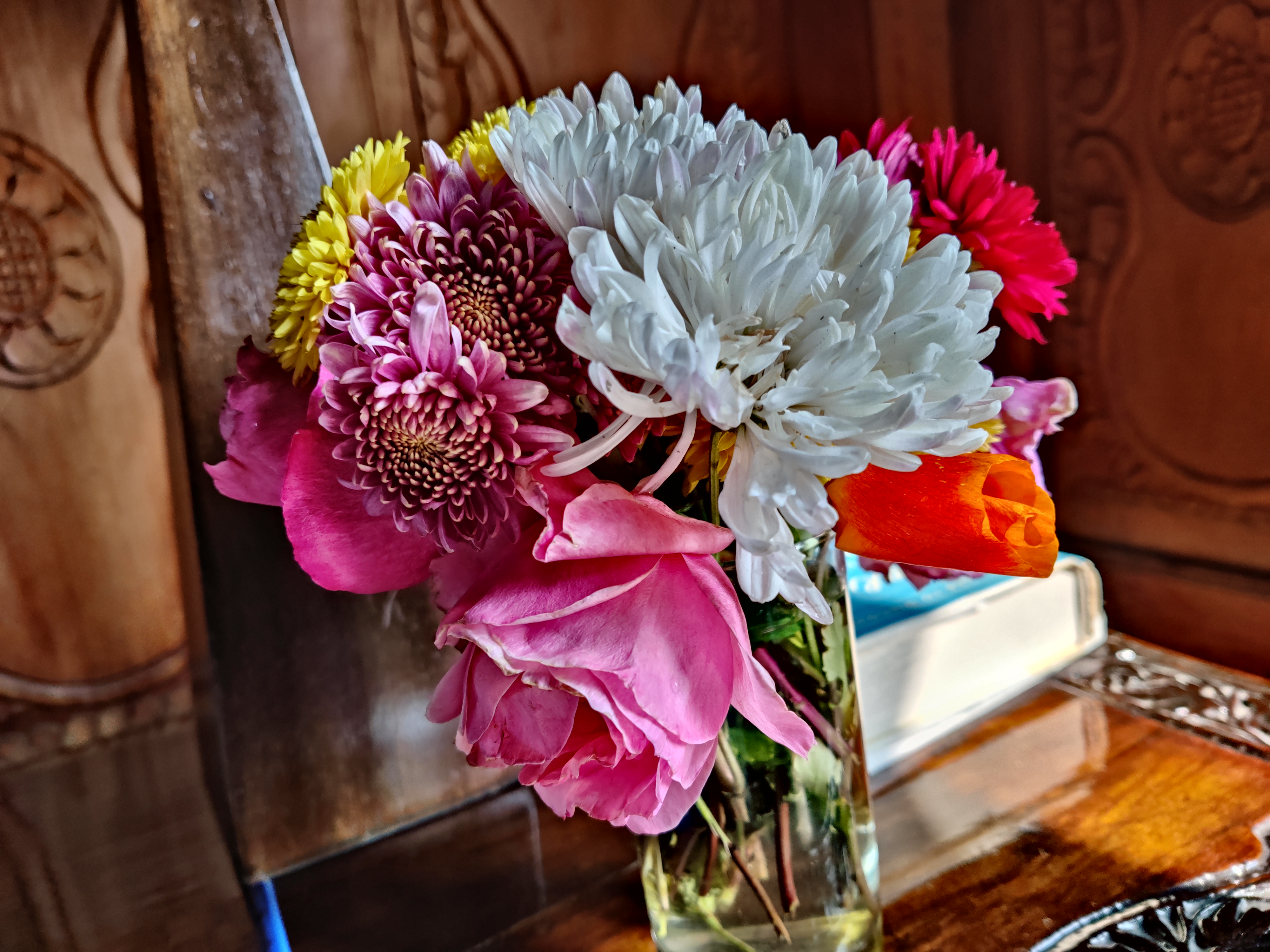

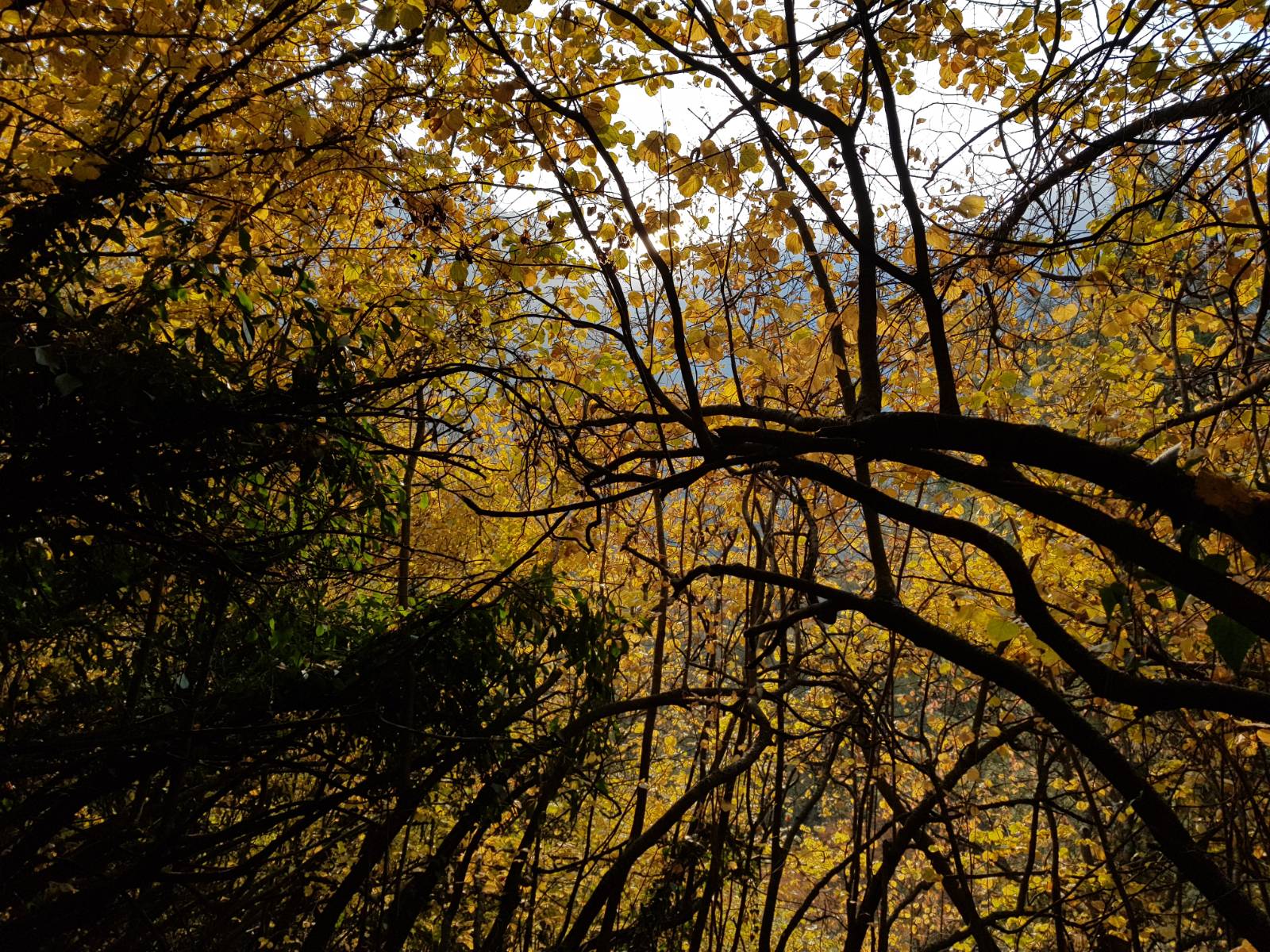
Autumn has brought foggy evenings. Charcoal braziers and kabab carts open house after dark around the lake. I Imagine long winter nights sitting around the brazier shelling walnuts as pots bubble slow and long, with hearty with stews of lentils, meat and dried vegetables, perhaps turnips. And my mind meanders to fairy tales with turnips and goblins and fairy godmothers.






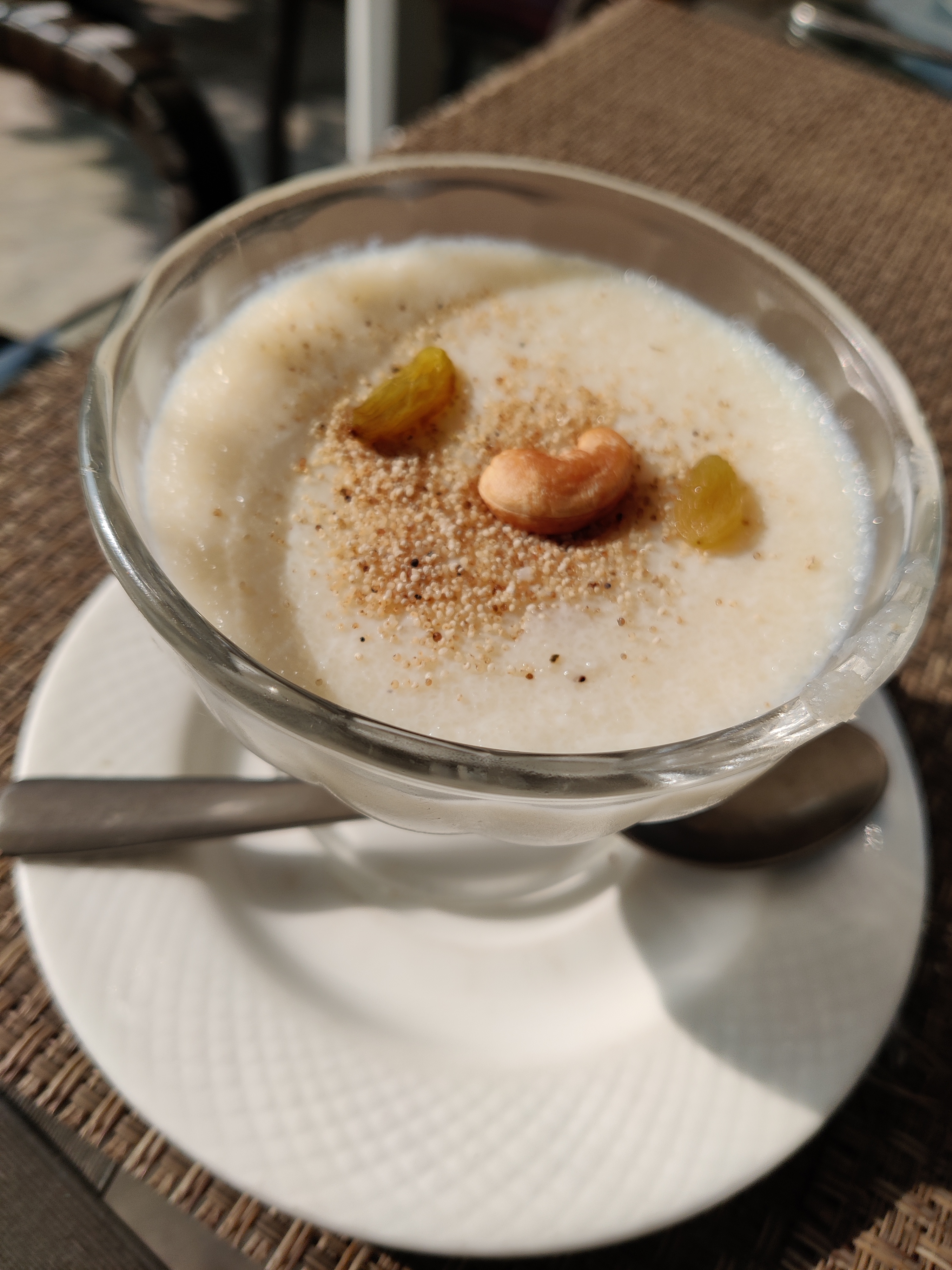
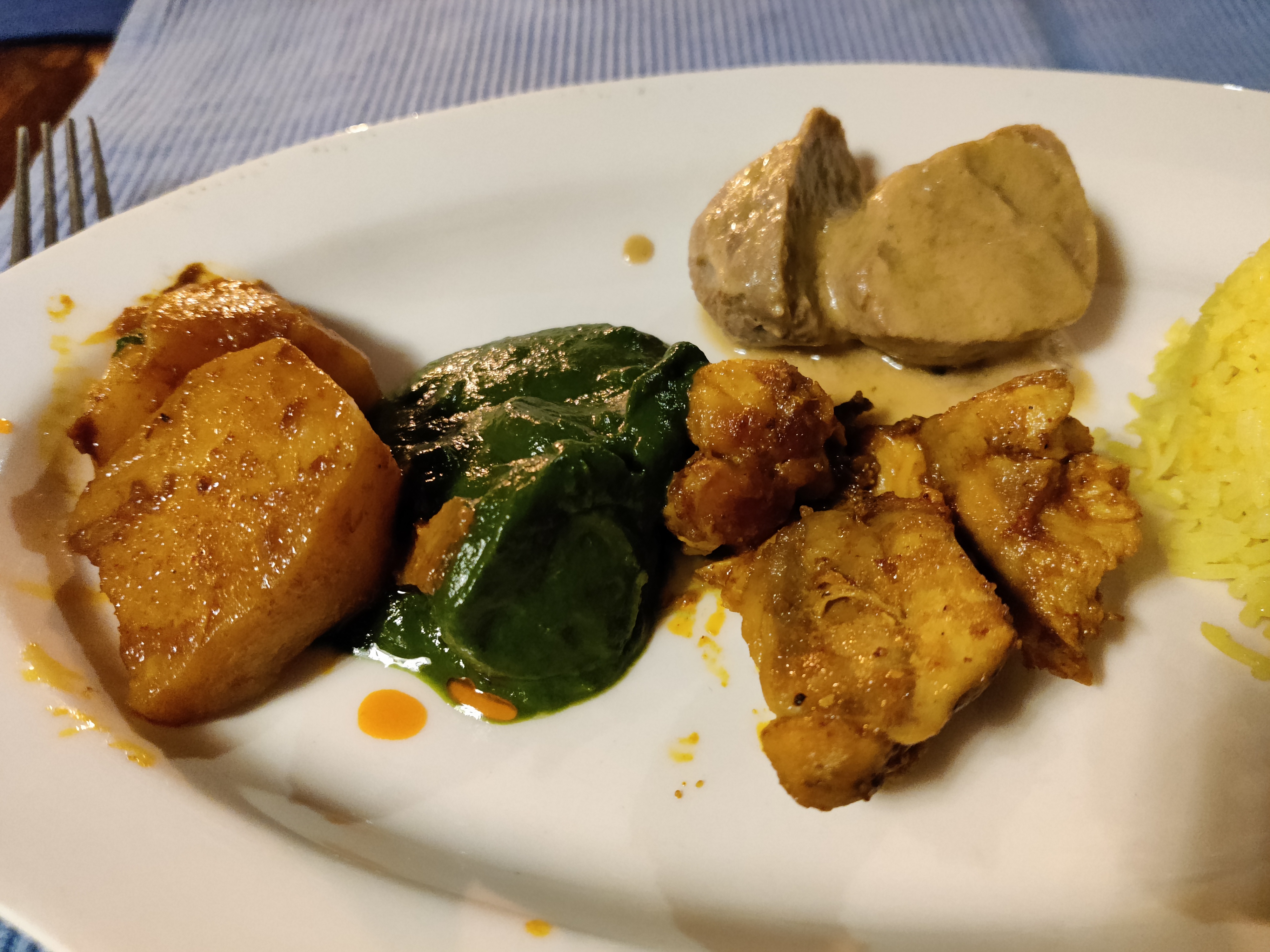
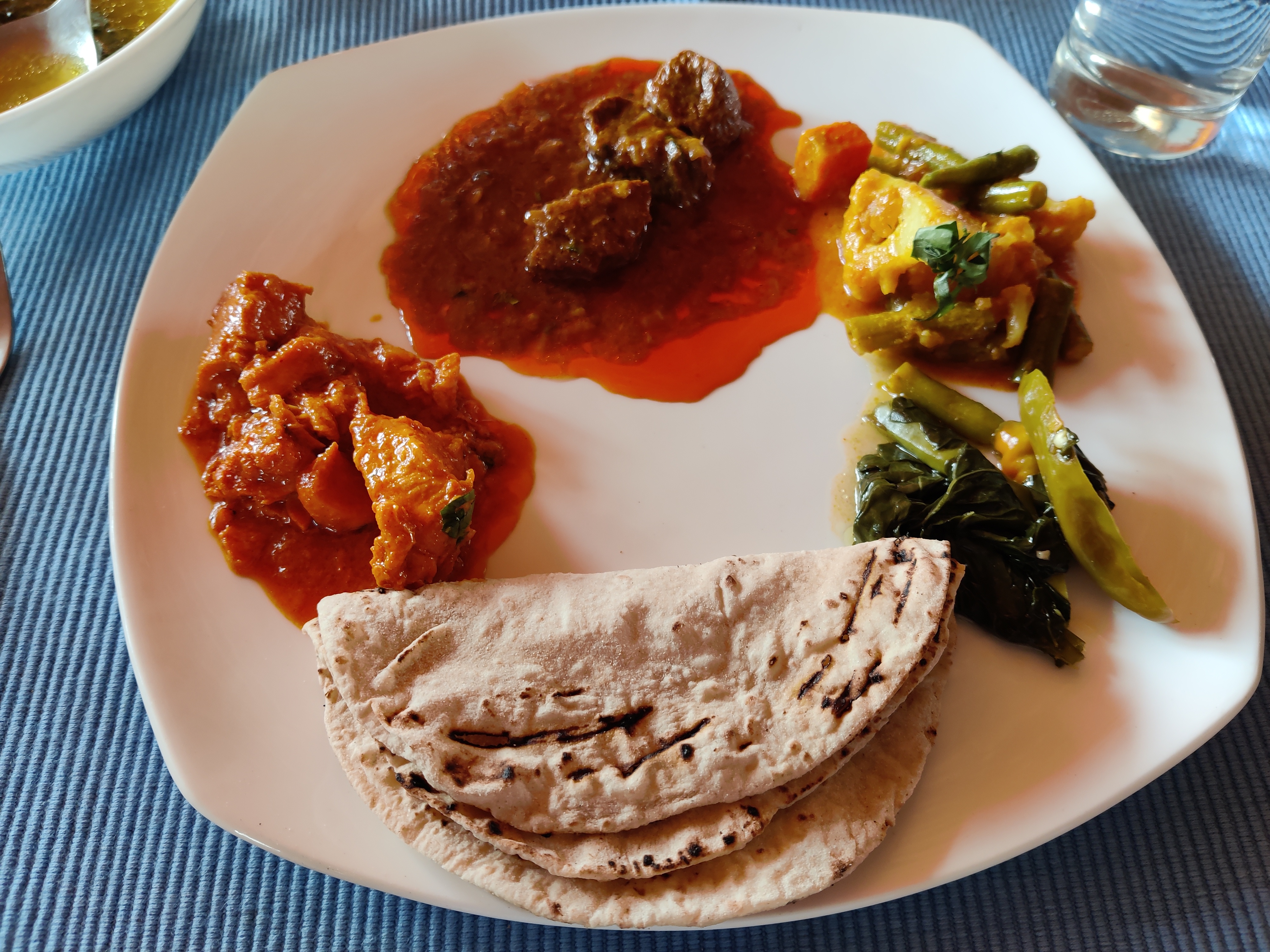
The Kashmiri Lotus stem is revealed in all its splendour- slim, pale white stalks, with delicate piercings, thinly sliced on the diagonal, beloved by both the pandits and the musallmans alike. I am hooked on Nadru Yakhni, and look forward to it every meal with greedy delight. It is Bob who insists I try it, and his choice of something so unusual and delicate explains where his film sensibilities stem from.
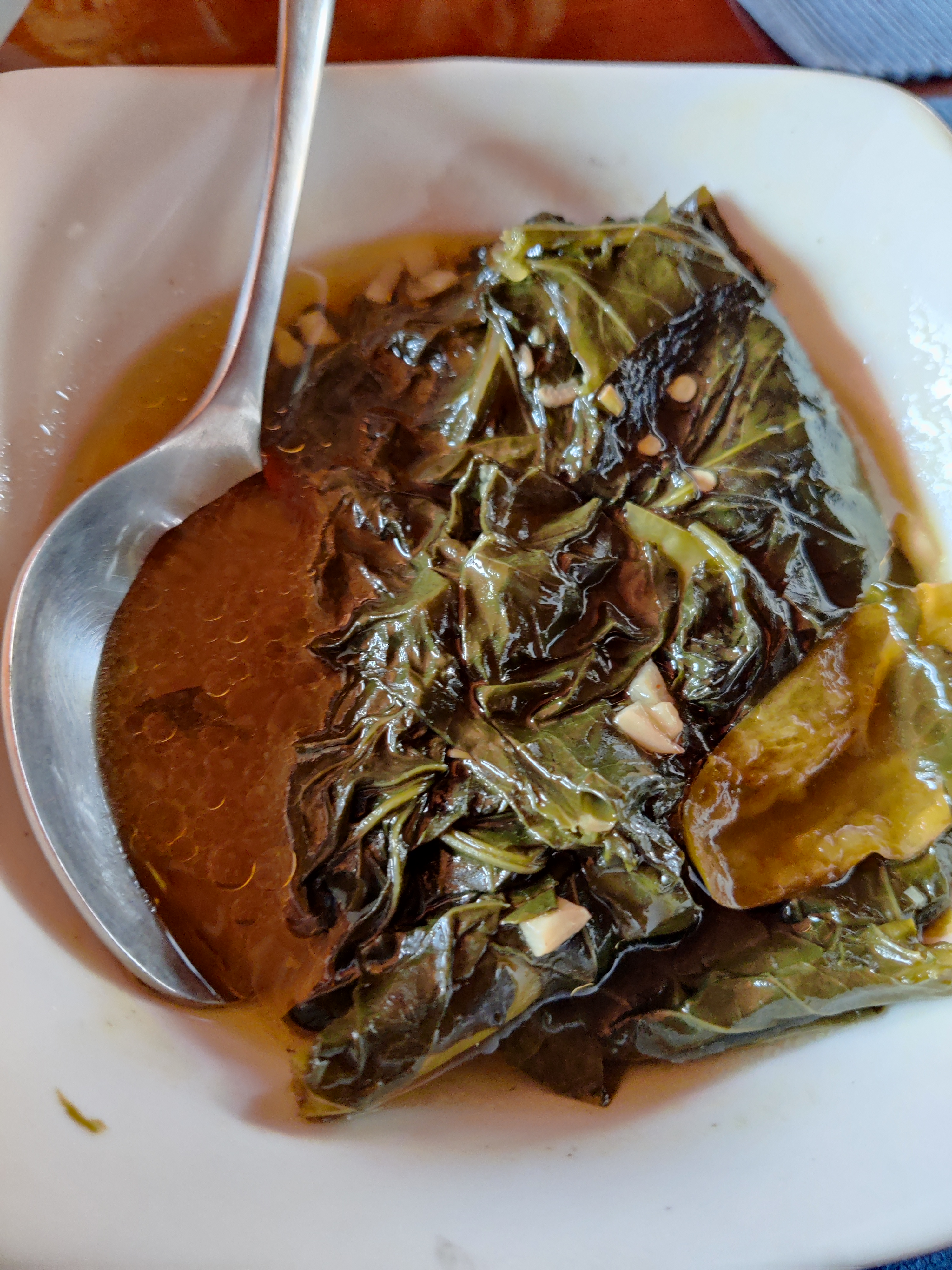
I end up shrugging off the more robust mutton rogan josh and rishta curry, the gushtaba. All mutton, not goat. Traditional kashmiri mutton curries are revered for their use of spices and the kashmiri red chilly. I find them too filling and heavy. Haaq (collard greens) has me spellbound with its delicacy, but I am now hooked on Nadru. I take a cooking class in local vegetables with the chef on our houseboat and cannot wait to try the recipes back home.


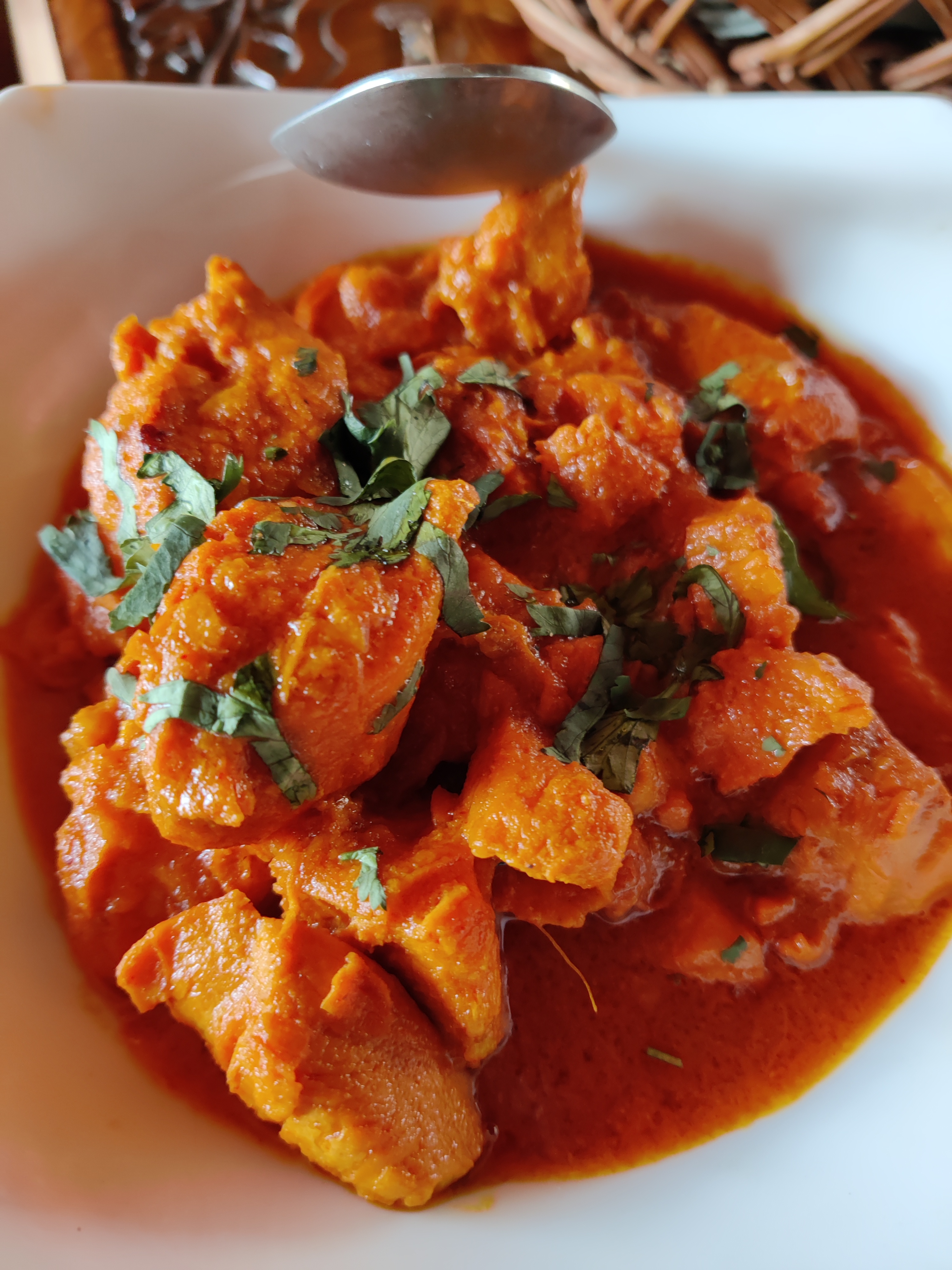

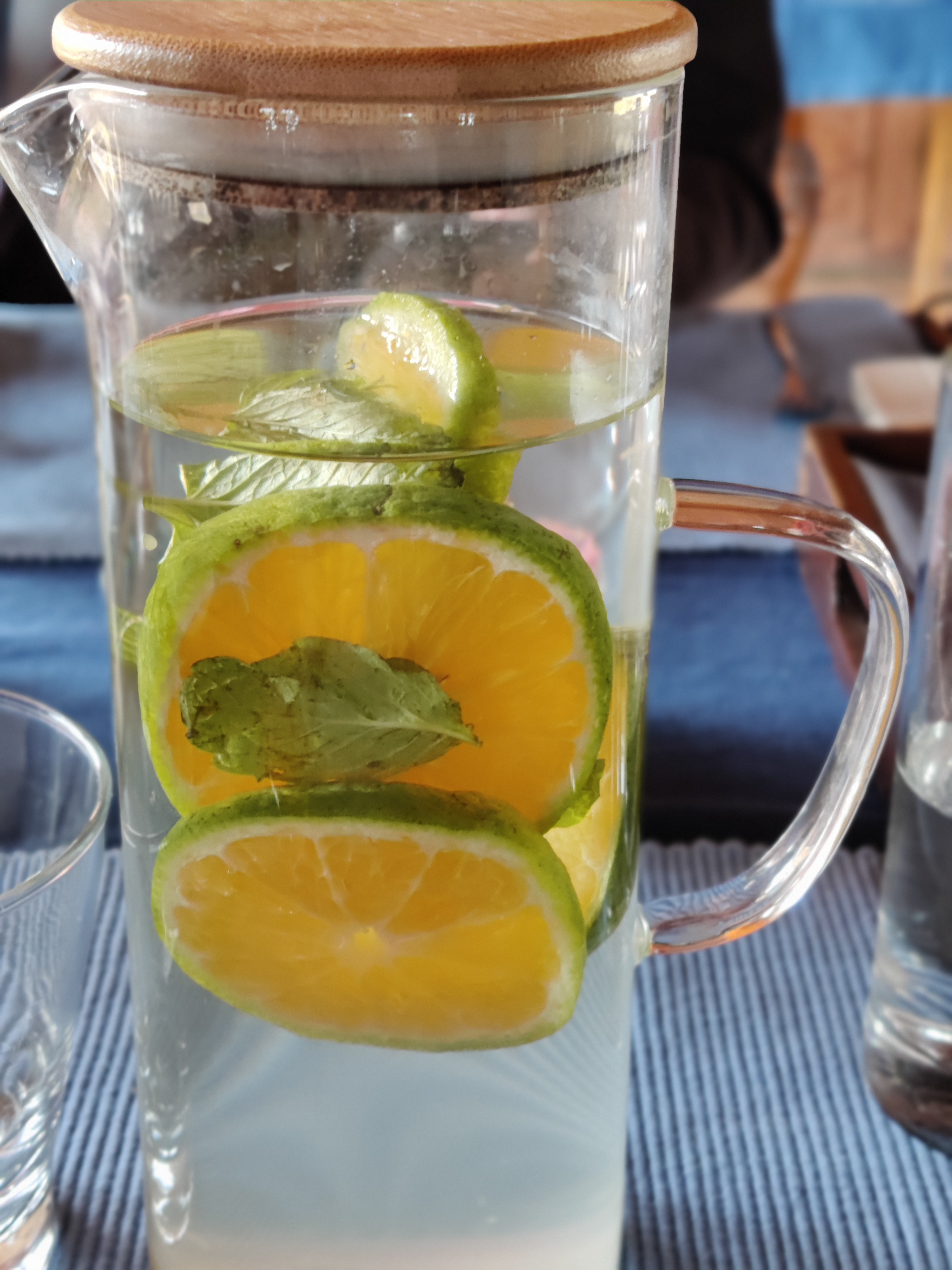
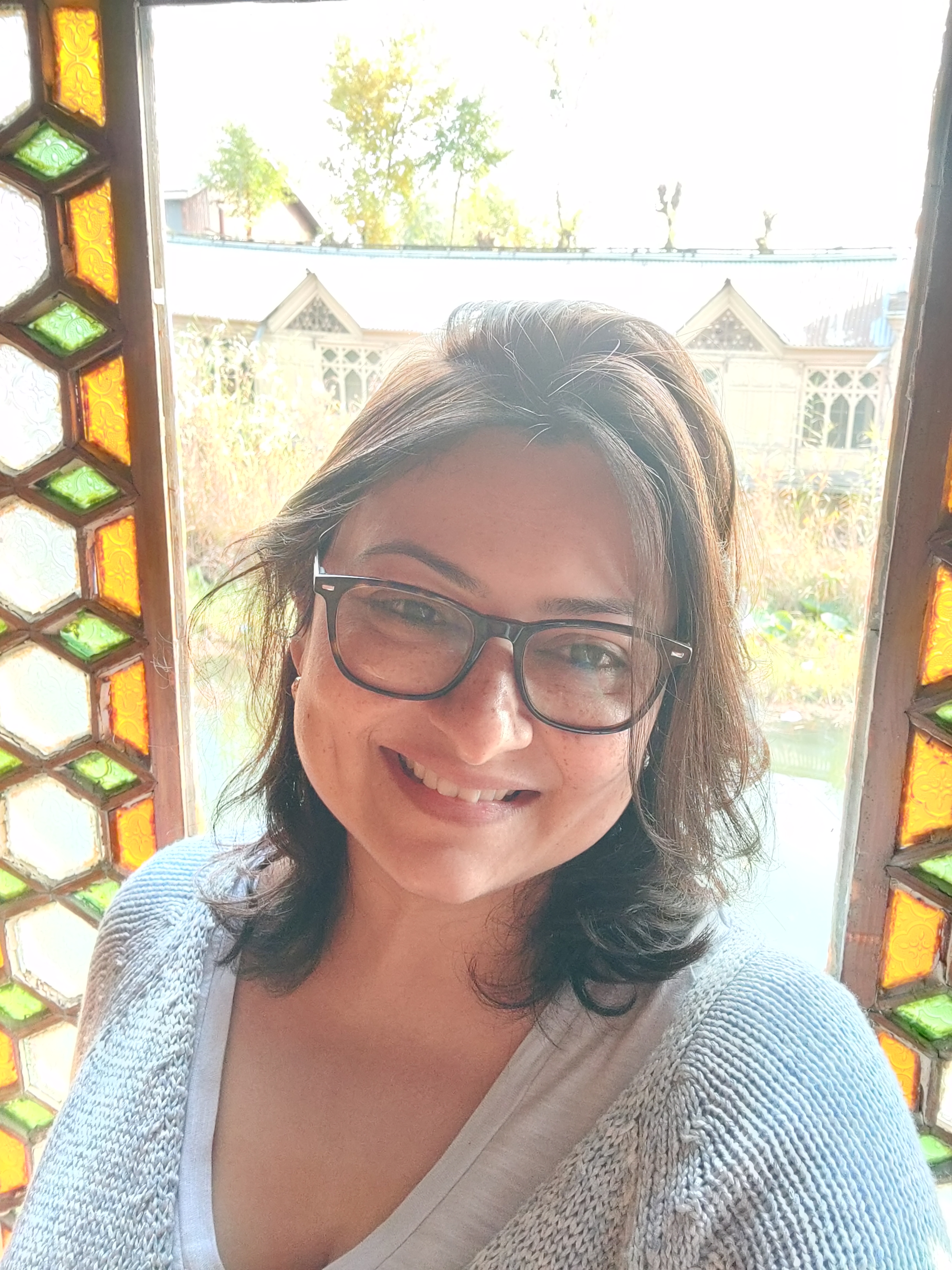

Cut to Amritsar a few days later: nippy but warmer than Srinagar. Aloo parathas, butter chicken and dal makhni- can there be anything more cliched in Punjab? Yet, everything is tastier, more earthy and real. I wander the gullies behind Harmandir Saheb searching for my friend’s masalchi, the one who sells me wariyan, chole masala and hing. I buy winter vegetable pickles for everyone on the crew as they recce wheat fields and audition for the epitome of the Punjabi farmer.
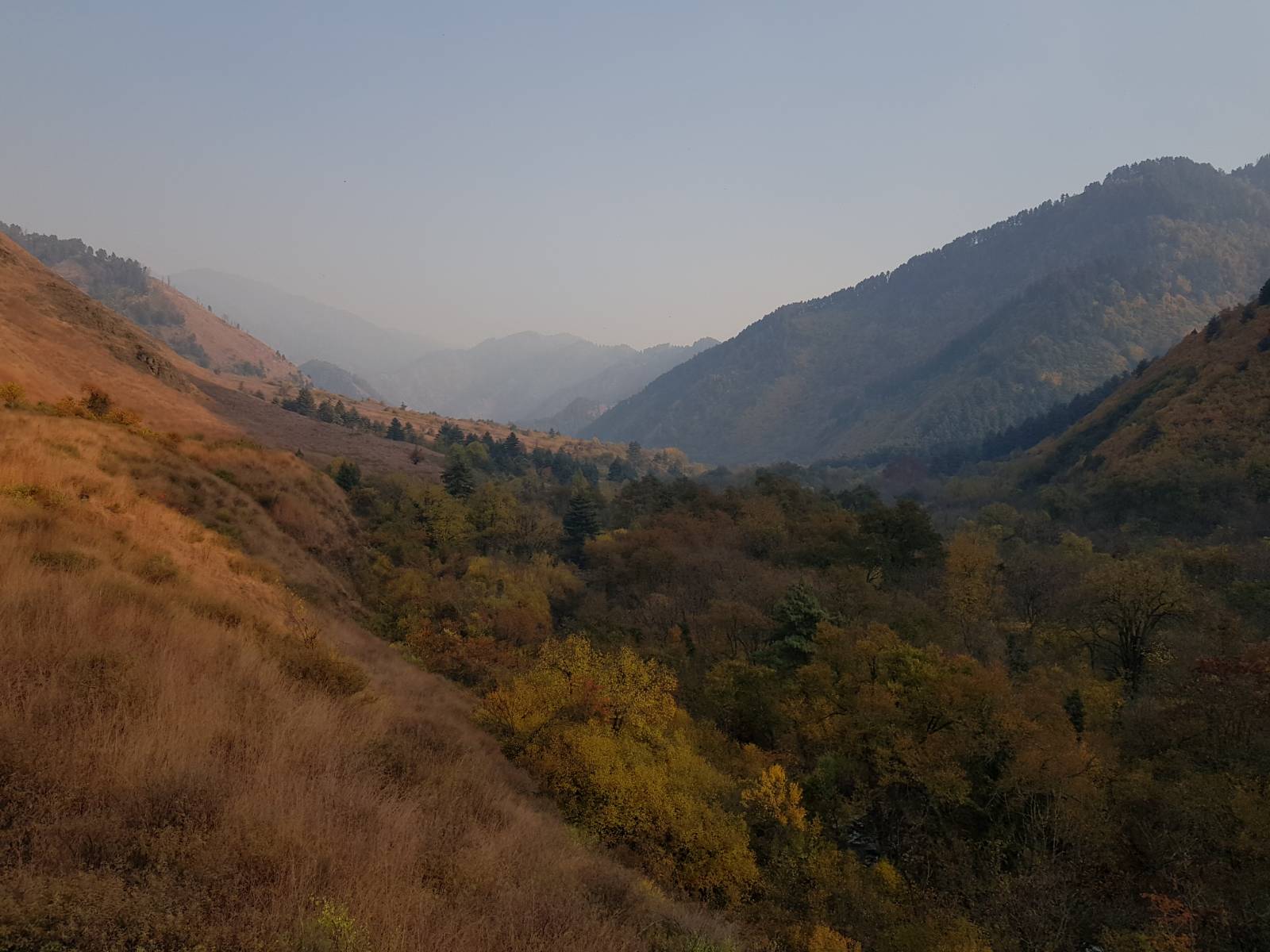
We are a small crew of barely 18, unheard of in this country where people outnumber everything else. We have been filming in search of the heart and soul of the Indian kissan across the most picturesque and remote farmlands in this country. It is to be a long TV commercial. We willingly wake up before sunrise for the perfect shot and willingly wait to capture the mystical mountains under that glorious, glorious sunset.
This entire schedule across India, we have feasted like kings on local delicacies, despite, or rather inspite of the pandemic, from Bombay to the south, the north and the coast. We have been relishing fish and freshwater prawns, grass fed mutton, robust little ilchi bananas, fat grains of rice, from our houseboat, our lodges, in our little crew bubble. We disparage room service and plastic meals on flights.
Banana chips and local rum, whiskey, and fried potatoes with curry leaves and hot red chillies compete humbly for our post-shoot happy hour. Every non-hotel meal is relished and our hearts ache for ghar ka khana after almost a month on the road, filming, filming and eating in between.


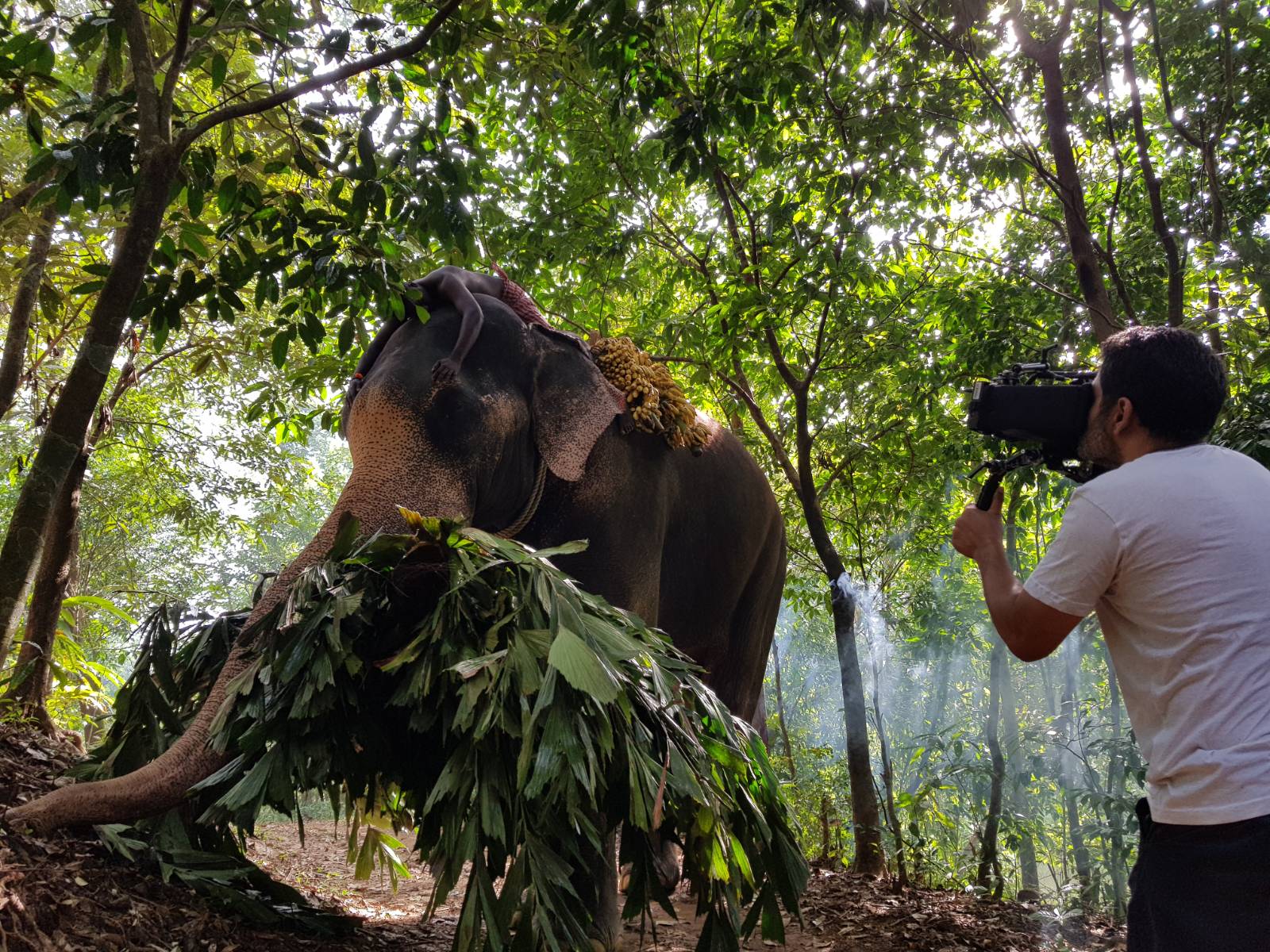

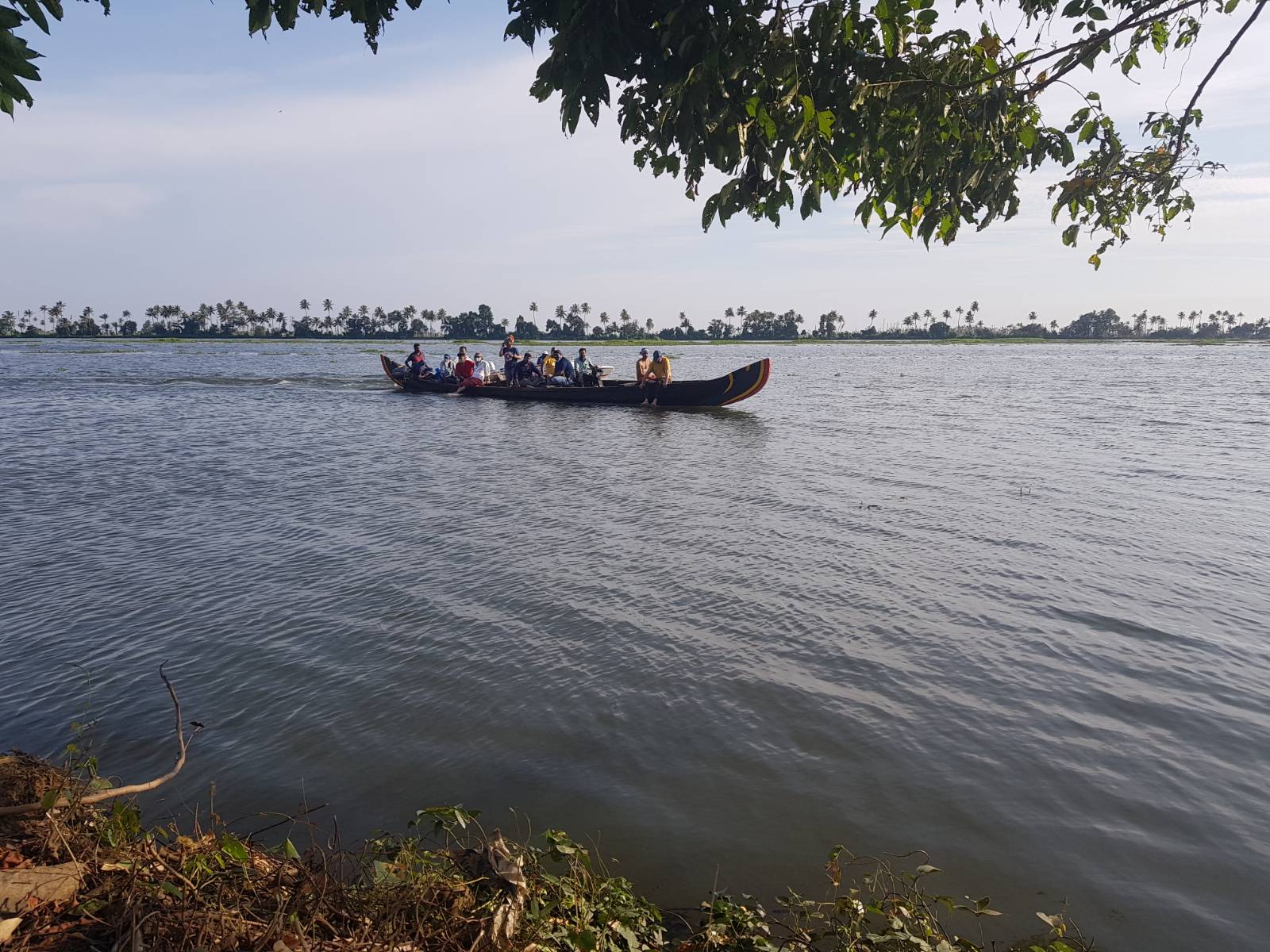

We crash a drone. We watch fishermen flinging their nets against the setting sun. We film coconut trees and more coconut trees. We gaze at neon sunsets. We ride water taxis.
The food is our obsession, keeping the Catering team challenged, and our bellies and minds fuelled to capture more magic every day. We eat with our hands, off banana leaves, local parottas and curries at humble establishments. We dress up in lungis and dance, we chat for hours besides an ocean of lotus blossoms, we travel by snake boat to another undiscovered cove, but above all, we dream about dinner. We happily feed stray dogs, miaowing cats and the beautiful elephant at the tea gardens.
We are treated to serene landscapes and unspoilt beauty as most of the nation remains in semi-lockdown, sequestered and working from home. The silence is eerie, the roads are bereft of noise and people and we are alone, quick to work and keep moving on, always testing and being testing for Covid. Some places refuse to believe in the Pandemic, other places are impossible to gain access to. Nothing is normal, maybe we will be the last people to travel this way if this is truly the promised Apocalypse.
So all we do is what film crews do: we subsist from break to break, meal to meal. And carry on filming.
Cut back to Amritsar. We are in a rambling farmhouse on the outskirts of the city, surrounded by miles of dusty roads and acres of wheat and mustard. We must film these beautiful young girls in turbans and kirpans, the nihangs. They pose prettily for us in an ocean of yellow mustard blossoms, smiles whiter than white, simple and real. I dream of my DDLJ moment and understand Yash Raj’s romantic sensibilities, selling visions of love here in the hinterland.


The farm is overrun by this adorable group of very young boys who decide to adopt me, obviously amused by my curiosity. I want to be shown around and soon I am trudging with them as they proudly drag me through every orchard and stable, barn and rivulet in my Steve Madden sandals. We feed a calf from a large bottle before inspecting the cow dung preciously stored for use. I am given a crash course in growing brinjals and tomatoes.
The ladies of the house are hidden inside, stepping out only to trail delightedly behind the camera crew to see what we are shooting. Tall and fair, very different from the south and west. Meanwhile the sandals have taken a hit and the posse laughingly draw me to the trough to wash off the muck. I see the future of my country in these young boys, still in school, muscles like rope, eager and bright eyed. I am drawn to wanting to adopt them and whisk them away. One offers me his life in exchange, out of the blue: take me with you. I gasp deeply and am unable to comprehend how to deal with his plea. He doesn’t seem unhappy, just hungry for better. Instead, the Production House outfits all of them in warm gear for the winter ahead: the warmest jackets and socks, hats and tee shirts we can find. And I take home a snapshot and memories of the kindest chocolate brown eyes.
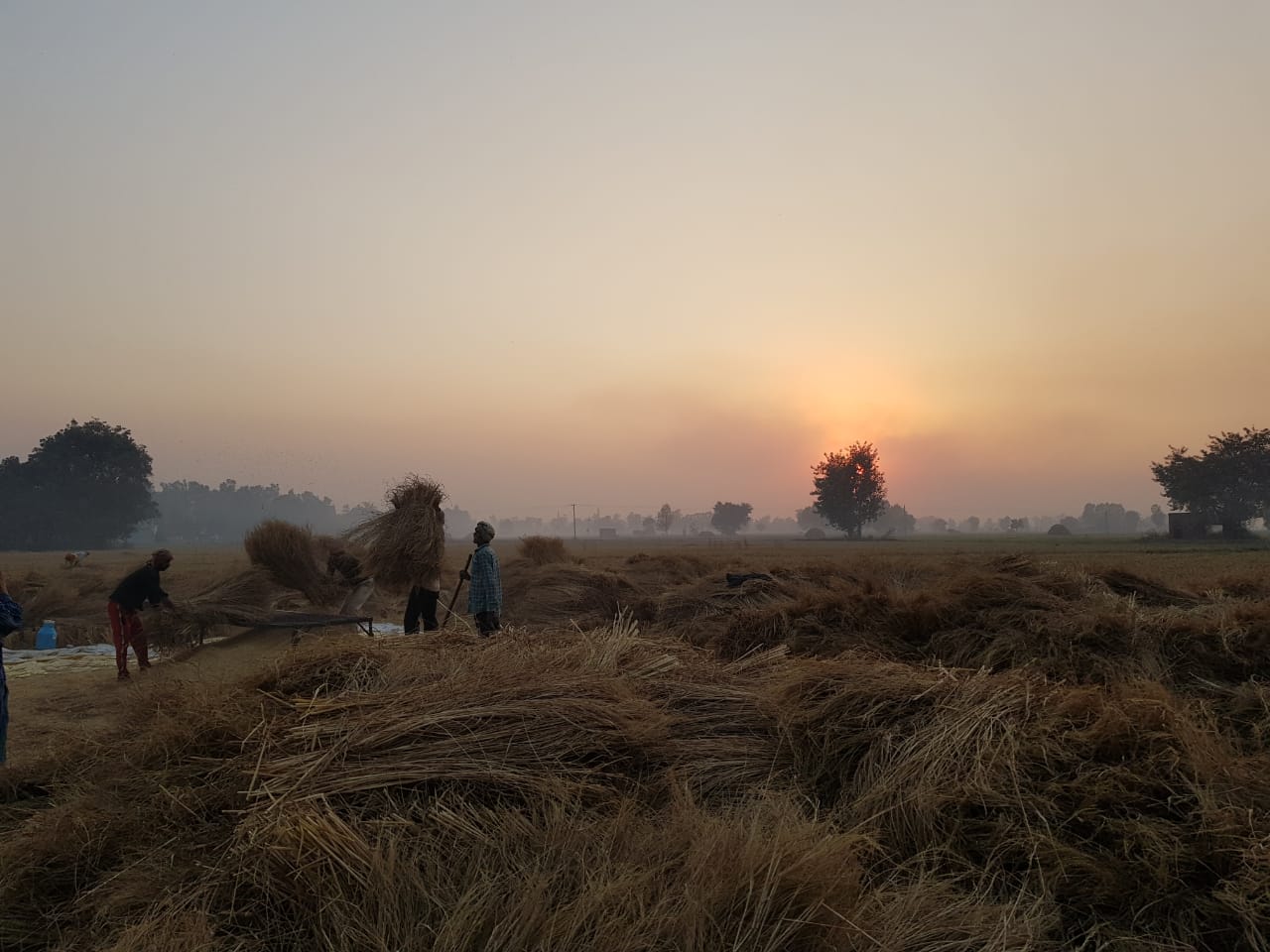
We move on to film the farmer in his dhoti and turban, armed with a kada on his wrist, and a wicked scythe, in his wheat fields. The shots are magnificent: this tall, looming Atlas, as he carries bushels of wheat freshly harvested, threshing them by hand, wiping the sweat from his brow, backlit, yet again, by the setting Dogra sun. It is a visual as old as Time: a man in the field. Worthy of van Gogh himself.
So far, the women are still silent observers. Eventually they give in and cook us a meal, barely showing themselves as we gather around in the falling dusk, swooning over their delectable dal makhni and rotis, with kulhads of chaas. The rum is brought out and a fire is lit. It is all very merry. I spend my time with the dogs, who are chained and miserable, my heart breaking for them. Not everyone loves dogs they way I do.
Lost in a reverie, I recall the juice I drank that morning in a crowded market street. I relished every drop of the supersized tumbler, packed with apples, beet, ginger, greens and pineapple. The evening before, I had dug into a steaming roast sweet potato sprinkled with salt, served up in a dried leaf cup as I wandered the streets behind the Golden Temple. I never managed the famed langar or khada prasad, instead spending the hours gazing at shining domes reflected in the water as the light around me changed. Pilgrims bathed and recited prayers, bhajans played and people walked around the shrines. It was humbling and fascinating and very spiritual.
The Konkan coast a few days later: We are excited to be in Goa, capturing this fort on the cliffs to ourselves. We spend a day unwinding on the beach, sunning like lizards in the white sand, after all the layers and jackets in the mountains.
We drink the local juice bar out of its hyper local coconuts and pineapples, alone on this remote strip of beach.We are in tropical heaven. Lunch has been carefully curated from a nearby thali joint. It is as local as Goa can be, and most certainly connected to the earth, the sky and the ocean before us.
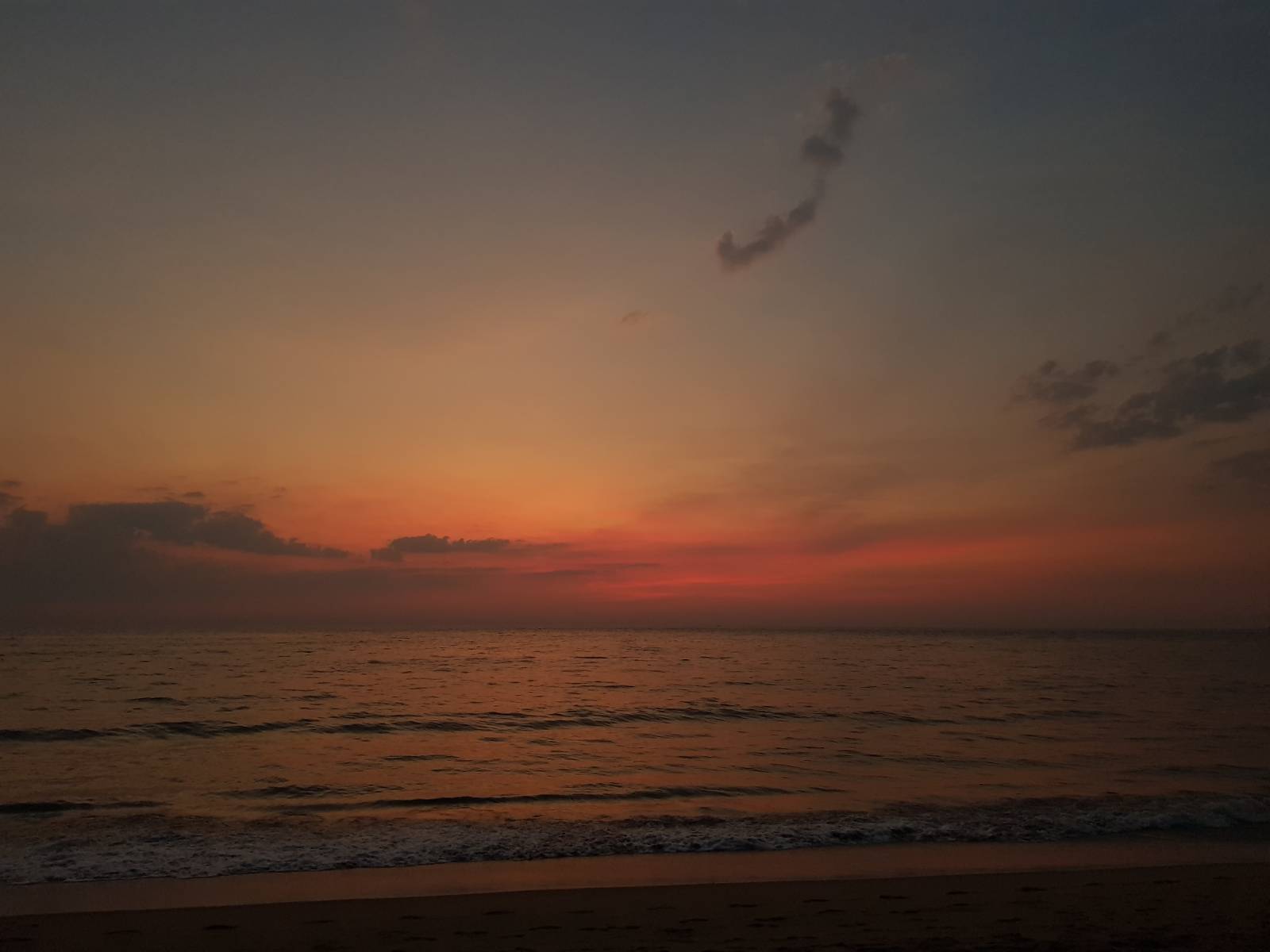

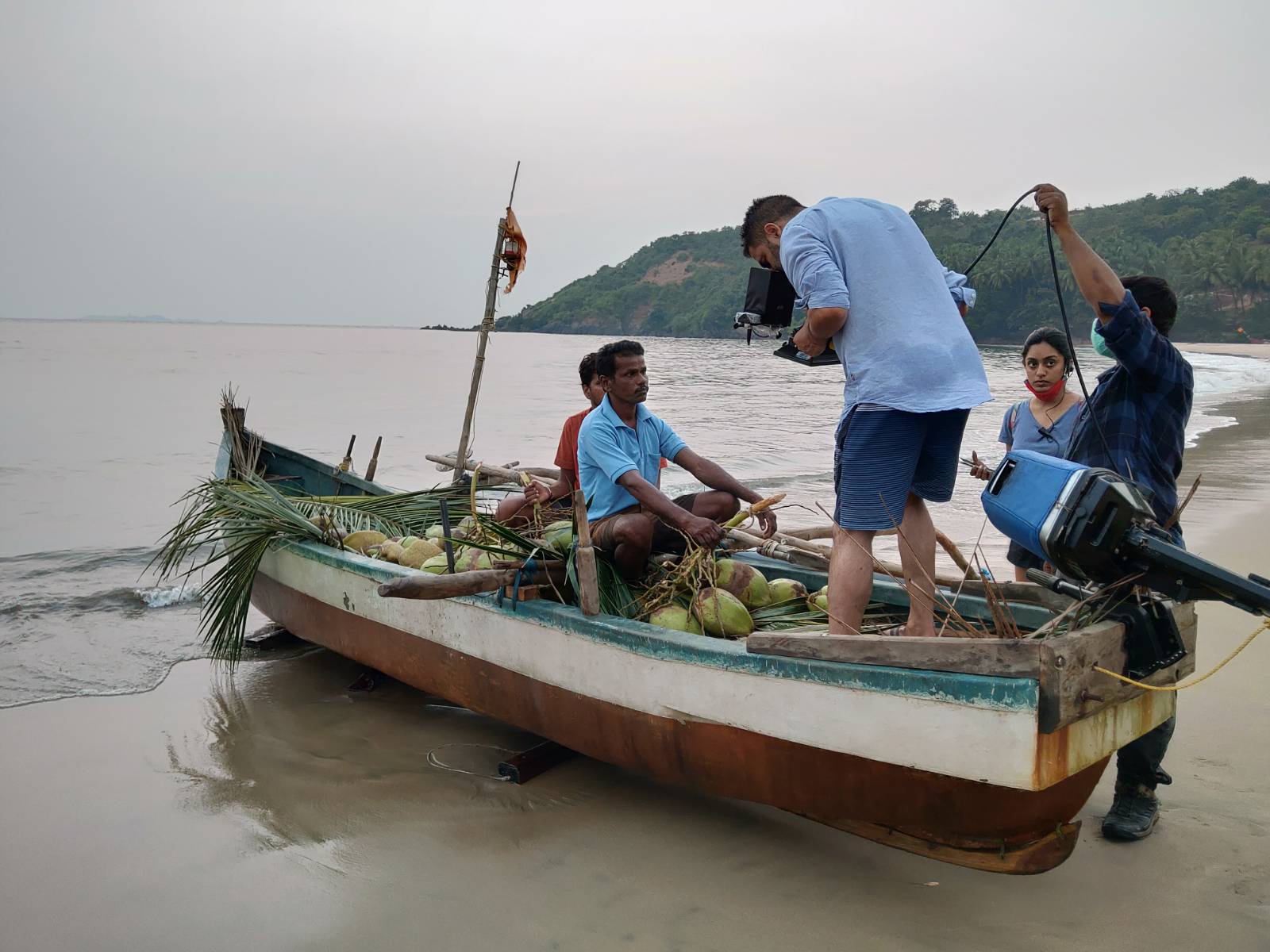
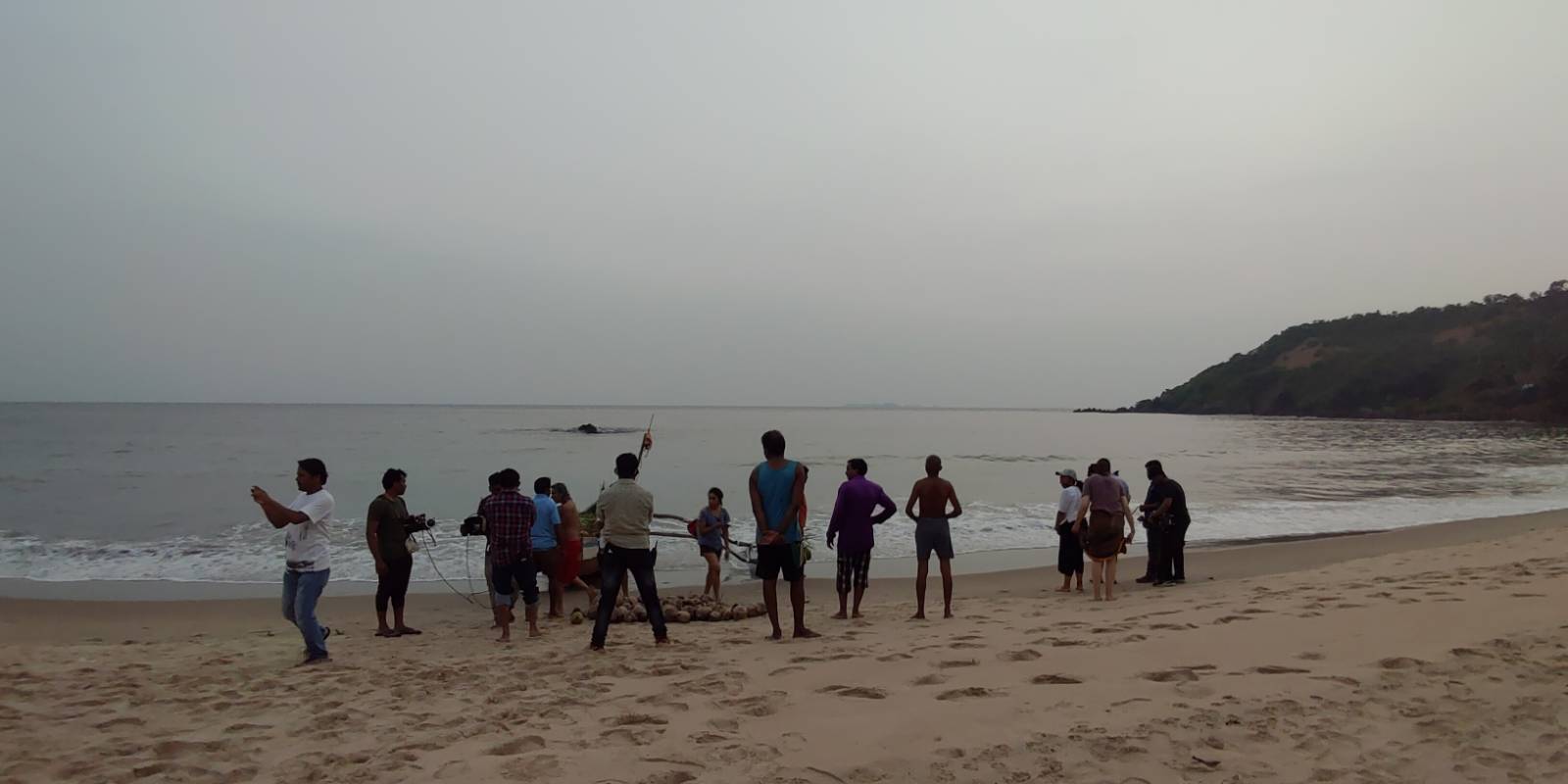
We dine on fried sea food, curry and rice, squished against each other on plastic benches with tiny tables, eating with our fingers. The overhead sun is hot, and we are red and smiling from the joy of being baked under the warm sun and salty breeze. There is fried surmai, fried prawns, masala prawns, ooof! it is simply too much food and arrives in batches, so we find ourselves eating a prolonged lunch with a lot of beer now that the coconuts and juice has run out ( that’s Goa ).
Here the harvest is seafood, the coconut, and local red rice. We are content and replete, eating locally, as we continue to wind our way up the coast and film for the next few days along paths unknown.
We are now driving single file on narrow village roads, off the main coast, filming in small hamlets, with utterly pristine coves of emerald waters. We shoot boats and coconut farmers and shiny black buffaloes. We dine only on local food in local hotels, large thalis and more crispy rava fried fish. There is country chicken curry and rice bhakris served on the beach as the sun sets blazing orange fire on that deep emerald green cove. We are bathed in iridescent hues as we wrap the end of the shoot. It is a Pack up and a film wrap, and we fall silent silent, It has been quite an odyssey: we were lucky to have been out in the wild in this terrible time across the world, and so well fed.
We are connected to this:
To the farms we have travelled, the food we have eaten, harvested by people who work with the earth to grow our food, people who have graciously agreed to be filmed and shown doing what they do unflinchingly each day, come what may, to put food on our tables.
We do not know about the farmer’s rebellion in India that will take place barely a month later and shelve this beautiful film for years to come. We only believe in the idyll of the Indian farmer that brought us here from the rice fields and coconut plantations of Kerala and Tamil Nadu, to the Himalayas and its foothills. We have followed the farmer over hills and valleys, across rivers and past fluorescent sunsets, searching for his soul to tell India about who really feeds us.
here is the link to the film we shot
LINKS
link to the film we shot about the farmers :https://youtu.be/u-3WB00NV5w?si=pLUDazfz1bhbUnNO
link to the production house who made this possible: www.goodmorningfilms.com
link to my earlier story on Srinagar Harissa https://wp.me/p98Kmm-2T
recipes: https://daankutth.wordpress.com such a beautiful blog on local cuisine
the houseboat we stayed on, and their incomparable hospitality: https://www.abchapriretreats.in/sukoon-houseboat/
Special mention to the lovely Saquib Mir and his bakes that kept us fuzzy and warm in Srinagar , especially THOSE cinnamon rolls. https://www.instagram.com/le_delice_the_french_bakery
some photo credits go to RDC
( Another story on Srinagar itself is long overdue)






 Thewanderingindiangourmet
A veritable feast for the eyes and the mind!!
LikeLike